A single miscalculated teaspoon of fertilizer can turn a thriving cannabis canopy into a crispy, yellowed disaster in under 48 hours. In over 15 years of cannabis cultivation, we have seen more grows fail from nutrient mismanagement than from pests, light stress, or genetics combined. This cannabis nutrients guide is the resource we wish existed when we started — a research-backed, stage-by-stage blueprint covering NPK ratios, feeding schedules, deficiency diagnosis, toxicity prevention, and the organic-vs-synthetic debate.
Whether you are running a living soil bed or a precision hydroponic system, the principles of cannabis nutrition determine the ceiling of your yield and potency. Let us walk through every step, from seed to harvest, so you never have to guess again.
What NPK Means and Why Cannabis Plants Need It
NPK stands for nitrogen (N), phosphorus (P), and potassium (K) — the three primary macronutrients every cannabis plant requires in the largest quantities. These numbers appear on every fertilizer label as a ratio (e.g., 10-5-7), representing the percentage by weight of each element. Mastering this ratio is the single most impactful lever you control as a grower.
Each macronutrient plays a distinct role in plant physiology:
- Nitrogen (N): Drives vegetative growth, chlorophyll production, and amino acid synthesis. It is the engine behind leaf expansion, stem thickness, and overall plant vigor.
- Phosphorus (P): Critical for root development, energy transfer (ATP), and flower formation. Research from McGill University (2024) demonstrated that increasing P from 30 to 90 mg/L boosted fresh leaf mass by 198.6% and root mass by 74.3% during vegetative growth.
- Potassium (K): Regulates stomatal function, water uptake, enzyme activation, and carbohydrate transport. It strengthens cell walls and boosts disease resistance.
Cannabis is a heavy feeder compared to most horticultural crops, but more is not always better. The 2024 McGill University study found that excessive potassium (above 175 mg/L) actually decreased plant height by 25.6%, root mass by 41.5%, and chlorophyll content — proving that balance matters more than volume.
Beyond NPK, cannabis requires secondary macronutrients (calcium, magnesium, sulfur) and trace micronutrients (iron, manganese, zinc, boron, copper, molybdenum). We will cover these in a dedicated section below. First, let us zero in on the ratios that change with each growth phase.
Ideal NPK Ratios for the Vegetative Stage
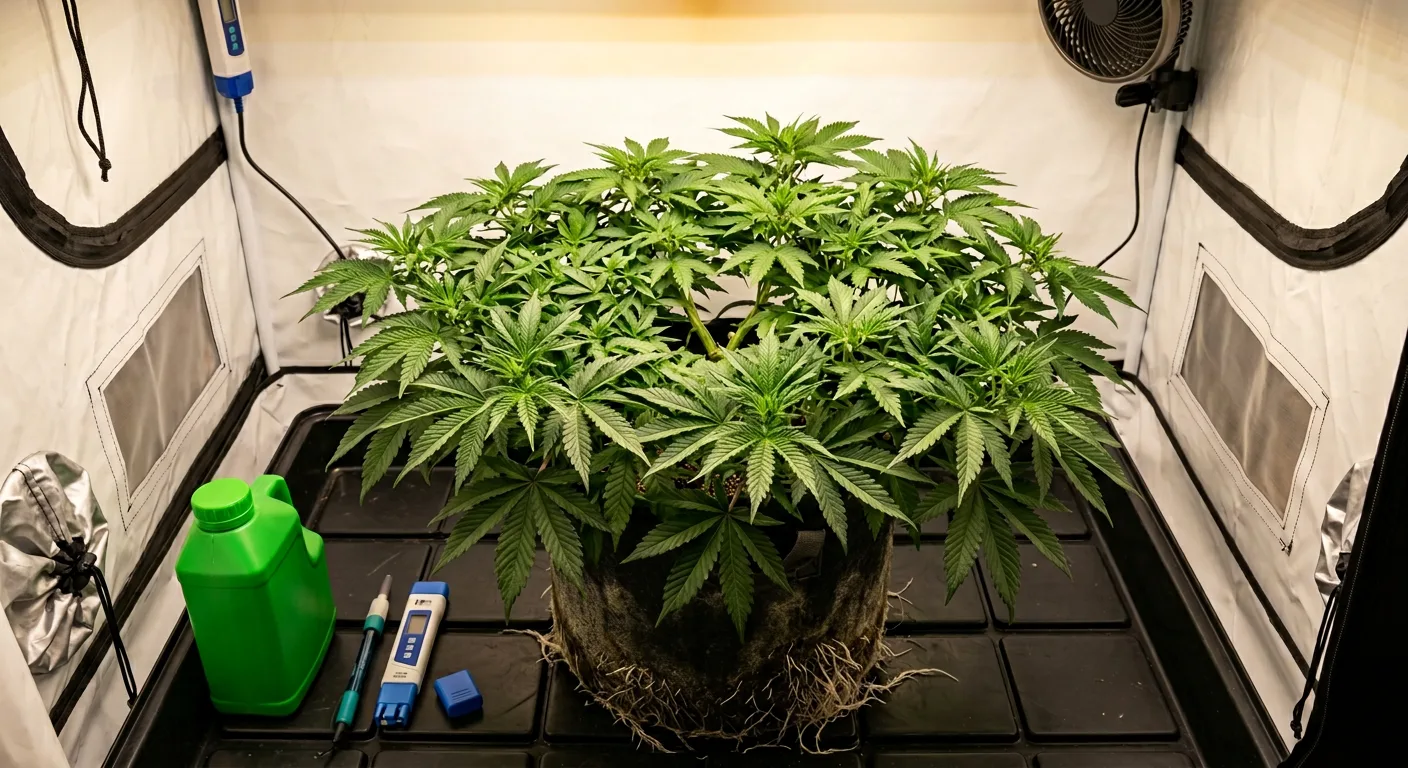
During vegetative growth, cannabis needs a nitrogen-dominant NPK ratio — typically 3-1-2 or similar — to fuel rapid leaf and stem development. This is the phase where your plant builds the structural framework that will eventually support heavy flowers, so skimping on nitrogen here limits your harvest ceiling.
Research-Backed Vegetative Nutrient Ranges
A 2024 study published in Frontiers in Plant Science by researchers at McGill University used response surface methodology to pinpoint optimal vegetative-stage concentrations in hydroponic systems. Their findings established these ranges:
- Nitrogen: 180–220 mg/L for maximum chlorophyll a and b production
- Phosphorus: 60–90 mg/L for optimal root and leaf development
- Potassium: 100–150 mg/L for height, branching, and leaf count
These translate roughly to an NPK ratio of 3-1-2 in most commercial vegetative formulas. For soil growers, a product labeled 6-2-4 or 10-5-7 hits a comparable proportion.
Weeks 1–2 (Seedling/Early Veg)
Start at 25–50% of the manufacturer's recommended dose. Seedlings have tiny root systems and are extremely sensitive to salt concentration. Target 300–500 PPM (EC 0.6–1.0). Use our nutrient calculator to dial in exact amounts.
Weeks 3–4 (Active Vegetative Growth)
Ramp to 75% strength. Target 500–800 PPM (EC 1.0–1.6). Nitrogen demand surges as the plant enters rapid leaf production. Watch for the deep, healthy green that signals adequate N uptake.
Weeks 5–6+ (Late Veg / Pre-Flower Transition)
Full vegetative strength: 800–1100 PPM (EC 1.6–2.2). Begin tapering nitrogen slightly and introducing bloom-ratio nutrients in the final 3–5 days before flipping to 12/12 light. This transition primes the plant for flower initiation.
Pro Tip: Heavy-feeding strains like OG Kush (26% THC) and Gorilla Glue #4 can handle the upper end of these ranges, while lighter feeders like Purple Power (10% THC) prefer 60–70% strength throughout veg. Always let the plant tell you what it needs — watch leaf color and tip condition between feeds.
If you are using training techniques like topping or ScrOG, nutrient demand increases because you are stimulating additional growth sites. Increase feed frequency rather than concentration to avoid burn.
Best NPK Ratios for the Flowering Stage
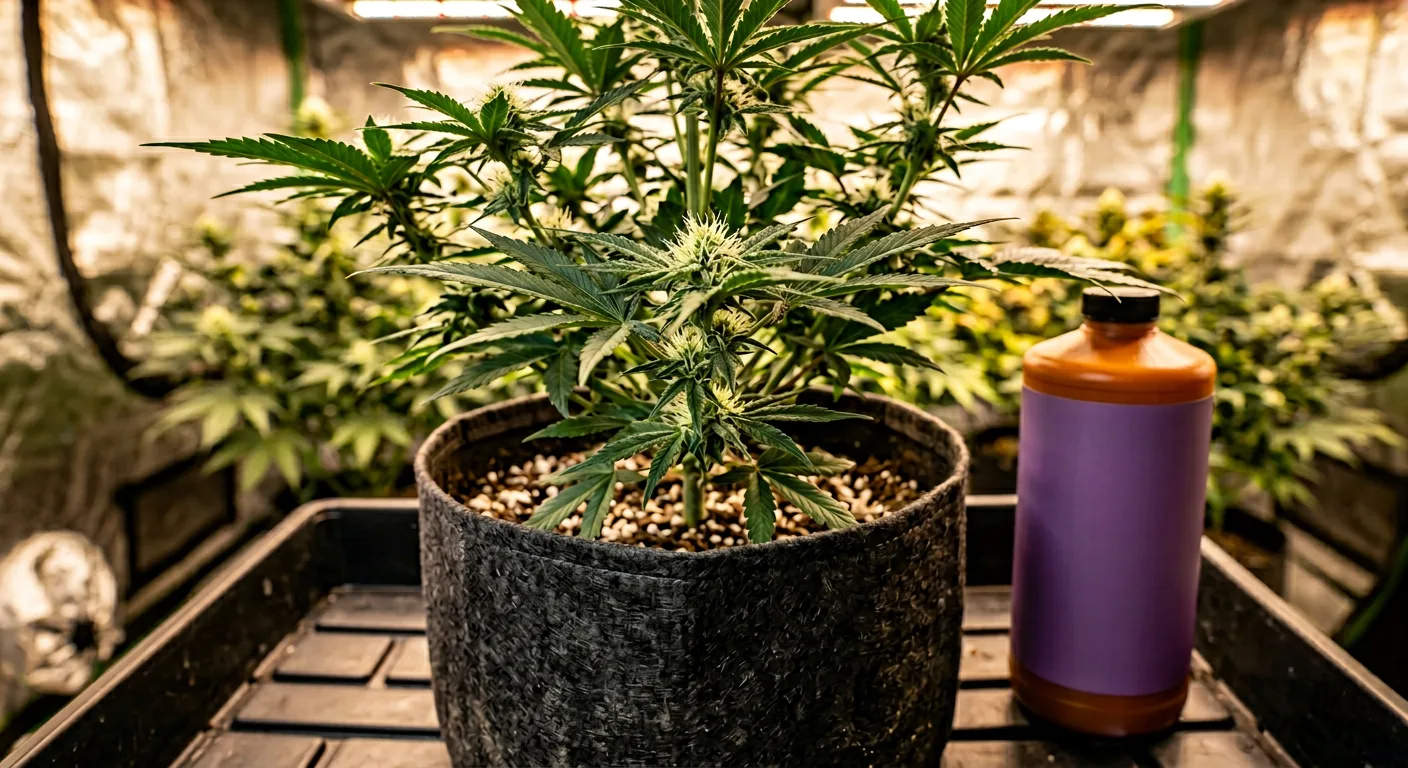
Once cannabis enters flower, it demands a phosphorus-and-potassium-dominant ratio — typically 1-3-2 or 0-3-3 — to support bud formation, resin production, and terpene synthesis. Nitrogen drops to a supporting role, and overdoing it during bloom is one of the most common mistakes we see.
Flowering-Stage Research Data
A study from the University of Guelph published in Frontiers in Plant Science (2021) optimized NPK for the flowering stage of cannabis in deep water culture. Their response surface model estimated the highest average yield of 144 g/plant at N = 194 mg/L and P = 59 mg/L. Key findings:
- Yield responded best to N in the range of 160–230 mg/L and P in the range of 40–80 mg/L
- Inflorescence yield did not respond to K within the tested range (the researchers noted K was likely sufficient across all treatments)
- Cannabinoid content was not affected by nutrient treatments — THC and THCA remained stable across all concentrations tested
- Yield correlated strongly with aboveground fresh weight (r = 0.98) and root dry weight (r = 0.90)
Research Insight: The University of Guelph study found no nutrient deficiency or toxicity symptoms on any plants within their tested ranges, suggesting cannabis has a fairly wide "safe zone" when NPK is roughly balanced. The critical takeaway? Modest, consistent feeding outperforms aggressive supplementation every time.
Flower-Phase Feeding Progression
Weeks 1–2 of Flower (Stretch Phase)
Transition to bloom formula but maintain moderate N (the plant still stretches 50–100% in height). Use a ratio like 2-3-3. PPM: 800–1000. This supports the final burst of vegetative growth before bud sites lock in.
Weeks 3–5 of Flower (Bud Building)
Peak nutrient demand. Switch to full bloom ratio (1-3-2). PPM: 1000–1400. P and K fuel calyx stacking, pistil production, and trichome development. This is where strains like Quantum Kush (30% THC) and Wedding Cake pack on the density that defines top-shelf flower.
Weeks 6–7 of Flower (Ripening)
Begin reducing feed strength to 70–80%. Drop nitrogen further (0.5-3-3). PPM: 700–1000. The plant is finishing resin production and redirecting energy from leaf growth to flower maturation.
Final 7–14 Days (Flush / Taper)
In soil and coco, many growers flush with plain pH-adjusted water to reduce residual salts and improve smoothness. In hydro, drop to 200–400 PPM of a reduced bloom formula. Monitor trichome ripeness to time your final harvest.
Secondary Nutrients and Micronutrients: The Supporting Cast
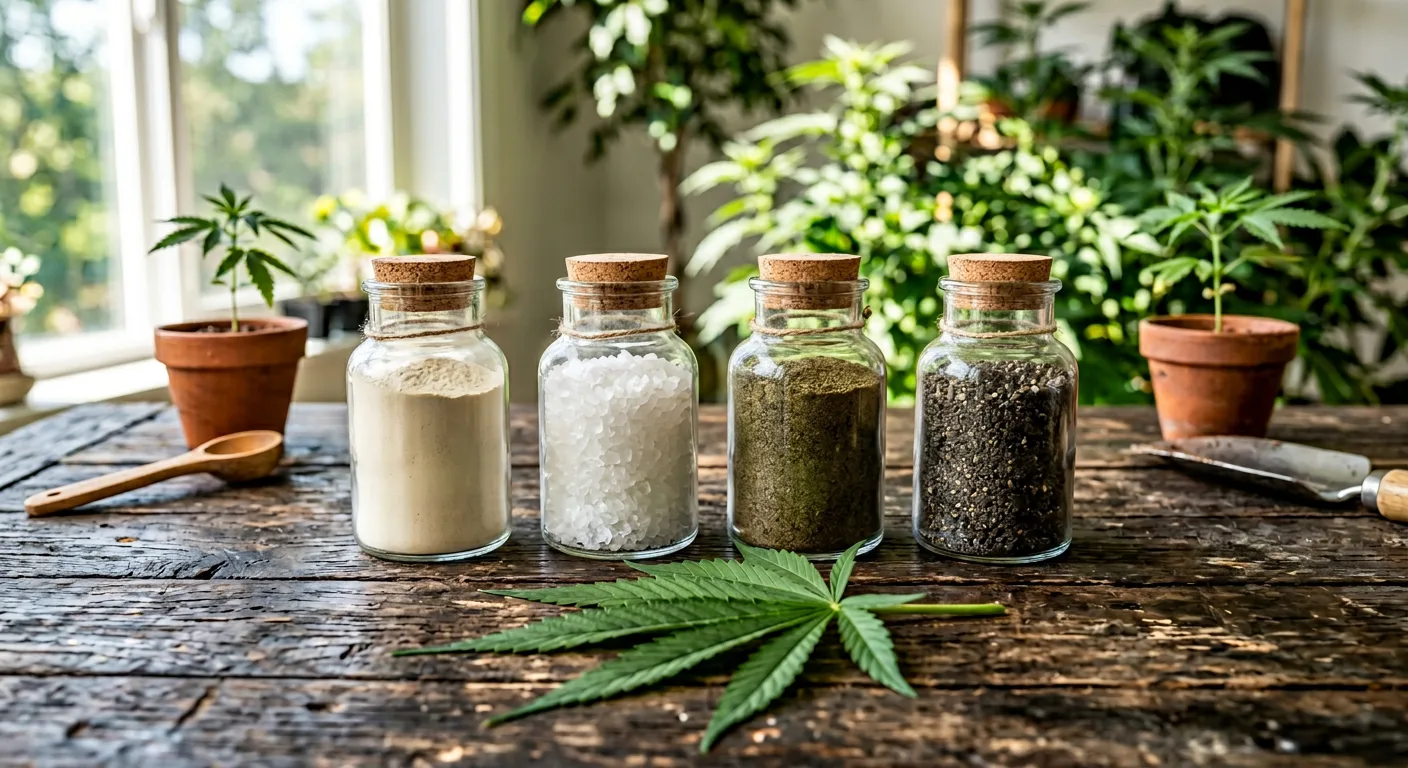
Calcium, magnesium, and sulfur are the secondary macronutrients cannabis needs in significant — but smaller — quantities than NPK, while micronutrients like iron, zinc, and manganese are required in trace amounts but remain essential for enzymatic processes.
Secondary Macronutrients
- Calcium (Ca): 100–200 PPM. Strengthens cell walls, critical in fast-growing environments. Deficiency causes twisted new growth and brown spots.
- Magnesium (Mg): 50–75 PPM. Central atom of chlorophyll. Deficiency causes interveinal yellowing on older leaves — a common issue in coco coir grows (see our coco growing guide).
- Sulfur (S): 30–60 PPM. Required for protein synthesis and certain terpene production. Deficiency resembles nitrogen deficiency but starts on newer leaves.
Essential Micronutrients
- Iron (Fe): Chlorophyll synthesis. Deficiency = bright yellow new leaves with green veins.
- Manganese (Mn): Photosynthesis enzyme activation. Deficiency = tan/brown spots between veins on young leaves.
- Zinc (Zn): Hormone regulation and internode spacing. Deficiency = stunted, crinkled new growth.
- Boron (B): Cell wall integrity and calcium transport. Deficiency = hollow stems, brittle growth tips.
- Copper (Cu): Lignin production and disease resistance. Deficiency = wilting leaf tips despite adequate water.
- Molybdenum (Mo): Nitrogen metabolism. Deficiency = leaf edges cupping upward.
Pro Tip: Cal-mag deficiencies are the #1 issue we see in coco coir and reverse-osmosis water setups. If you use RO water or coco, supplement with 3–5 mL/L of a cal-mag product from day one. In living soil, worm castings and mycorrhizal inoculants naturally improve micronutrient availability.
Cannabis Nutrient Feeding Schedule: Week-by-Week
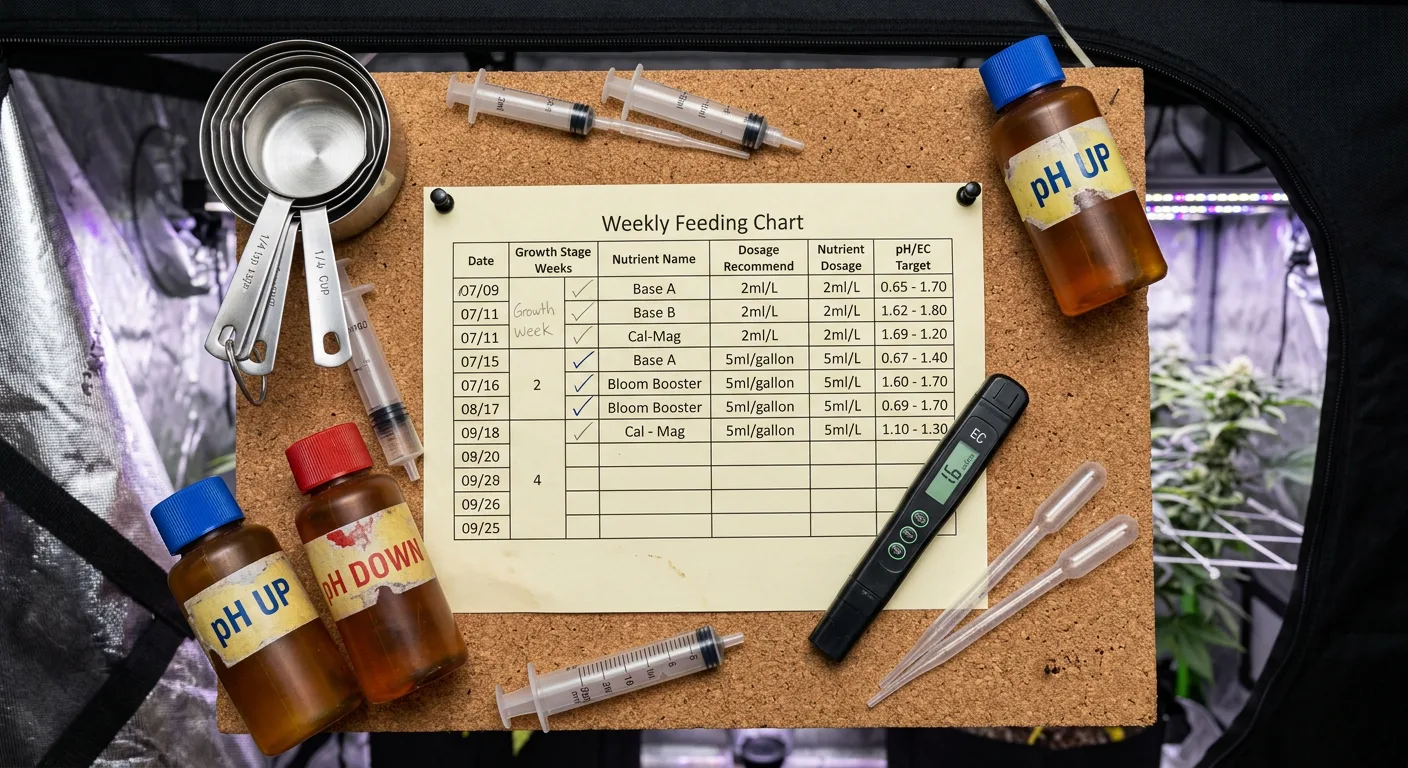
A proper cannabis nutrient feeding schedule gradually increases concentration through vegetative growth, peaks during mid-flower bud building, and tapers down before harvest. The table below provides a general framework — always adjust based on strain, medium, and plant response.
| Growth Phase | Week | NPK Ratio | PPM (EC) | pH Target | Key Notes |
|---|---|---|---|---|---|
| Seedling | 1–2 | 2-1-1 | 300–500 (0.6–1.0) | 6.2–6.5 | Plain water first 5–7 days; start at 25% strength |
| Early Veg | 3–4 | 3-1-2 | 500–800 (1.0–1.6) | 6.0–6.5 | Ramp to 75% strength; watch for deep green |
| Late Veg | 5–6+ | 3-1-2 | 800–1100 (1.6–2.2) | 6.0–6.5 | Full veg strength; add cal-mag if needed |
| Transition | Flower Wk 1–2 | 2-3-3 | 800–1000 (1.6–2.0) | 6.0–6.3 | Stretch phase; maintain moderate N |
| Bud Building | Flower Wk 3–5 | 1-3-2 | 1000–1400 (2.0–2.8) | 6.0–6.3 | Peak demand; PK boosters optional |
| Ripening | Flower Wk 6–7 | 0.5-3-3 | 700–1000 (1.4–2.0) | 6.0–6.3 | Reduce N; maintain P and K |
| Flush | Final 7–14 days | 0-0-0 or minimal | 0–400 (0–0.8) | 6.0–6.5 | Plain water or very light feed |
For hydroponic systems, subtract about 0.5 from the pH targets (aim 5.5–6.0) and monitor reservoir EC daily. Reservoir changes every 7–10 days prevent nutrient imbalances from selective uptake. Use our nutrient calculator and VPD calculator together to optimize both feeding and environment simultaneously.
Warning: Never combine nutrients from different product lines without understanding their formulations. Mixing Brand A's "base" with Brand B's "bloom booster" can cause nutrient lockout from precipitation reactions. Stick to one complete line or use single-element additives with a known base.
Autoflower Feeding Adjustments
Autoflowering strains like Amnesia Haze Autoflower (17% THC) and Skywalker OG Autoflower (23% THC) have compressed life cycles (8–10 weeks total). Reduce all PPM targets by 20–30% compared to photoperiod schedules. Autos begin flowering around week 3–4 regardless of light cycle, so the transition from veg to bloom nutrients happens faster — often within a single week rather than the gradual shift described above.
Identifying Cannabis Nutrient Deficiency Signs
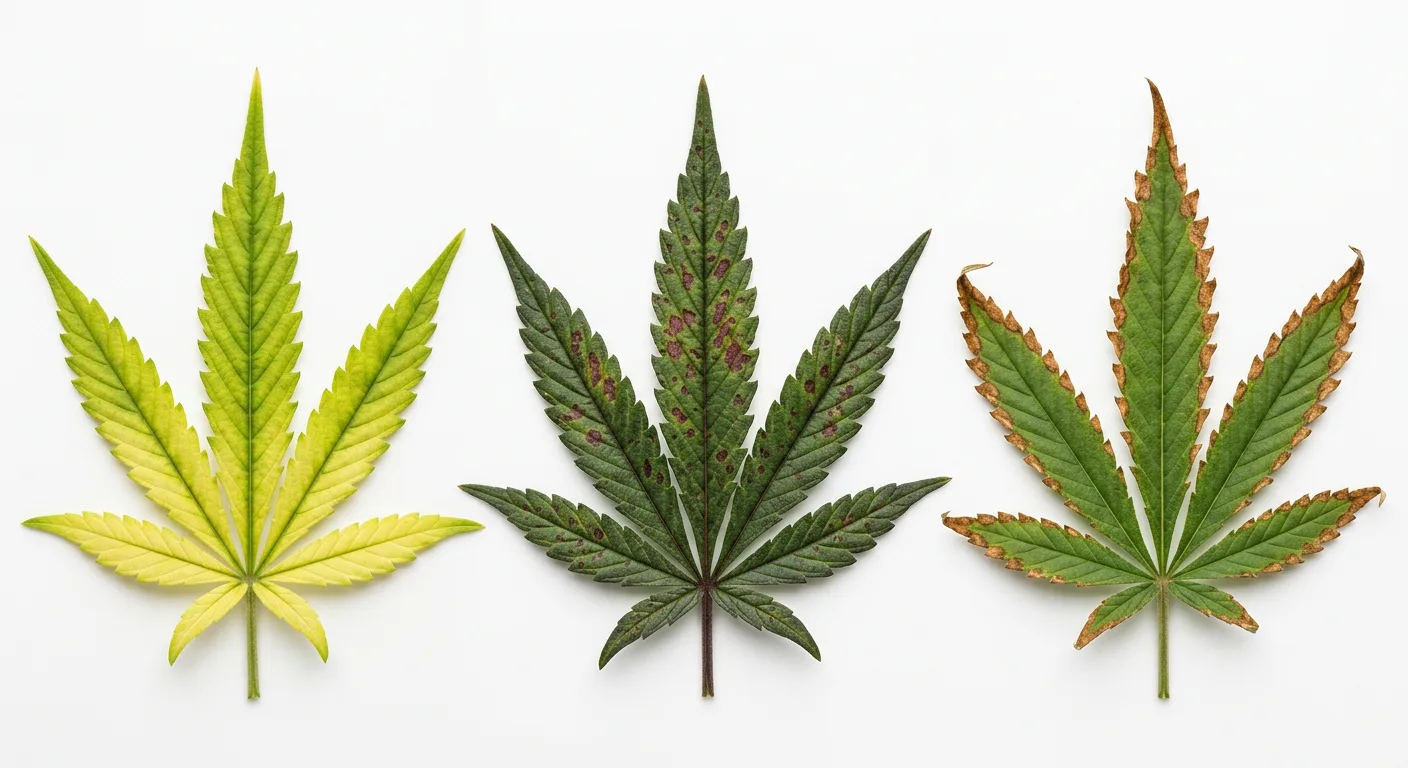
Cannabis nutrient deficiency signs follow predictable visual patterns based on whether the nutrient is mobile (appears on older/lower leaves first) or immobile (appears on new/upper growth first). Learning to read these signals is the fastest diagnostic skill you can develop.

Nitrogen Deficiency in Cannabis
The most common deficiency in cannabis cultivation. Lower (older) leaves turn uniformly pale green, then yellow, then eventually drop. The plant cannibalizes nitrogen from old growth to feed new growth. If untreated, yellowing climbs up the plant rapidly.
- Visual signs: Uniform yellowing (not spotted or patchy) starting at the bottom of the plant
- Growth impact: Slowed vegetative growth, smaller leaves, thin stems, reduced branching
- Common causes: Underfeeding, pH lockout (soil pH below 5.8 or above 7.0), root problems
- Fix: Increase N in feed solution; check and correct pH; foliar spray with 0.5% urea solution for fast response
Phosphorus Deficiency in Cannabis
Often misidentified because it does not always present as a single symptom. Phosphorus deficiency in cannabis produces dark green or blue-green leaves, sometimes with purple or reddish stems and petioles. The McGill University study (2024) showed that plants at the lowest P levels (30 mg/L) had dramatically reduced growth compared to 90 mg/L treatments — with differences exceeding 300% in dry leaf mass.
- Visual signs: Dark green leaves that develop brown or bronze patches; purple petioles; stunted overall size
- Growth impact: Severely reduced root development and flower yield
- Common causes: Cold root zone temperatures (below 60°F/15°C impair P uptake), pH above 7.0, insufficient P in feed
- Fix: Warm the root zone, correct pH to 6.0–6.5, add a P-rich supplement like bone meal (soil) or monoammonium phosphate (hydro)
Potassium Deficiency in Cannabis
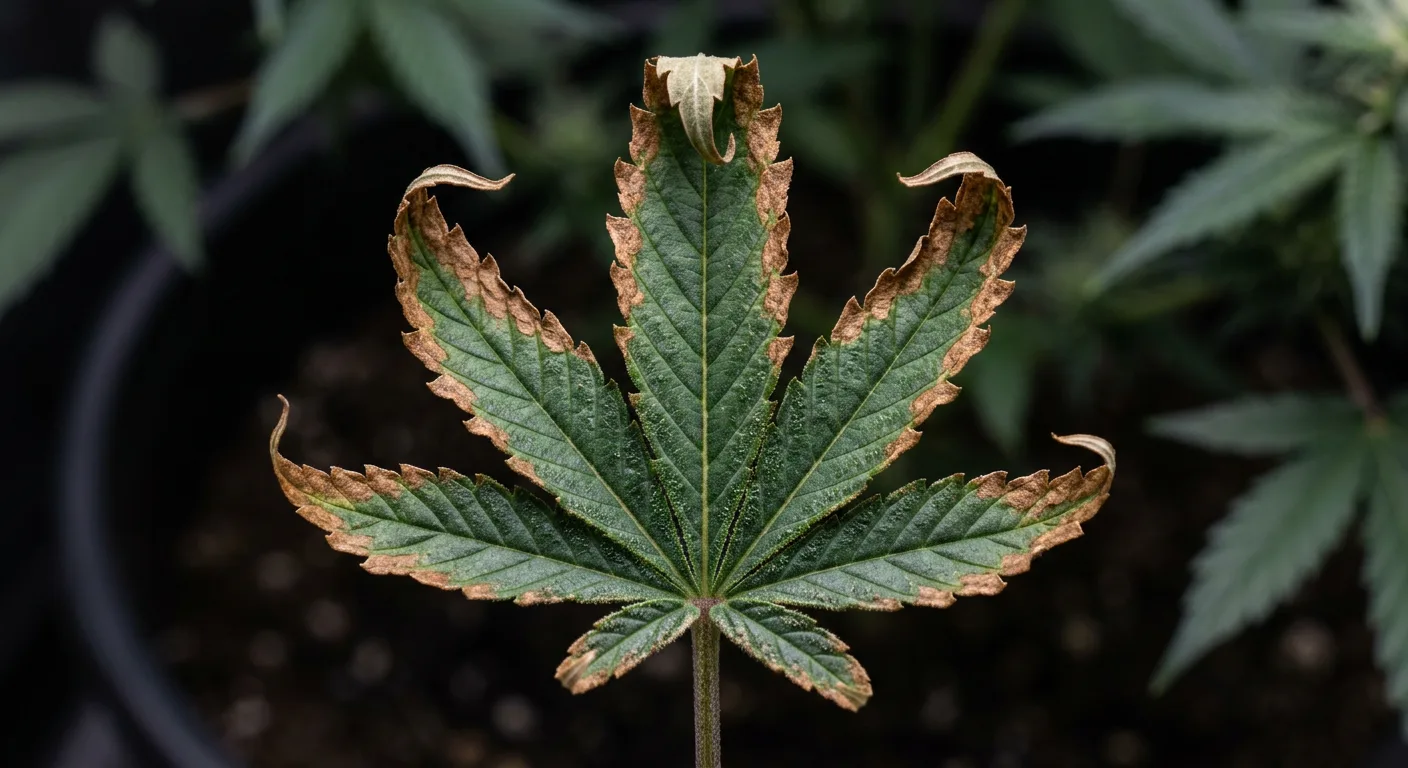
Shows as brown, crispy leaf edges (marginal necrosis) on older leaves. Can look like nutrient burn at first glance, but K deficiency edges are dry and papery, while nutrient burn tips are usually dark brown or black and shiny.
- Visual signs: Brown, dry leaf edges; interveinal chlorosis on older leaves; weak, stretchy stems
- Growth impact: Reduced disease resistance, smaller flowers, loose bud structure
- Common causes: Underfeeding, excessive calcium competing for uptake, pH above 7.0
- Fix: Add potassium sulfate or adjust bloom nutrient dosing upward; verify pH
Quick Deficiency Diagnostic Reference
| Nutrient | Mobility | Appears On | Key Visual Sign | Most Common Cause |
|---|---|---|---|---|
| Nitrogen (N) | Mobile | Lower/old leaves | Uniform yellowing bottom-up | Underfeeding; pH lockout |
| Phosphorus (P) | Mobile | Lower/old leaves | Dark green + purple stems/spots | Cold roots; high pH |
| Potassium (K) | Mobile | Lower/old leaves | Brown, crispy leaf edges | Underfeeding; Ca excess |
| Calcium (Ca) | Immobile | Upper/new growth | Twisted tips; brown spots on new leaves | Low pH; RO water |
| Magnesium (Mg) | Mobile | Lower/old leaves | Interveinal yellowing (green veins, yellow between) | Coco coir; low Mg feed |
| Iron (Fe) | Immobile | Upper/new growth | Bright yellow leaves, green veins | High pH (above 6.5 in hydro) |
| Sulfur (S) | Semi-mobile | New growth | Uniform pale yellowing on new leaves | Low-sulfur feeds; high pH |
| Zinc (Zn) | Immobile | New growth | Stunted, crinkled new leaves; short internodes | Overwatering; high pH |
Use our free plant diagnosis tool to upload a photo of symptomatic leaves and get an instant preliminary identification.
Key Takeaway: Before adding nutrients to "fix" a deficiency, always check pH and EC first. Over 80% of deficiency symptoms we encounter in our growing operations are caused by pH-induced nutrient lockout — not an actual absence of the element. Correct pH often resolves the symptom within 3–5 days without adding anything extra.
Cannabis Nutrient Burn and Toxicity: When More Is Too Much

Cannabis nutrient burn appears as brown, crispy leaf tips — usually shiny and dark — and is the plant's alarm signal that dissolved salt concentration exceeds its uptake capacity. It is the mirror opposite of deficiency and far more common among enthusiastic newer growers.
Identifying Nutrient Burn
- Early sign: Tips of leaves (especially sugar leaves near buds) turn yellow-brown and curl slightly
- Moderate burn: Brown tips extend inward, affecting 10–25% of leaf surface; leaf edges crisp
- Severe burn: Entire leaf margins die; new growth emerges twisted and dark; buds may develop foxtailing from stress
Nitrogen Toxicity: The "Claw"
Excessive nitrogen causes a distinctive downward curling of leaf tips known as "the claw" or "eagle talons." Leaves become an unnaturally dark, waxy green. The McGill study (2024) documented this directly: increasing N from 160 to 240 mg/L at high K levels (175 mg/L) decreased plant height by 19.5%, growth index by 46.5%, and chlorophyll content by up to 50%.
Too much nitrogen during flowering is especially damaging — it promotes leaf growth at the expense of flower production, delays maturation, and creates harsh-tasting final product with poor burn quality.
How to Fix Nutrient Burn
Stop Feeding Immediately
Switch to plain pH-adjusted water for 1–3 waterings. In hydro, drain the reservoir and refill with 50% strength fresh solution.
Flush the Root Zone
In soil or coco, run 2–3x the container volume of pH-adjusted water through the medium. Measure runoff EC — keep flushing until runoff drops to within 200 PPM of input water.
Resume at Reduced Strength
When new growth appears healthy (usually 5–7 days), resume feeding at 50–60% of your previous dose and increase gradually while monitoring leaf tips.
Caution: Burned leaf tissue does not recover. Do not remove damaged fan leaves unless more than 50% of the leaf is dead — the remaining green tissue still contributes to photosynthesis. Monitor new growth to confirm recovery.
Organic vs Synthetic Cannabis Nutrients: Full Comparison

Organic nutrients feed the soil biology, which in turn feeds the plant slowly and naturally; synthetic nutrients deliver plant-available mineral salts directly to roots for immediate uptake and precise control. Neither approach is universally "better" — the right choice depends on your growing medium, experience level, and goals.
Head-to-Head Comparison
| Factor | Organic | Synthetic |
|---|---|---|
| Nutrient availability | Slow — requires microbial breakdown (days to weeks) | Immediate — fully dissolved mineral salts |
| Precision/control | Low — hard to target exact PPM | High — exact PPM/EC measurable and adjustable |
| Burn risk | Low — slow release acts as a buffer | High — over-dosing causes rapid toxicity |
| Soil health | Excellent — builds microbial life and long-term fertility | Neutral to negative — can kill beneficial microbes; salt buildup |
| Flavor/terpene profile | Often reported as superior (anecdotal; limited controlled studies) | Consistent but some growers report "chemical" taste if not flushed |
| Cost per cycle | Moderate to high upfront; decreases as soil improves | Lower upfront; consistent cost per cycle |
| Hydro compatibility | Poor — clogs lines, risks root rot | Excellent — designed for recirculating systems |
| pH stability | Self-buffering in mature living soil | Requires constant monitoring and adjustment |
| Best for | Soil growers, flavor-focused cultivars, sustainability goals | Hydro/coco, maximum yield targets, commercial production |
Popular Organic Amendment Sources
- Nitrogen: Blood meal (12-0-0), fish meal (10-6-0), alfalfa meal (3-1-2)
- Phosphorus: Bone meal (3-15-0), bat guano (0-10-0), rock phosphate (0-3-0)
- Potassium: Kelp meal (1-0-4), wood ash (0-1-3), langbeinite (0-0-22)
- All-purpose: Worm castings (1-0-0, plus micronutrients and beneficial microbes)
Pro Tip: Hybrid approaches work beautifully. Many experienced growers build a living soil base with organic amendments for slow-release nutrition, then supplement with synthetic cal-mag and small amounts of liquid feed during peak flower demand. This gives you the microbial benefits of organic growing with the precision of synthetics when it counts most.
Research from the University of Guelph (Caplan et al., 2017) on organic fertilizer rates for cannabis found optimal results in coir-based substrates at 389 mg N/L during veg and 418 mg N/L during flower — significantly higher than synthetic recommendations because organic N sources have lower availability rates.
Soil vs Hydro Nutrient Management Differences
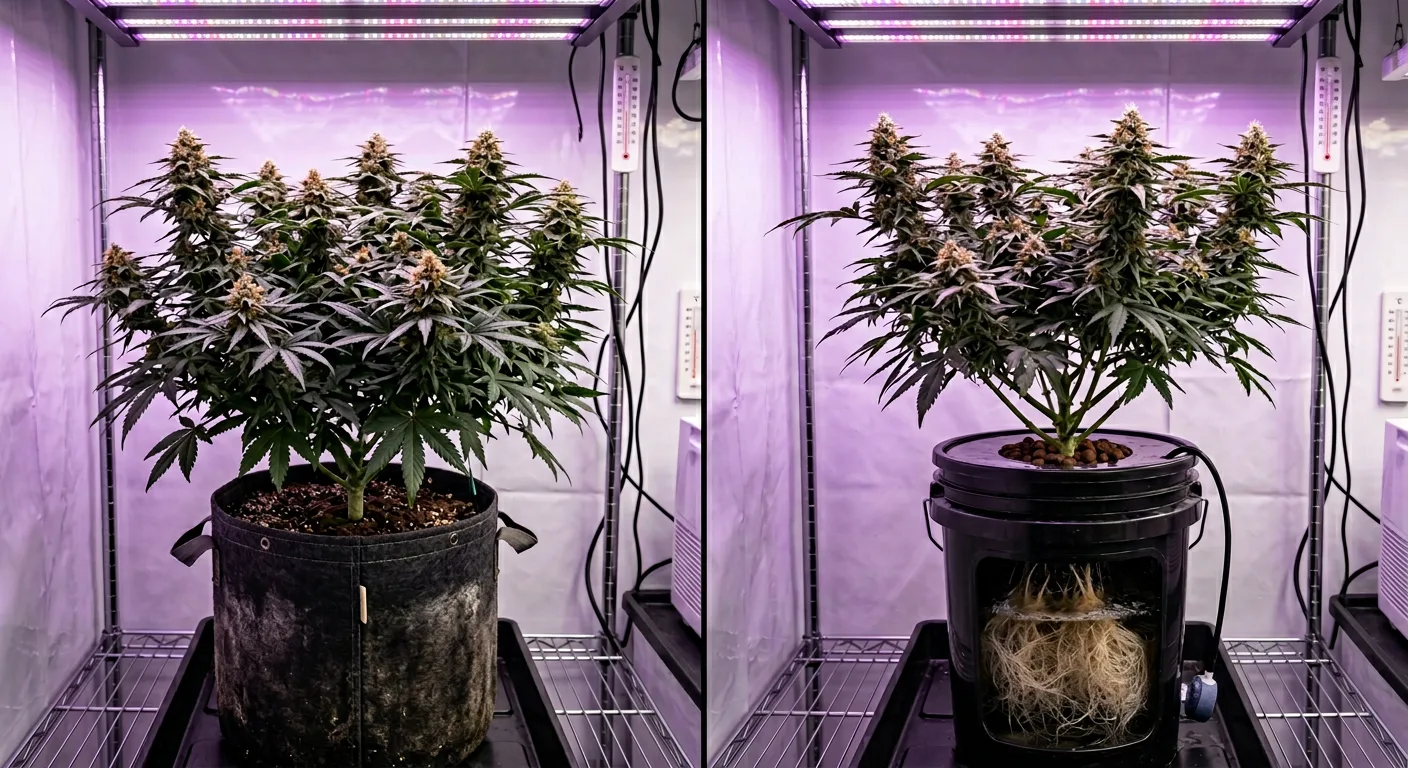
Soil acts as a nutrient buffer that forgives mistakes and releases elements slowly, while hydroponic systems deliver nutrients directly to roots with zero buffer — demanding precise pH and EC management every single day. Your growing medium fundamentally changes how you approach feeding.
Soil-Specific Nutrient Considerations
- pH target: 6.0–6.8 (widest availability window for soil-bound nutrients)
- Feeding frequency: Every other watering in most cases (feed → water → feed → water)
- Runoff testing: Check EC every 1–2 weeks; flush if runoff exceeds 2× input EC
- Organic advantage: Living soil can recycle nutrients, reducing total input needed
- Common pitfall: Overwatering causes anaerobic root zones that mimic nutrient deficiencies
Hydroponic-Specific Nutrient Considerations
- pH target: 5.5–6.0 (some growers fluctuate deliberately between 5.5 and 6.2 to access different nutrient availability windows)
- Feeding frequency: Continuous — nutrients are always in the solution
- Reservoir management: Replace every 7–10 days; top off with half-strength solution between changes
- Water quality matters: Start with RO water (0–50 PPM base) and build your solution from scratch for maximum control
- Common pitfall: pH drift — hydro solutions shift pH rapidly; check twice daily in recirculating systems
For growers running ebb and flow or deep water culture systems, nutrient concentration monitoring is non-negotiable. A study from the University of Guelph (Bevan et al., 2021) ran their cannabis flowering-stage trials in deep water culture and found that inflorescence yield correlated with root dry weight at r = 0.90 — underscoring that healthy root environments in hydro directly translate to heavier harvests.
Core Insight: In hydro, your nutrient solution is the soil. Every variable — pH, EC, dissolved oxygen, temperature (keep it 65–72°F / 18–22°C) — must be actively managed. In soil, nature does much of this work for you. Choose your medium based on how much control you want and how much time you can dedicate to monitoring. Check our complete indoor growing guide for full setup recommendations.
Coco Coir: The Middle Ground
Coco coir behaves like a hybrid — it is technically hydroponic (inert medium with no inherent nutrients) but retains moisture like soil. The critical difference: coco naturally binds calcium and releases sodium and potassium, meaning you must always supplement with cal-mag and treat it more like a hydro system for pH/EC management. Our complete coco growing guide covers this in depth.
Putting It All Together: Your Nutrient Mastery Checklist
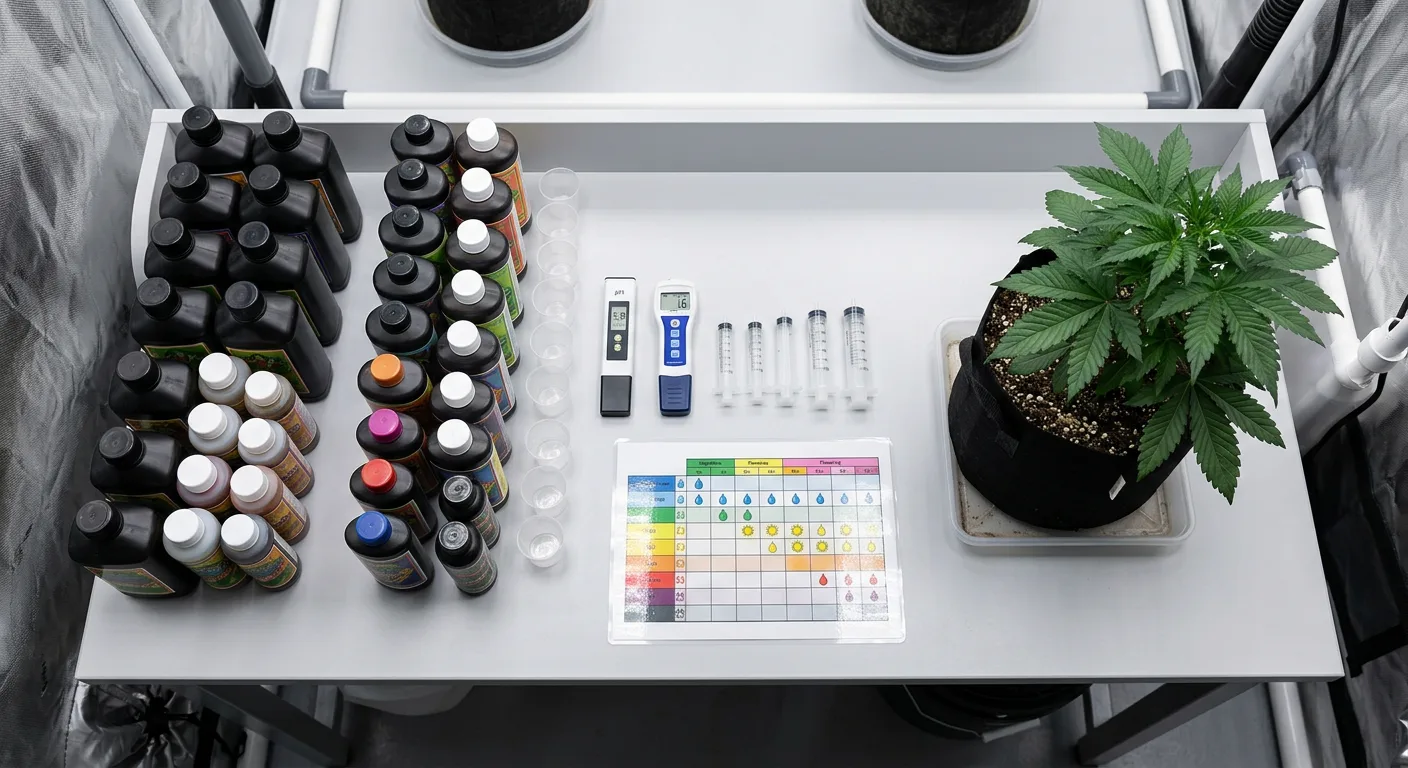
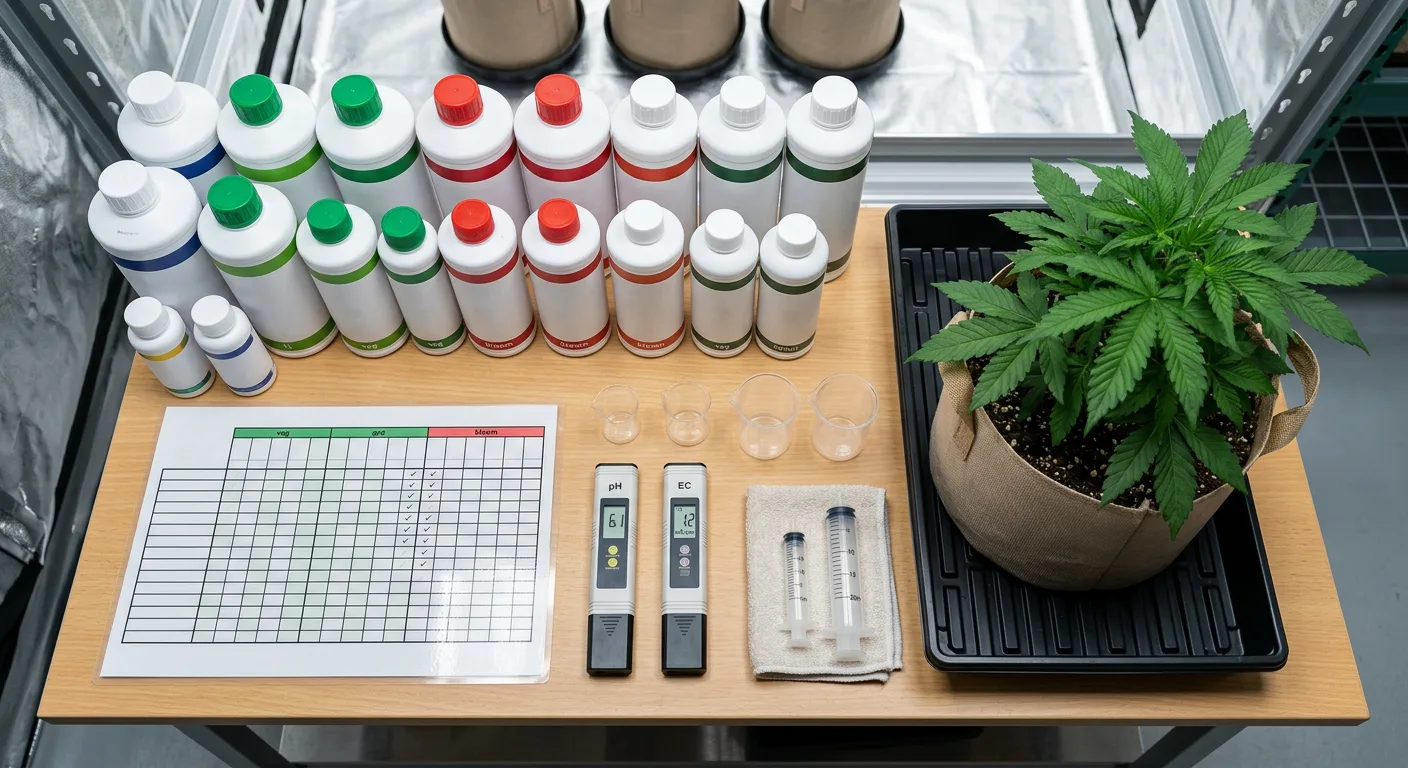
This checklist consolidates every principle from this guide into a practical, actionable reference you can keep beside your grow — covering the full lifecycle from seedling to harvest.
- Calibrate pH and EC meters before every grow cycle
- Start seedlings on plain water for 5–7 days (seed cotyledons provide initial nutrition)
- Begin feeding at 25% strength and increase 25% per week through veg
- Maintain veg NPK ratio around 3-1-2 (high nitrogen)
- Switch to bloom NPK ratio (1-3-2) when flipping to 12/12 light
- Monitor pH at every feeding (soil: 6.0–6.5; hydro: 5.5–6.0)
- Check runoff EC weekly — flush if runoff exceeds input by 500+ PPM
- Add cal-mag for coco coir, RO water, or any signs of interveinal yellowing
- Watch leaf tips for early nutrient burn — reduce dose at first sign of browning
- Taper nitrogen in late flower to prevent harsh-tasting, leafy buds
- Flush or taper for 7–14 days before harvest
- Use the nutrient calculator to convert between PPM, EC, and product dosing
- Keep a grow journal — log every feeding, pH reading, and plant observation
- Choose healthy genetics from the start — even perfect nutrition cannot compensate for weak genetics (explore strains like White Widow at 25% THC or Northern Lights x Big Bud at 20% THC for heavy-feeding, high-yield genetics backed by our germination guarantee)
Track your environmental conditions alongside nutrition using our VPD calculator — nutrient uptake efficiency is directly tied to temperature and humidity. A plant at optimal VPD transpires efficiently, pulling nutrients through the xylem at maximum rate. Dial in both nutrition and environment together, and your results will be greater than the sum of their parts.
Once you harvest, proper drying and timing your harvest for peak potency preserves every milligram of quality your nutrient program built. Nutrition does not end at chop — it sets the ceiling that post-harvest practices aim to maintain.
Cannabis Nutrients FAQ
What is the best NPK ratio for cannabis during the vegetative stage?
During the vegetative stage, cannabis thrives with a higher-nitrogen NPK ratio such as 3-1-2. Research from McGill University (2024) found optimal nutrient solution concentrations of 180–220 mg/L nitrogen, 60–90 mg/L phosphorus, and 100–150 mg/L potassium for maximum vegetative growth in hydroponic systems. In soil, look for products labeled around 6-2-4 or 10-5-7, which provide similar proportions.
How do I know if my cannabis plant has a nutrient deficiency?
Nutrient deficiencies show specific visual signs based on nutrient mobility. Nitrogen deficiency causes uniform yellowing of lower leaves that progresses upward. Phosphorus deficiency produces dark green or purple-tinged leaves with brown spots. Potassium deficiency creates brown, crispy leaf edges. Deficiencies in mobile nutrients (N, P, K, Mg) appear on older leaves first, while immobile nutrient deficiencies (Ca, Fe, Mn, Zn) show on new growth. Always check pH first — most apparent deficiencies are actually pH-induced lockout. Use our free plant diagnosis tool for visual identification help.
What is the difference between organic and synthetic cannabis nutrients?
Organic nutrients (worm castings, bone meal, kelp) feed the soil microbiome, which then makes nutrients plant-available through microbial breakdown. They release slowly over days to weeks, reducing burn risk but offering less precise PPM control. Synthetic nutrients are immediately plant-available dissolved mineral salts, allowing exact concentration targeting — ideal for hydroponics. However, they can cause salt buildup and nutrient burn if over-applied, and may reduce beneficial soil microbial populations over time.
How often should I feed cannabis nutrients?
In soil, most growers use a feed-water-feed pattern (every other watering) during vegetative growth. During peak flowering, you may increase to two feeds per three waterings. In hydroponics, nutrients are supplied continuously through the reservoir — change the reservoir every 7–10 days and top off with half-strength solution between changes. Always monitor runoff EC in soil/coco; if it exceeds your input by more than 200–500 PPM, flush with plain pH-adjusted water before resuming feeds.
Can you use the same nutrients for soil and hydroponic cannabis?
Generally, no. Hydroponic nutrients are formulated with immediately plant-available mineral salts and include all necessary micronutrients since there is no soil to supply them. Soil nutrients often contain organic compounds requiring microbial breakdown that would clog hydro systems and create anaerobic conditions leading to root rot. Some growers use hydro-grade nutrients in soil successfully (they work but miss the benefits of organic amendments), but never use thick organic formulas in recirculating hydro systems.
Sources & References
This article was researched and fact-checked using 6 verified sources including 3 peer-reviewed studies, 1 authoritative reference, 2 industry sources.
- Frontiers | Mineral nutrition for Cannabis sativa in the vegetative stage using response surface analysis — frontiersin.org [Research]
- Optimisation of Nitrogen, Phosphorus, and Potassium for Soilless Production of Cannabis sativa in the Flowering Stage Using Response Surface Analysis - PMC — pmc.ncbi.nlm.nih.gov [Research]
- Mineral nutrition for Cannabis sativa in the vegetative stage using response surface analysis - PMC — pmc.ncbi.nlm.nih.gov [Research]
- Best nutrients & fertilizers for indoor and outdoor cannabis | Leafly — leafly.com [Reference]
- Which Nutrients Are Best For Growing Cannabis? | Grow Weed Easy — growweedeasy.com [Industry]
- Cannabis Nutrients: What Your Plants Need and When to Feed Them – Hey abby — heyabby.com [Industry]