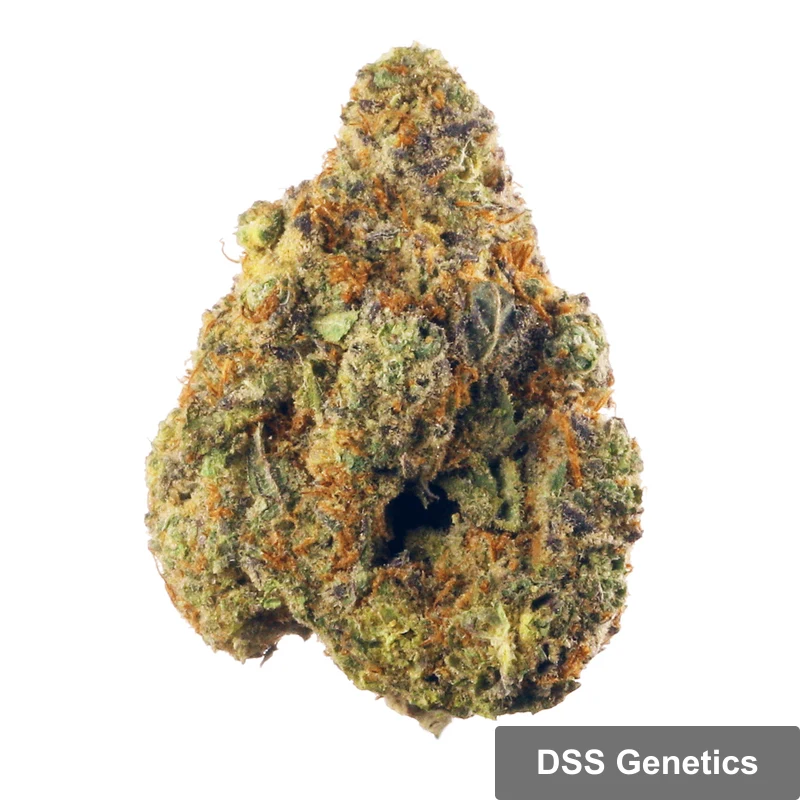
Every grower who has hand-watered a dozen pots on a sweltering afternoon eventually asks the same question: what if the system watered itself — on schedule, with perfect nutrient ratios, and zero guesswork? That is exactly the promise of ebb and flow cannabis cultivation. Also called flood and drain, this hydroponic method cyclically bathes root zones in nutrient solution and then pulls it away, delivering both food and oxygen in a rhythm that cannabis roots genuinely love.
If you have already explored our complete hydroponics guide or experimented with deep water culture, ebb and flow is the natural next step. It scales from a single-tent hobby setup to a full commercial rack system — and it remains one of the most searched hydro methods for cannabis growers in 2026. This guide covers every detail you need to build, dial in, and troubleshoot a high-performing flood and drain cannabis grow.
How Ebb and Flow Hydroponics Actually Works
An ebb and flow system periodically floods a grow tray with nutrient solution from a reservoir below, then drains it back by gravity — delivering nutrients, flushing stale air from the root zone, and pulling in fresh oxygen on each drain cycle.
The concept is elegantly simple. A submersible pump sits inside a reservoir filled with pH-adjusted, nutrient-rich water. A timer triggers the pump at set intervals. Solution travels up through a fill fitting into a shallow flood tray where your potted cannabis plants sit. As the solution rises, it saturates the inert growing medium and bathes the roots.
An overflow drain fitting — typically positioned about 10 cm (4 inches) above the tray floor, as detailed in CannaConnection's system breakdown — prevents the water from ever rising high enough to submerge stems. When the timer shuts the pump off, gravity pulls every drop of solution back through the fill fitting into the reservoir. The draining action sucks fresh oxygen down through the medium, supercharging root respiration.
Why it works so well for cannabis: The alternating wet-dry cycle mimics natural rain and drought patterns. Roots grow aggressively between floods to seek moisture, leading to larger root masses and faster nutrient uptake than static systems.
This flood-drain rhythm is what sets the method apart from continuous-flow systems like NFT or drip irrigation. Your roots are never permanently submerged (unlike DWC) and never left completely dry for long stretches (unlike hand-watering). That balance is the engine behind the impressive yields ebb and flow growers consistently report.
Complete Gear Checklist: Everything You Need to Build Your System
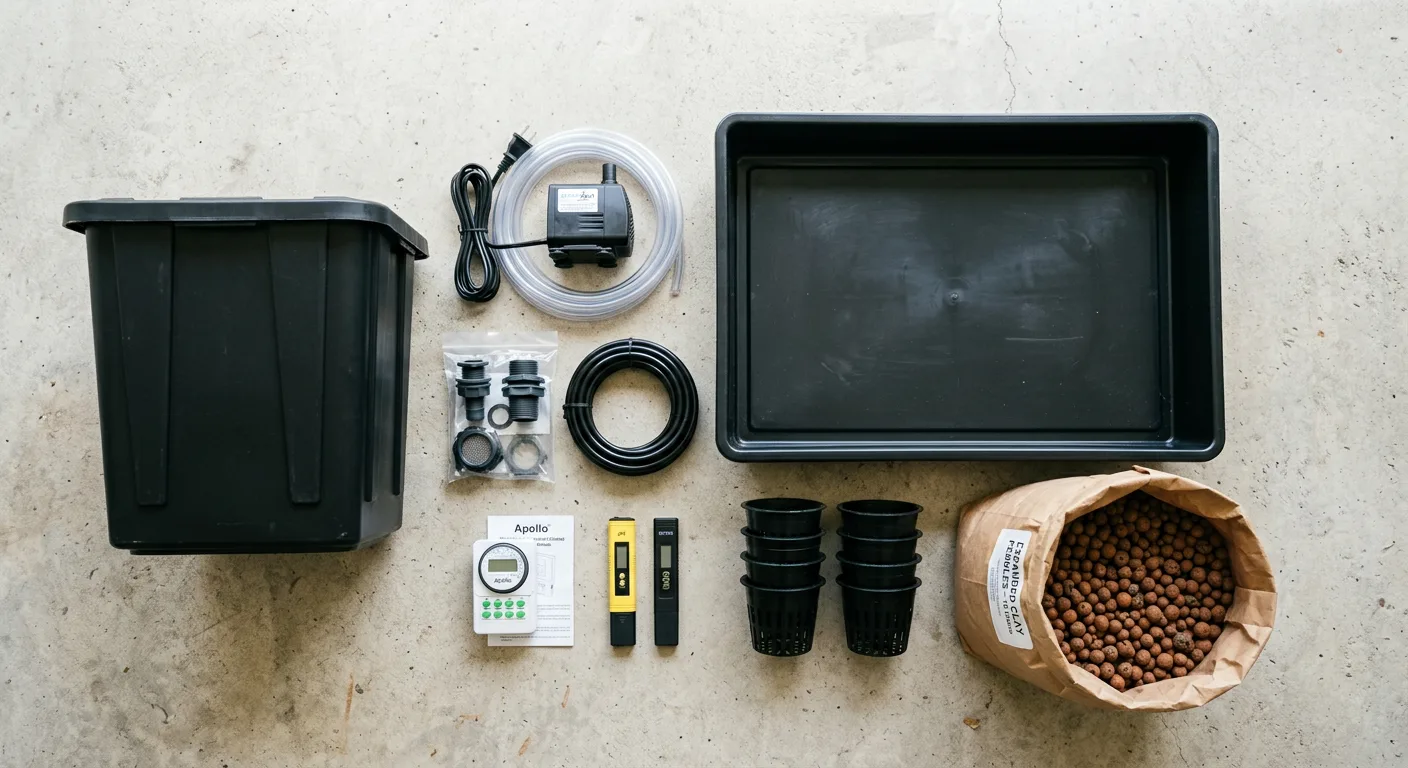
Building a reliable flood and drain cannabis system requires a reservoir, flood tray, submersible pump, cycle timer, fill and overflow fittings, tubing, net pots, inert grow medium, and basic water-testing instruments.
Before you drill a single hole, gather every component. Missing one fitting on build day means a postponed grow — or worse, a leak. Here is the complete shopping list:
- Flood tray (grow table) — 60 × 60 cm for small tents, 120 × 120 cm for full rooms
- Reservoir — opaque, food-safe, minimum 50 L capacity (bigger is more stable)
- Submersible pump — 400-600 GPH for a standard 4 × 4 tray
- Digital cycle timer — 1-minute increments (not a 15-minute lamp timer)
- Bulkhead fill fitting — ¾-inch with screen filter
- Bulkhead overflow fitting — ¾-inch, height-adjustable or fixed at 10 cm
- Vinyl tubing — ¾-inch inner diameter, enough to reach pump to tray and back
- Net pots — 6-inch or 8-inch diameter depending on final plant size
- Growing medium — expanded clay pebbles (hydroton), rockwool, or perlite blend
- pH meter and EC/TDS meter — digital, calibrated
- Hydroponic nutrient line — complete base + cal-mag
- Air pump and air stone — for reservoir oxygenation (optional but strongly recommended)
- Water chiller or frozen bottles — keep reservoir below 20 °C (68 °F)
- Backup timer — a second timer stored ready in case of failure
Pro tip: Always size your reservoir so that at least 20-25% of the nutrient solution remains after a full flood cycle. This buffer prevents the pump from running dry and ensures stable EC levels between refills, a guideline echoed by experienced hydro builders at HydroponicsExplained.
Use our grow cost calculator to estimate total investment based on your tent size and plant count before buying anything.
Step-by-Step: How to Set Up an Ebb and Flow System for Cannabis
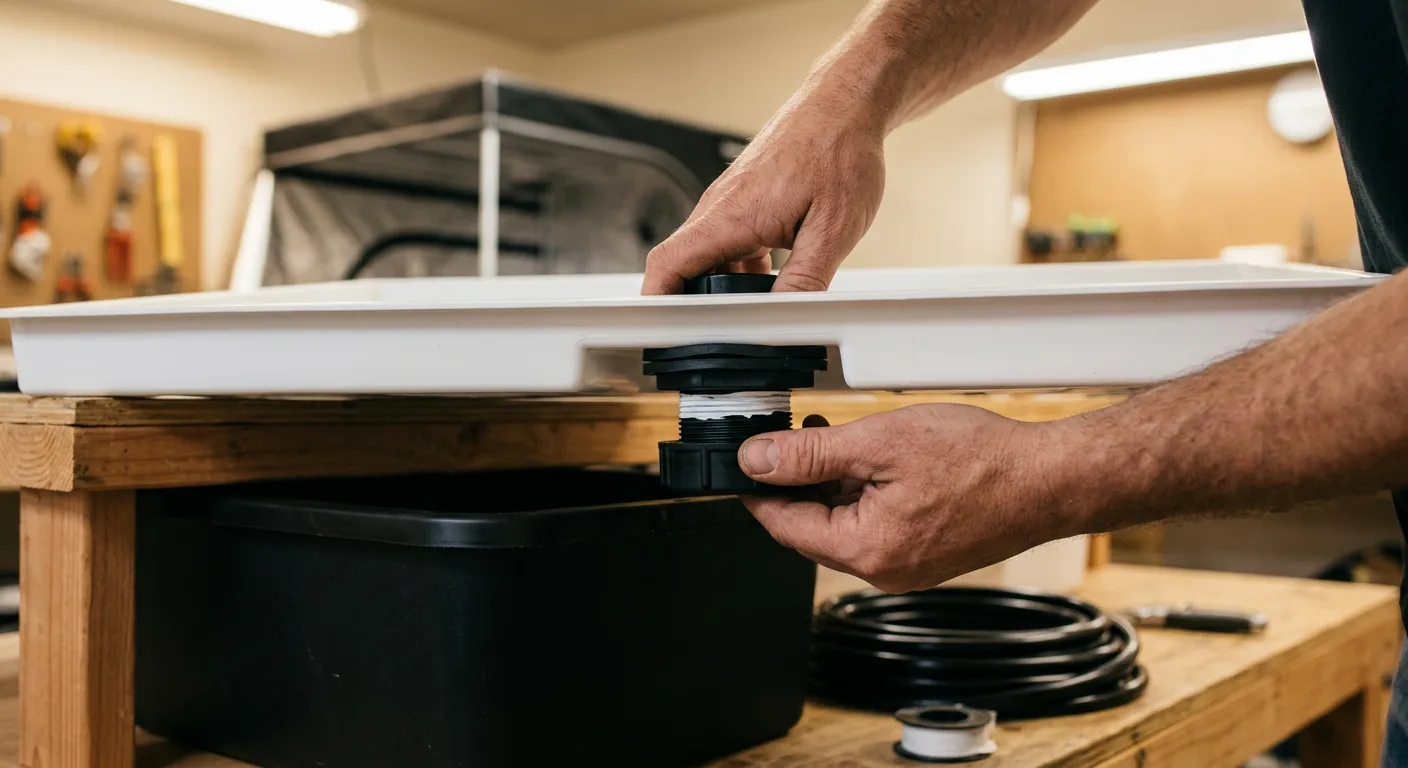
Setting up an ebb and flow system involves installing two bulkhead fittings in the flood tray, connecting tubing to a pump in the reservoir below, setting a cycle timer, and testing the flood height before adding any plants.
Follow these seven steps for a leak-free, functional build on day one:
Position the Reservoir and Stand
Place your reservoir on the floor or lowest shelf. The flood tray must sit above it so gravity can drain solution back. A sturdy shelf, cinder blocks, or a purpose-built metal frame all work. Verify the stand can support the combined weight of wet medium, plants, and solution — easily 50+ kg for a 4 × 4 tray.
Drill and Install Bulkhead Fittings
Mark two holes in the lowest section of your flood tray — one for the fill/drain fitting and one for the overflow. Use a hole saw matched to your bulkhead size. Apply plumber's tape and rubber gaskets on both sides. Tighten firmly but do not crack the plastic.
Set Overflow Height
The overflow fitting controls maximum water depth. For most cannabis grows, set it at 8-10 cm (3-4 inches). This floods the lower two-thirds of your net pots without reaching the stem. Adjust upward slightly for 8-inch pots, downward for 6-inch pots.
Connect Tubing and Pump
Run ¾-inch tubing from the submersible pump (sitting in the reservoir) up through the fill fitting. The overflow drain fitting gets a separate tube running back down into the reservoir. Secure with hose clamps — a loose connection during flood is the number-one cause of grow room floods.
Fill the Reservoir and Test
Fill your reservoir with plain pH-adjusted water (no nutrients yet). Plug the pump into your timer, set a 15-minute test cycle, and watch the tray flood. Confirm the overflow fitting catches the water before it reaches the tray lip. Check every connection for drips. Run three full flood-drain cycles before proceeding.
Add Medium and Pots
Rinse your clay pebbles or rockwool thoroughly to remove dust and stabilize pH. Fill net pots and place them in the tray. Run one more flood to verify even water distribution across all pot positions.
Mix Nutrients and Transplant
Mix your nutrient solution to the appropriate EC for your growth stage (see the feeding chart below). Calibrate your pH and EC meters. Transplant seedlings or clones into the net pots and start your flood schedule.
Critical safety note: Always place your reservoir on a waterproof tray or liner. Even well-built systems can develop slow leaks over a 10-week flower cycle. A containment tray turns a potential disaster into a minor cleanup.
Best Grow Medium for Ebb and Flow Cannabis
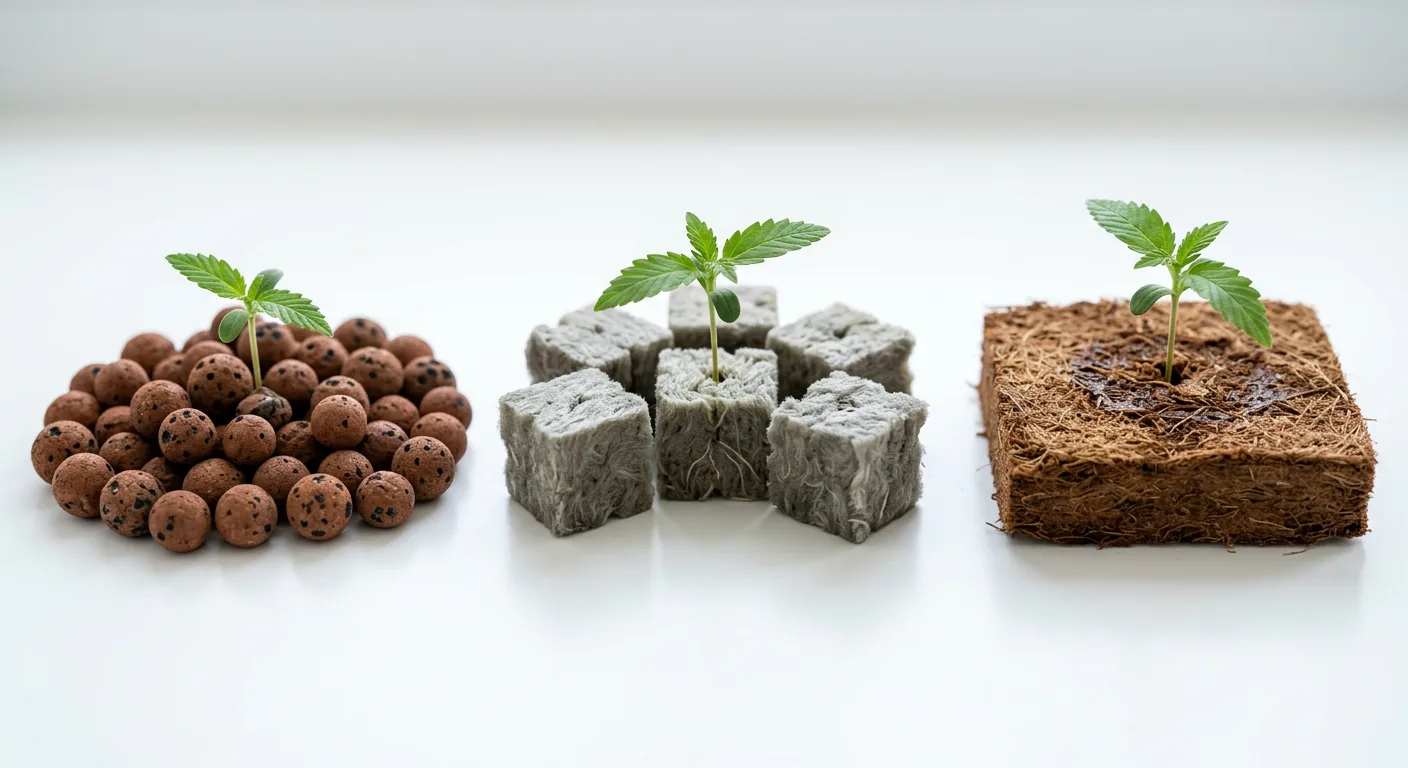
Expanded clay pebbles (hydroton) are the most widely recommended grow medium for ebb and flow cannabis because they drain rapidly, resist compaction, provide excellent aeration, and are endlessly reusable after sterilization.
Your medium choice directly affects flood frequency, root health, and how forgiving the system is when things go wrong. Here are the three proven options:
Expanded Clay Pebbles (Hydroton)
Lightweight, pH-neutral, and nearly indestructible. Clay pebbles drain within minutes of the pump shutting off, creating the oxygen-rich environment cannabis roots thrive in. They are the default recommendation from Royal Queen Seeds and virtually every commercial flood-and-drain operator we have studied.
- Pros: Reusable, excellent drainage, no decomposition, easy to inspect roots
- Cons: Low water retention — requires more frequent floods in hot environments
Rockwool Cubes and Slabs
Rockwool holds roughly 80% water and 20% air when saturated, making it a strong choice for growers who want longer intervals between floods. Many commercial cannabis operations pair rockwool slabs with flood tables for precisely this reason. However, rockwool's naturally high pH (around 7.5-8.0) requires pre-soaking in pH 5.5 water for 24 hours before use.
- Pros: High water retention, uniform structure, easy to clone into
- Cons: Not reusable, disposal concerns, requires pH pre-treatment
Hydroton-Perlite Blend (70/30)
For growers who want the drainage speed of clay pebbles with slightly better moisture retention, a 70/30 mix of hydroton and coarse perlite hits a sweet spot. This blend is especially useful in warm grow rooms where pure hydroton dries too fast between floods.
Grower's note: Coco coir — a favorite in hand-watered and drip systems — is generally not ideal for ebb and flow. Fine coco particles can clog fittings and build up in the reservoir. If you prefer coco, consider a dedicated coco coir drip system instead.
Flood Frequency by Growth Stage: Seedling, Veg, and Flower Schedules
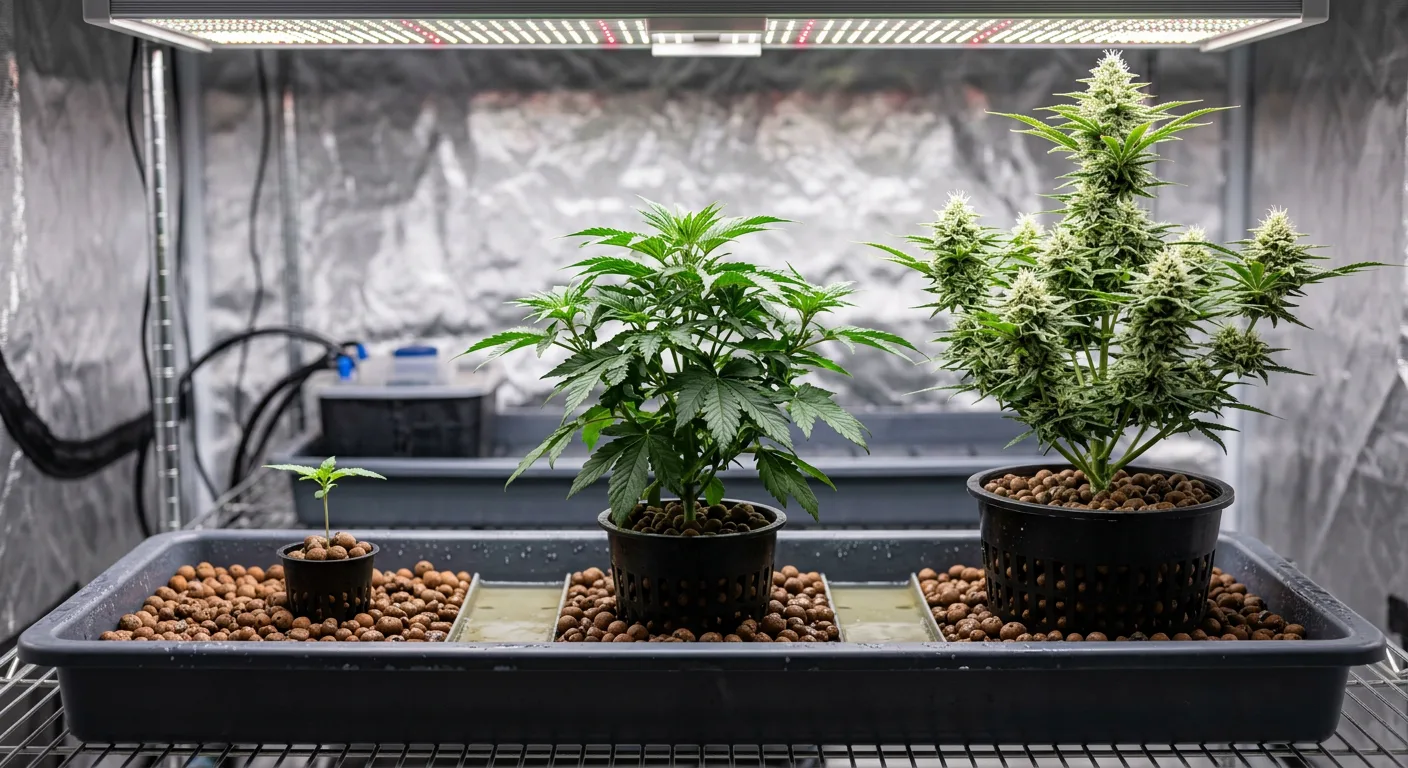
Cannabis seedlings need only 1-2 short floods per day, vegetative plants require 3-4 floods, and flowering plants perform best with 4-6 floods daily — each lasting 15-20 minutes to fully saturate the medium before draining.
Dialing in the right flood schedule is the single most important variable in ebb and flow cannabis growing. Flood too often and roots suffocate. Flood too rarely and nutrient uptake stalls. Use this stage-by-stage framework:
| Growth Stage | Floods per Day | Flood Duration | EC Target (mS/cm) | pH Target |
|---|---|---|---|---|
| Seedling (week 1-2) | 1-2 | 10-15 min | 0.4-0.6 | 5.8-6.0 |
| Early veg (week 3-4) | 2-3 | 15 min | 0.8-1.2 | 5.6-6.0 |
| Late veg (week 5-6) | 3-4 | 15-20 min | 1.2-1.6 | 5.6-6.0 |
| Early flower (week 1-3) | 4-5 | 15-20 min | 1.4-1.8 | 5.8-6.2 |
| Peak flower (week 4-7) | 4-6 | 15-20 min | 1.6-2.0 | 5.8-6.2 |
| Late flower / flush (week 8+) | 3-4 | 15 min | 0.0-0.4 | 5.8-6.0 |
Key rule: As CannaConnection's editorial team explains, "As your plants grow bigger, you simply increase the flood and drain intervals." Start conservative and add one flood per day only when the top inch of medium dries out within 3-4 hours of the last drain.
Timing Floods During Lights-On vs Lights-Off
Cannabis absorbs the majority of its water and nutrients during the light period when transpiration is highest. Schedule most flood cycles during lights-on hours. A single flood 30 minutes after lights-on and one 60 minutes before lights-off bookend the day. Space remaining floods evenly between those anchors.
During the dark period, one flood (or none) is sufficient. Over-flooding at night — when transpiration slows to a crawl — is a common contributor to root rot. If you notice standing moisture in the tray 45 minutes after the pump shuts off, skip the overnight cycle entirely.
Use our VPD calculator alongside your flood schedule. High VPD (dry air) means plants drink faster and may need an extra flood. Low VPD means they drink slower — reduce floods to avoid waterlogging.
EC, pH, and Nutrient Management for Flood and Drain Cannabis
Ebb and flow systems perform best with pH between 5.5 and 6.2 and EC levels that gradually ramp from 0.4 mS/cm at seedling stage to a peak of 2.0 mS/cm during mid-flower, with a flush drop before harvest.
Nutrient management in flood and drain is slightly different from DWC or hand-watered grows because the solution recirculates. Every flood that returns to the reservoir carries back whatever the plants didn't absorb, plus dissolved salts leached from the medium. This means your reservoir chemistry drifts faster than in a drain-to-waste system.
Daily Monitoring Protocol
- Check pH twice daily — once before the first flood, once mid-day. Ebb and flow pH tends to rise between floods as roots exchange hydrogen ions. Correct back to 5.8 with phosphoric acid.
- Check EC daily — if EC rises overnight, plants are drinking more water than nutrients (dilute the reservoir). If EC drops, plants are feeding heavily (top up nutrients).
- Full reservoir change every 7-10 days — as recommended by multiple experienced growers, including the HydroponicsExplained community. This prevents toxic salt accumulation and nutrient ratio drift.
Our nutrient calculator can help you dial in the exact ratios for each growth phase based on your reservoir size and plant count.
Science note: Dissolved oxygen in the reservoir directly affects nutrient uptake. As Royal Queen Seeds' hydroponic research highlights, dissolved oxygen is "the key to thriving hydroponic weed plants." Adding an air stone to your reservoir keeps DO levels above 6 mg/L — the threshold below which root function begins to decline.
Preventing Salt Buildup in the Flood Tray
White crystalline deposits on your tray, pot rims, and medium surface are nutrient salts that accumulated during evaporation between floods. Left unchecked, these deposits raise localized EC around root crowns to damaging levels.
- Flush the tray with plain pH-adjusted water once per week
- Wipe tray surfaces during reservoir changes
- Rinse clay pebbles around pot rims if crust is visible
Common Failure Points and How to Prevent Them
The three most common ebb and flow failures are timer malfunctions that skip flood cycles, nutrient salt buildup in the tray and overflow fittings, and root rot caused by poor drainage or high reservoir temperatures.
Ebb and flow is forgiving — but it is not foolproof. Knowing where the system is most likely to fail lets you build in safeguards before problems become disasters.
Timer Malfunction
If your timer dies during a 12-hour dark period, your plants miss multiple feedings. In hot environments with fast-draining hydroton, roots can become critically dry in 8-10 hours. Solution: use a high-quality digital cycle timer with battery backup. Keep a spare timer on hand. Some growers run a smart plug with app notifications that alerts them if the timer goes offline.
Pump Failure
Submersible pumps can clog with root debris or mineral buildup. Inspect and clean the pump impeller every two weeks. Replace pumps every 12-18 months in continuous-use setups. A clogged pump during peak flower can cost you an entire harvest.
Root Rot Between Floods
Root rot (Pythium) thrives in warm, stagnant, low-oxygen conditions. In ebb and flow, the risk is highest when reservoir temperature exceeds 22 °C (72 °F) or when the medium retains too much moisture between cycles. For a deep dive on identification and treatment, see our root rot diagnosis and treatment guide.
- Keep reservoir temperature at 18-20 °C (64-68 °F)
- Add beneficial microbes (Hydroguard, Great White) at every reservoir change
- Run an air stone in the reservoir 24/7
- Ensure the tray drains completely — no standing water pockets
Overflow Fitting Blockage
If roots, medium particles, or debris block the overflow drain, water rises above the fitting and spills over the tray edge. This is the "flood disaster" scenario that, as GreenCamp notes, makes some indoor growers nervous about ebb and flow. Install a screen filter on the overflow, check it weekly, and always run your system inside a waterproof containment area.
Disaster prevention rule: Never leave your grow room unmonitored for the first 48 hours after any system change — new pump, new timer, new reservoir. Most catastrophic floods happen within the first cycle after maintenance.
Ebb and Flow vs DWC vs Aeroponics: Side-by-Side Comparison
Ebb and flow, DWC, and aeroponics all accelerate cannabis growth beyond soil, but they differ significantly in cost, complexity, failure tolerance, scalability, and yield ceiling — making each method best suited to different grower profiles.
If you have already read our DWC content and are evaluating alternatives, this comparison table gives you the full picture:
| Factor | Ebb and Flow | DWC (Deep Water Culture) | Aeroponics |
|---|---|---|---|
| Startup cost (4-plant setup) | $150-300 | $80-200 | $300-600+ |
| Difficulty level | Intermediate | Beginner-Intermediate | Advanced |
| Vegetative growth speed | Fast | Very fast | Fastest |
| Yield potential per plant | 4-8 oz (home), 3-4 oz (short veg commercial) | 4-10 oz | 4-10 oz |
| Scalability | Excellent — add trays | Moderate — one bucket per plant | Poor — complex plumbing |
| Failure tolerance | High — roots survive hours without flood | Medium — air pump failure is critical | Very low — mist failure kills roots in minutes |
| Maintenance frequency | Weekly reservoir change + tray wipe | Weekly reservoir change + pH daily | Constant monitoring of misters and pressure |
| Root oxygenation | Excellent (drain cycle pulls oxygen) | Good (requires air stones) | Excellent (roots hang in air) |
| Best for | Multi-plant grows, SOG, commercial racks | Single-plant focus, monster crops | Research, maximum growth speed |
As High Times documented in their profile of BUDS, a Washington State commercial operation, their ebb and flow rack system produces an average of 3-4 ounces of finished product per plant with only a 7-8 day vegetative period — using 10 plants per light in a compact cage design. That level of throughput is difficult to replicate with individual DWC buckets at scale.
Bottom line: Choose DWC if you want maximum yield from a small number of plants. Choose ebb and flow if you want to scale to 10-20+ plants efficiently. Choose aeroponics only if you are an experienced hydro grower willing to monitor systems daily.
Best Cannabis Strains for Ebb and Flow Hydro in 2026
The best strains for ebb and flow hydroponics are compact, fast-flowering genetics with strong root systems and proven hydro performance — including Northern Lights, White Widow, OG Kush, Gorilla Glue, and Gelato.
Flood and drain systems reward strains that stay compact (to fit flood table spacing), develop robust root systems quickly (to anchor in loose clay pebbles), and finish flowering within 8-10 weeks. Here are our top picks across categories:
Proven Hydro Performers
- Northern Lights — The classic hydro strain. Short, bushy, incredibly resilient to pH swings. Finishes in 7-8 weeks of flower. Our Northern Lights x Big Bud Feminized cross (20% THC) adds yield bulk to the original's hydro-friendliness.
- White Widow — Proven in flood and drain since the 1990s Dutch grow scene. Vigorous root growth and strong structure. Available in our catalog as White Widow Feminized Seeds at 25% THC.
- Gorilla Glue #4 — Heavy feeder that thrives in the nutrient-rich flood cycles of ebb and flow. Produces dense, resinous buds at 25-28% THC. Plan for plant support stakes — the colas get heavy.
- Gelato — Compact structure is perfectly suited to flood table spacing. Exceptional terpene production in hydro. 20-25% THC with a 8-9 week flower time.
High-Yield Commercial Choices
- OG Kush Feminized (26% THC) — BUDS, the Washington commercial operation profiled in High Times, uses OG Kush genetics in their flood-and-drain rack system. Strong lateral branching fills trays efficiently.
- Wedding Cake — Fast-finishing indica-dominant hybrid with excellent hydro yields. 24-28% THC. Responds exceptionally well to the consistent feeding rhythm of ebb and flow.
- Super Lemon Haze Feminized (23% THC) — Sativa-dominant but manageable in hydro with early training. The flood schedule keeps this hungry plant consistently fed.
Beginner-Friendly Picks for First Ebb and Flow Grows
- Super Skunk Feminized (20% THC) — Extremely forgiving of beginner pH and EC errors. Short stature, fast flower, heavy yield.
- Blue Dream — Vigorous hybrid that handles varying flood frequencies without stress. 18-21% THC. Great first hydro strain.
- Zkittlez — Compact indica-dominant growth pattern ideal for flood tables. Forgiving of temperature fluctuations. 20-23% THC.
For a broader selection of genetics suited to hydro, check out our Northern Lights x Amnesia Haze Feminized (24% THC) — a vigorous hybrid that leverages ebb and flow's nutrient delivery to fuel its sativa-side stretch. All seeds ship with our germination guarantee.
Maximizing Yield: Advanced Ebb and Flow Techniques
Advanced growers can push ebb and flow cannabis yields 30-50% above baseline by combining flood table systems with ScrOG training, Sea of Green (SOG) plant counts, CO2 supplementation, and precise VPD management.
Once your basic system is dialed in and you have a successful harvest under your belt, these advanced strategies unlock the method's full potential:
ScrOG on a Flood Table
A Screen of Green net stretched 20 cm above the flood tray creates a flat, even canopy that maximizes light penetration. This pairing is particularly effective because ebb and flow's automated feeding eliminates the need to reach under the screen to hand-water pots. Set up the screen during late veg and tuck branches for 1-2 weeks before flipping to flower. See our full ScrOG growing guide for technique details.
Sea of Green (SOG)
SOG packs many small plants — typically 1-4 per square foot — into a flood table with minimal vegetative time. BUDS's commercial operation, as documented by High Times, uses precisely this approach: 10 plants per light with only 7-8 days of veg, yielding 3-4 ounces per plant. The flood table's uniform feeding makes SOG especially consistent because every plant receives identical nutrition at the same time.
CO2 Enrichment
Cannabis in enriched CO2 environments (1,200-1,500 ppm) transpires faster and feeds more aggressively. If you add CO2 supplementation, increase your flood frequency by 1-2 additional cycles per day and bump peak-flower EC to 2.0-2.2 mS/cm. Our CO2 supplementation guide covers the full cost-benefit analysis.
Advanced grower's edge: Pair your flood schedule with real-time VPD monitoring. When VPD exceeds 1.2 kPa (high transpiration), add an extra flood cycle. When VPD drops below 0.8 kPa (low transpiration), remove one. This dynamic approach optimizes water uptake far better than a static timer schedule.
Reservoir Chilling and Oxygenation
Keeping nutrient solution at 18-20 °C (64-68 °F) increases dissolved oxygen capacity by 15-20% compared to a 24 °C reservoir. Combined with an air stone running 24/7, chilled reservoirs virtually eliminate root rot risk and allow more aggressive feeding schedules. The investment in a small aquarium chiller pays for itself in healthier root mass and reduced losses.
Yield Expectations: Ebb and Flow vs Soil
Across multiple grows and various genetics, well-maintained ebb and flow systems consistently produce 20-30% more yield than comparable soil grows. The automated nutrient delivery, superior root oxygenation, and faster vegetative growth combine to produce larger plants in less time. Home growers running a 4 × 4 flood table with four plants commonly report 4-8 ounces per plant — numbers that soil growers typically achieve only with supplemental CO2 and extended veg periods.
Use our yield estimator to project harvest weight based on your specific setup, light wattage, and strain selection.
Frequently Asked Questions About Ebb and Flow Cannabis
How often should I flood my ebb and flow system for cannabis?
Flood frequency depends on growth stage. Seedlings need 1-2 floods per day for 10-15 minutes. Vegetative plants need 3-4 floods daily. Flowering plants perform best with 4-6 floods per day, each lasting 15-20 minutes. Always let the tray drain completely between cycles. In hot environments or with fast-draining media like pure hydroton, you may need to add one extra cycle.
What is the best growing medium for ebb and flow cannabis?
Expanded clay pebbles (hydroton) are the gold standard — they drain fast, provide excellent root aeration, resist compaction, and can be sterilized and reused indefinitely. Rockwool is a strong alternative for growers who want longer moisture retention between floods. A 70/30 hydroton-to-perlite blend offers a practical middle ground for most setups.
Is ebb and flow better than DWC for growing cannabis?
Neither is universally better — they serve different needs. DWC often produces slightly faster vegetative growth because roots stay permanently submerged in oxygenated solution. Ebb and flow is easier to scale to 10-20+ plants, more forgiving of short-term equipment failures, and simpler to maintain. Yield per plant is comparable when both systems are properly dialed in.
When should I transplant seedlings into my ebb and flow system?
Wait until seedlings have developed 2-3 sets of true leaves before transplanting into the flood table. Start them in rockwool starter cubes or a separate propagation tray. Once transplanted, reduce flood frequency to 1-2 times per day and keep EC below 0.6 mS/cm to protect delicate roots from nutrient burn.
How much more yield does ebb and flow produce compared to soil?
Across comparable genetics and growing conditions, ebb and flow systems typically yield 20-30% more than soil. Commercial operators like BUDS in Washington State report 3-4 ounces per plant with only a 7-8 day vegetative period. Home growers with longer veg cycles regularly achieve 4-8 ounces per plant in a well-maintained flood table system.
Sources & References
This article was researched and fact-checked using 1 verified sources including 1 community resource.
- - YouTube — youtube.com [Community]