Beneath every thriving cannabis plant lies an invisible network that most growers never see — and it can extend the effective root surface area by up to 700%. Mycorrhizal fungi cannabis partnerships are among the oldest symbiotic relationships on Earth, dating back over 400 million years. Yet in the cannabis world, mycorrhizae get mentioned in passing on product labels and forum posts without the rigorous treatment this topic deserves.
We're going to change that. This guide covers the biology, the application methods, the products that actually work, the ones that don't, and the peer-reviewed science behind every claim. Whether you're building a living soil or hydroponic setup, you'll leave knowing exactly when mycorrhizae help, when they're a waste of money, and how to avoid the most common (and expensive) mistakes.
What Mycorrhizal Fungi Actually Do for Cannabis Roots
Mycorrhizal fungi form a physical connection with cannabis roots, extending microscopic threads called hyphae far beyond the root zone to mine nutrients and water the plant cannot reach alone. This symbiosis trades plant sugars for phosphorus, zinc, copper, and moisture — a deal that evolved long before cannabis existed.
The Hyphal Network: Your Plant's Second Root System
Cannabis roots, even in ideal conditions, can only access nutrients within a few millimeters of the root surface. Mycorrhizal hyphae are roughly 1/50th the diameter of the finest root hair, allowing them to penetrate soil pores that roots physically cannot enter. A single cubic centimeter of colonized soil can contain 10–20 meters of hyphal threads.
This network functions as an extension of the root system that specializes in three tasks:
- Phosphorus solubilization and transfer — Hyphae release organic acids that dissolve rock-bound phosphorus and transport it directly to root cells
- Water acquisition during drought stress — The extensive hyphal network accesses moisture in micropores unavailable to roots, buffering against dry periods between waterings
- Micronutrient delivery — Zinc, copper, and manganese absorption all increase with mycorrhizal colonization, reducing the likelihood of trace element deficiencies
Arbuscules: Where the Exchange Happens
The defining feature of endomycorrhizae is the arbuscule — a tree-shaped structure that forms inside root cortical cells. This is the exchange interface where phosphorus flows from fungus to plant, and sugars flow from plant to fungus. A 2022 study from Khon Kaen University published in Frontiers in Plant Science confirmed that cannabis plants inoculated with arbuscular mycorrhizal fungi (AMF) showed presence of hyphae, arbuscules, and vesicles — the hallmark structures of a functional symbiosis.
Key Takeaway: Mycorrhizal fungi don't just "help" roots — they fundamentally transform the architecture of nutrient acquisition. The hyphal network becomes a secondary root system that mines phosphorus, zinc, copper, and water from soil volumes the roots alone could never access.
What the Research Says About Cannabis Growth Enhancement
Research from Khon Kaen University and Wageningen University (2022) tested two AMF species — Rhizophagus prolifer and R. aggregatus — on Cannabis sativa. Plants inoculated with R. aggregatus achieved 21% root colonization and showed significantly higher biomass compared to unfertilized controls. The study also measured cannabinoid content, finding that mycorrhizal treatment influenced major cannabinoid concentrations at harvest (60 days).
A separate study from the Agricultural University of Athens examined Rhizophagus irregularis on cannabis seedlings, confirming successful colonization and measurable effects on seedling quality using Dickson's Quality Index. These are not anecdotal claims — they're replicated, peer-reviewed results with statistical validation.
Science Note: Both studies used ANOVA with Fisher's LSD at p ≤ 0.05, meaning the differences were statistically significant — not just random variation. This is the level of evidence that separates proven biology from marketing hype.
Endomycorrhizae vs Ectomycorrhizae: The Distinction That Saves You Money
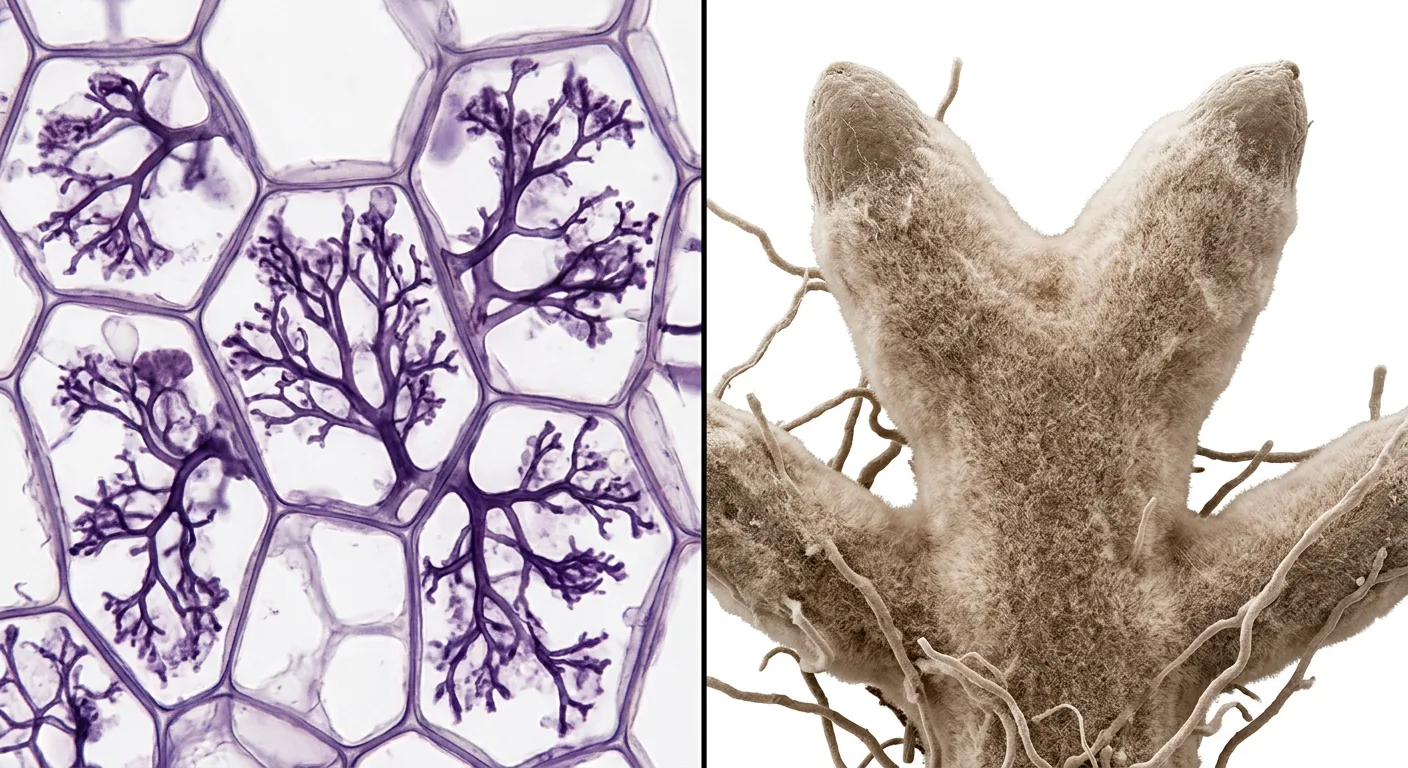
Cannabis exclusively forms associations with endomycorrhizal (arbuscular mycorrhizal) fungi — specifically species in the phylum Glomeromycota. Ectomycorrhizal fungi, which form sheaths around tree roots, cannot colonize cannabis. This distinction is the single most important piece of knowledge for avoiding worthless products.
How Endomycorrhizae (AM Fungi) Work
Arbuscular mycorrhizal fungi penetrate the root cortical cell wall and form arbuscules inside the cell. They do not create a visible sheath around the root. Key endomycorrhizal species relevant to cannabis include:
- Rhizophagus irregularis (formerly Glomus intraradices) — the most widely studied and commercially available AM species
- Rhizophagus aggregatus — showed 21% root colonization in the Khon Kaen University cannabis trial
- Rhizophagus prolifer — colonized cannabis at 13% in the same study
- Funneliformis mosseae (formerly Glomus mosseae) — common in multi-species inoculants
Why Ectomycorrhizae Are Irrelevant (and a Red Flag)
Ectomycorrhizal fungi form relationships with trees like pines, oaks, birches, and beeches. They create a dense fungal sheath called a Hartig net around the root exterior. Cannabis is an herbaceous annual that cannot form ectomycorrhizal associations — period.
If a product label lists species like Pisolithus tinctorius, Rhizopogon spp., Laccaria spp., or Scleroderma spp. as its primary ingredients, those spores will do absolutely nothing for your cannabis plants. Some products pad their species count with 10–15 ectomycorrhizal species to appear comprehensive while including only one or two endomycorrhizal species at low concentrations.
Warning: A product listing "18 species of mycorrhizae" sounds impressive but is often a red flag. If 14 of those species are ectomycorrhizal, you're paying for filler. Read the label — count only the Glomus, Rhizophagus, Funneliformis, and Claroideoglomus species. Those are the only ones that matter for cannabis.
| Feature | Endomycorrhizae (AM Fungi) | Ectomycorrhizae |
|---|---|---|
| Colonizes Cannabis? | Yes — confirmed by peer-reviewed research | No — cannot colonize herbaceous annuals |
| Where It Lives | Inside root cortical cells (arbuscules) | Outside root in a fungal sheath (Hartig net) |
| Host Plants | ~80% of plant species including cannabis, tomatoes, peppers | Trees: pines, oaks, birches, eucalyptus |
| Key Genera | Rhizophagus, Funneliformis, Glomus, Claroideoglomus | Pisolithus, Rhizopogon, Laccaria, Amanita |
| Visible to Naked Eye? | No (requires microscopy) | Sometimes — visible sheath on root tips |
| On Cannabis Product Labels? | Should be the primary or sole ingredient | Filler species — adds nothing for cannabis |
Step-by-Step: How to Inoculate Cannabis at Every Growth Stage
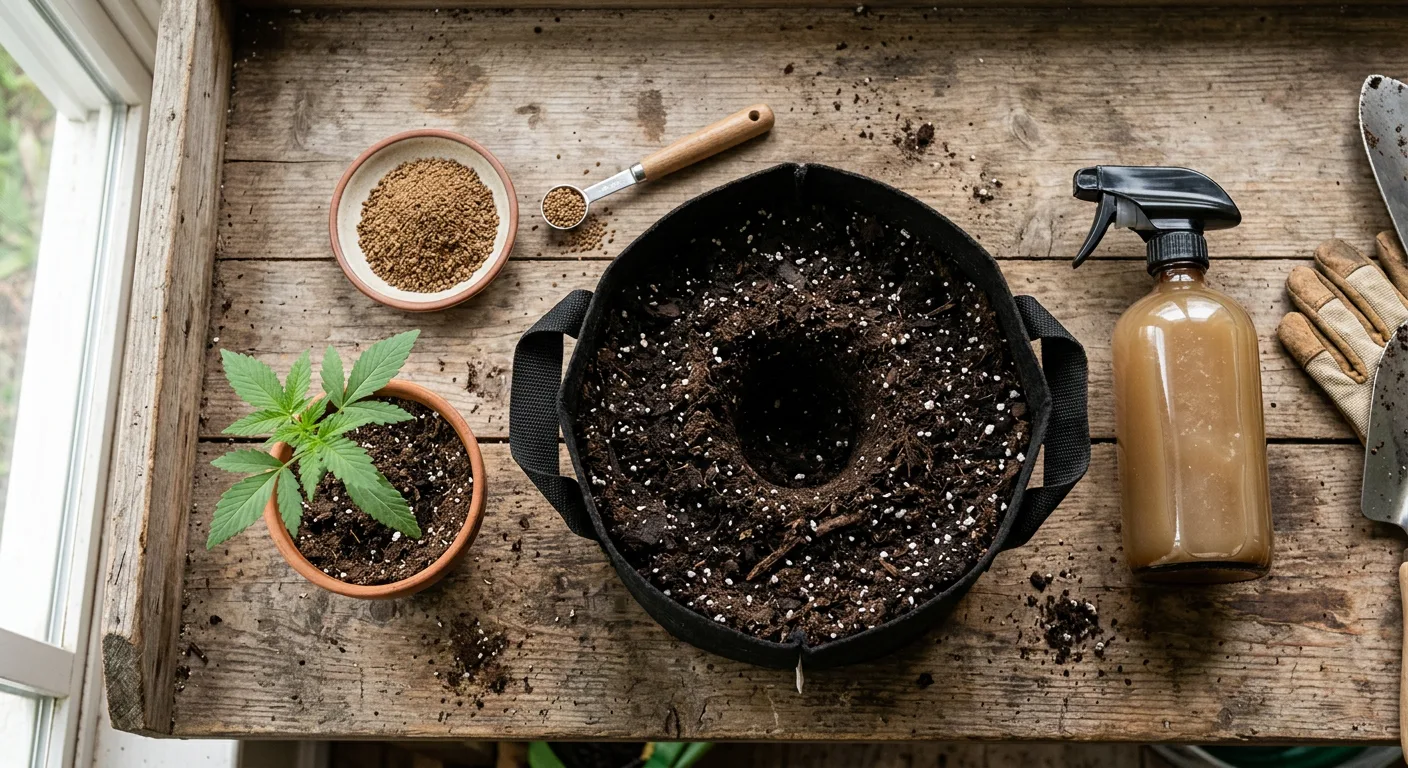
Successful mycorrhizal inoculation requires physical contact between viable spores and living roots. Broadcasting granules on the soil surface and hoping they migrate down to the root zone is the most common mistake — and the reason many growers conclude mycorrhizae "don't work." Here's how to do it right at each stage.
Method 1: Seed Inoculation (Before Germination)
Moisten the Seed Lightly
Mist your cannabis seed with plain water or roll it in a damp paper towel for 30 seconds. The goal is a thin moisture layer that helps powder adhere — not soaking.
Dust with Powdered Mycorrhizal Inoculant
Place a small amount (⅛ teaspoon) of powdered endomycorrhizal inoculant in a dish. Roll the moistened seed gently in the powder until coated. Use a fine-powder formulation, not granules.
Plant Directly into Moist Medium
Place the coated seed into your germination medium at the standard ½-inch depth. The spores will be positioned exactly where the emerging radicle first contacts substrate.
Growing Tip: Seed inoculation works best with strains you're direct-sowing into their final containers. If you plan to transplant, the transplant method below gives you a second (and more impactful) inoculation opportunity. Consider vigorous varieties like Northern Lights x Big Bud or White Widow that develop aggressive root systems quickly — giving mycorrhizae more root surface to colonize.
Method 2: Transplant Inoculation (Most Effective)
Dig the Transplant Hole
Prepare a hole in your final container or bed that's slightly larger than the root ball. For transplanting seedlings, this is typically 4–6 inches deep and wide.
Apply Granular Inoculant Directly to the Hole
Sprinkle 1–2 tablespoons of granular mycorrhizal inoculant into the bottom and sides of the hole. The goal is direct root-to-spore contact — not mixing throughout the entire pot volume.
Dust the Root Ball
Before placing the seedling, lightly dust the outer surface of the root ball with additional powdered inoculant. This ensures contact on all sides as roots grow outward.
Set the Plant and Water In
Place the seedling, backfill with soil, and water gently with plain, pH-adjusted water (6.2–6.8). Avoid using any fertilizer in this initial watering — especially phosphorus-heavy solutions.
Method 3: Root Drench (For Established Plants)
Mix a Soluble Mycorrhizal Inoculant
Use a water-soluble formulation (not granules) at the manufacturer's recommended rate — typically 1–2 teaspoons per gallon of dechlorinated water. Stir thoroughly.
Apply as a Soil Drench at the Base
Pour the solution slowly at the base of the plant, saturating the root zone. Apply during early vegetative growth for best results — colonization takes 2–4 weeks to establish.
Avoid Disturbance for 7–10 Days
Don't repot, drastically change watering schedules, or apply synthetic fertilizers for at least a week. The developing hyphal network is fragile during initial colonization.
Key Takeaway: Transplant inoculation is the single most effective method because it places the highest concentration of viable spores in direct contact with actively growing root tips. If you only inoculate once, do it at transplant.
What Kills Mycorrhizae in Cannabis Grows (and How to Avoid It)
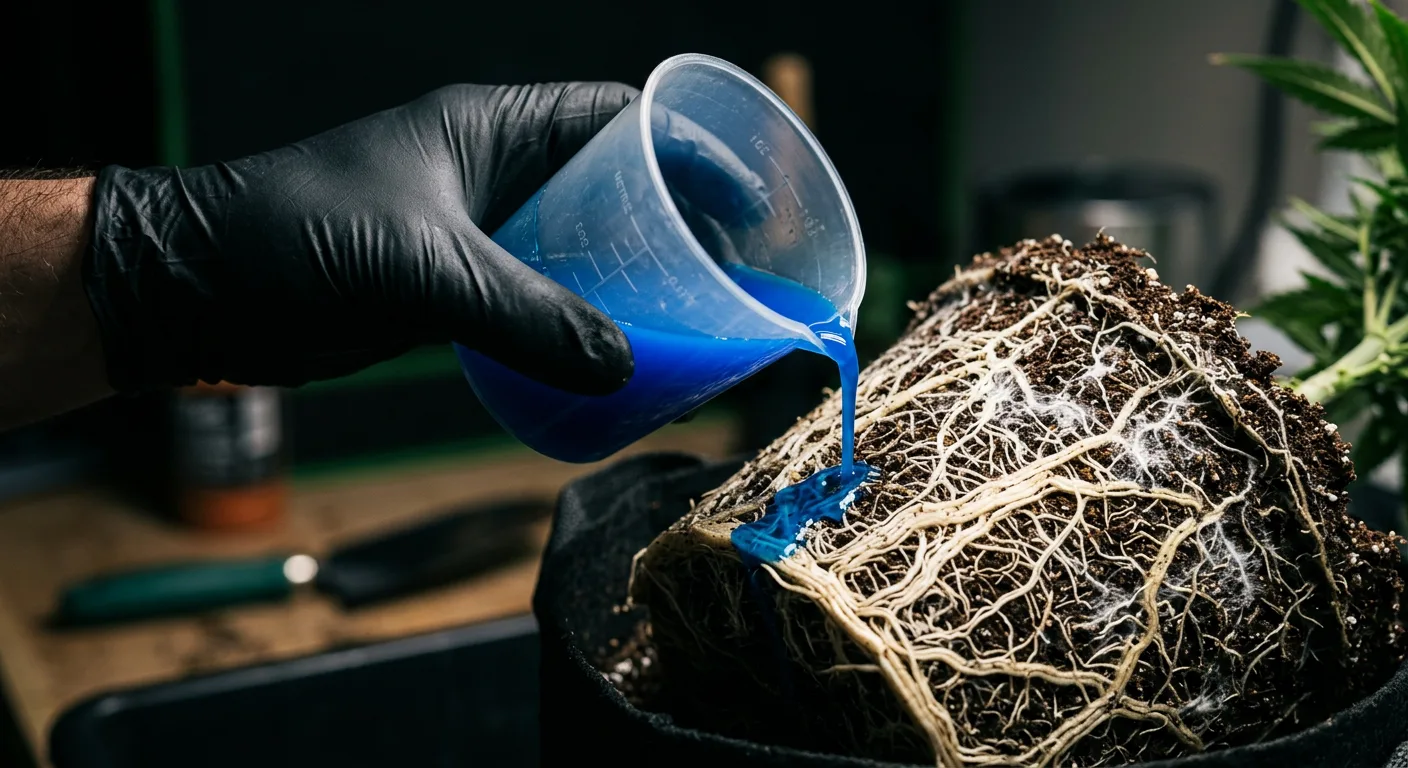
Even a perfect inoculation fails if your growing practices destroy the symbiosis after it forms. These are the five most common mycorrhizae killers in cannabis cultivation — and most growers are guilty of at least two.
High Phosphorus Fertilizer Inputs
This is the number-one killer. When soluble phosphorus floods the root zone, the plant no longer needs the fungal partnership. It reduces carbon allocation to the fungi, and colonization drops or never establishes. Bloom boosters with NPK ratios like 0-50-30 are the worst offenders. We cover the phosphorus paradox in detail below.
Synthetic Fungicides
Products containing captan, mancozeb, thiophanate-methyl, or other broad-spectrum fungicides don't distinguish between pathogenic fungi and beneficial mycorrhizae. If you're treating for mold or fungal disease, you're likely killing your mycorrhizal network simultaneously.
Hydrogen Peroxide Root Drenches
A common remedy for root rot in hydroponic systems, hydrogen peroxide (H₂O₂) is a non-selective oxidizer. It destroys all biological life in the root zone — including mycorrhizal hyphae and spores. If you use H₂O₂ regularly, mycorrhizal inoculation is a waste of money.
Excessive Tillage or Root Disturbance
The hyphal network is physically fragile. Repotting, aggressive root pruning, or tilling soil breaks the network and forces re-colonization from scratch. This is why no-till and living soil approaches produce the strongest mycorrhizal communities over time.
Chlorinated Water
Municipal tap water with chlorine or chloramine can suppress soil biology over time. While a single watering won't annihilate your mycorrhizae, chronic chlorinated irrigation degrades the fungal population. Let water sit 24 hours to off-gas chlorine, or use a carbon filter for chloramine.
- Avoid bloom boosters with P higher than 10 in the NPK ratio
- Never use broad-spectrum fungicides in mycorrhizae-inoculated soil
- Skip hydrogen peroxide drenches in living soil systems
- Minimize transplanting — choose final container size early
- Dechlorinate water before every irrigation
- Avoid tilling inoculated beds — top-dress amendments instead
Product Comparison: 4 Major Mycorrhizal Inoculants for Cannabis
Not all mycorrhizal products are equal. Spore viability, species selection, CFU counts, and carrier quality vary wildly. We analyzed the labels and grower feedback for the four most popular brands in cannabis cultivation as of 2026. The critical metric: endomycorrhizal propagule count per gram.
Caution: Many cheap mycorrhizal products — especially bulk bags sold on general marketplaces — contain dead spores. AMF spores lose viability when exposed to temperatures above 140°F (60°C), prolonged UV light, or improper storage. Always buy from reputable retailers, check manufacture dates, and store products in cool, dark conditions.
| Product | Key Endo Species | Propagules/g | Ecto Species Included? | Best Application | Price Range (2026) |
|---|---|---|---|---|---|
| Mykos (Xtreme Gardening) | Rhizophagus irregularis | 300 per gram | No — single species | Transplant granules | $15–25 / 1 lb |
| Great White Premium | R. irregularis + 8 other endo species | Varied (multi-species blend) | Yes — 7 ecto species | Powder — seed/transplant | $30–55 / 4 oz |
| Rootwise Mycrobe Complete | R. irregularis + 3 endo species | 200+ per gram | No | Granules or drench | $20–35 / 8 oz |
| Xtreme Gardening Azos + Mykos combo | R. irregularis + Azospirillum brasilense | 300 per gram (Mykos portion) | No | Transplant hole | $25–40 / combo pack |
Label Analysis: What to Look For
When evaluating any mycorrhizal product for cannabis, check for these three things on the label:
- Guaranteed endomycorrhizal propagule count — Minimum 100 propagules per gram. Below this, you need impractically large doses
- Species listed by current taxonomy — Rhizophagus irregularis (not the outdated Glomus intraradices) suggests the manufacturer stays current with mycological science
- Manufacture or expiration date — Spore viability degrades over time. Products older than 2 years should be treated as suspect
Growing Tip: Mykos by Xtreme Gardening is the workhorse choice for most cannabis growers — it's a single-species product (R. irregularis) with a high propagule count and zero ecto filler. If you want additional beneficial bacteria alongside mycorrhizae, pair it with a separate bacterial inoculant rather than relying on a jack-of-all-trades combo product.
Our Honest Take on Great White
Great White is one of the most recognized names in cannabis mycorrhizae. Its formula includes 9 endomycorrhizal species, 7 ectomycorrhizal species, beneficial bacteria, and trichoderma. The endo content is legitimate. However, those 7 ecto species are useless for cannabis and inflate the perceived value. It's a premium-priced product, and you're partially paying for ingredients your plants can't use.
That said, the trichoderma and bacterial components do provide root zone benefits beyond mycorrhizae. If you want a single all-in-one product and accept the price premium, Great White delivers — just understand that the "15 species of mycorrhizae" marketing includes ecto species that won't colonize your plants.
Does Mycorrhizae Work in Coco Coir or Hydroponics?
Mycorrhizal fungi require a stable, aerated substrate with moderate moisture and low-to-moderate soluble nutrient levels to establish colonization. In most hydroponic and coco coir systems running synthetic nutrients, meaningful mycorrhizal colonization does not occur. Here's why.
Why Hydro Systems Fail Mycorrhizae
Deep water culture (DWC), nutrient film technique (NFT), and aeroponics provide no substrate for hyphal attachment. The fungal network needs physical particles to grow through and anchor to. Roots suspended in solution or mist don't provide the soil-like matrix that AMF require.
Additionally, hydroponic nutrient solutions deliver phosphorus directly to roots in highly soluble forms (typically monopotassium phosphate), eliminating the plant's incentive to allocate carbon to a fungal partner. Even if spores germinate, the plant won't invest in the relationship.
The Coco Coir Gray Area
Coco coir provides physical structure, which gives it a theoretical advantage over pure hydro. Some coco coir growers report seeing white fungal growth on roots after inoculation. However, several factors work against successful colonization:
- High-frequency fertigation — Coco is typically watered 1–3 times daily with complete synthetic nutrients, flooding the root zone with soluble P
- Runoff-based feeding — The constant flush of nutrient solution through the substrate disrupts delicate hyphal networks
- Salt accumulation patterns — Coco's cation exchange properties can create localized salt concentrations hostile to fungal growth
Key Takeaway: If you grow in coco or hydro with synthetic nutrients, skip mycorrhizal products and invest that money in optimizing your nutrient solution and VPD environment instead. Mycorrhizae deliver their strongest ROI in soil, living soil, super soil, and organic no-till systems.
The Phosphorus Paradox: Why High-P Fertilizers Destroy Mycorrhizae
The relationship between phosphorus and mycorrhizal fungi is the most misunderstood dynamic in cannabis nutrition. High phosphorus doesn't just suppress mycorrhizae — it fundamentally eliminates the plant's reason for maintaining the symbiosis, causing the relationship to collapse from the plant side.
How the Feedback Loop Works
Mycorrhizal symbiosis is a cost-benefit calculation for the plant. The cannabis plant "pays" its fungal partner with 4–20% of its photosynthetically fixed carbon (sugars). In return, it receives phosphorus, water, and micronutrients that would otherwise be inaccessible.
When you drench the root zone with soluble phosphorus from synthetic fertilizers or heavy bloom booster applications, the plant can acquire all the P it needs without fungal help. The cost of maintaining mycorrhizae (carbon loss) exceeds the benefit (P that's already abundant). The plant reduces carbon allocation to the fungi, arbuscules degrade, and colonization percentages drop.
What Phosphorus Levels Are Safe?
Research across multiple crop species suggests that soil solution phosphorus above approximately 50 ppm begins to suppress mycorrhizal colonization. Many cannabis bloom fertilizers deliver P concentrations far above this threshold. The study from Khon Kaen University compared mycorrhizal treatments against synthetic NPK fertilizer, finding that while synthetic fertilizer produced growth, the mycorrhizal approach provided an alternative pathway with additional benefits to cannabinoid profiles.
Practical Solutions for Cannabis Growers
- Use rock phosphate instead of soluble phosphates — Slow-release forms keep soil solution P low while providing long-term supply, which actually incentivizes mycorrhizal activity
- Reduce bloom booster concentrations by 50% if growing in soil with active mycorrhizae — the fungi will supply a significant portion of P needs
- Monitor with a soil test — Use our nutrient calculator to calibrate inputs and avoid phosphorus overload
- Top-dress with worm castings — They provide slow-release nutrients that feed both plants and mycorrhizal fungi
Science Note: Research by Cockson et al. (2020) on phosphorus impacts in cannabis specifically found that phosphorus levels influence cannabinoid and terpene production. The interplay between P availability, mycorrhizal colonization, and secondary metabolite production is an active area of research — and a strong argument for moderate-P organic approaches over heavy synthetic bloom feeding.
Building a Complete Mycorrhizal Strategy for Living Soil Cannabis
Mycorrhizal inoculation is most powerful when integrated into a broader living soil ecosystem — not used as a standalone additive. The fungi thrive when supported by bacterial communities, organic matter cycling, and minimal chemical disruption. Here's how to build that system.
Start with the Soil Food Web Foundation
Before inoculating, ensure your soil biology is healthy enough to support mycorrhizal establishment:
- Quality compost — Provides diverse bacterial communities that support fungal establishment
- Worm castings (15–20% of soil mix) — Contain beneficial microbes, humic acids, and slow-release nutrients that feed the fungal network
- Aeration amendments — Pumice, perlite, or rice hulls at 25–30% ensure the oxygen-rich environment AM fungi require
- Cover crops — Between cycles, living roots from cover crops maintain the mycorrhizal network and prevent hyphal die-off
The No-Till Advantage
In a no-till system, the mycorrhizal network persists between grow cycles. Each successive plant connects to an existing, mature hyphal network — colonizing faster and receiving benefits sooner than a plant inoculated into sterile media. This is why experienced no-till growers report their 3rd, 4th, and 5th cycles in the same soil outperform the first.
If you're running a no-till bed, inoculate once during your initial planting and then protect the network by top-dressing rather than mixing amendments into the soil. Varieties with robust root systems, like OG Kush (26% THC) or Super Skunk (20% THC), establish extensive root networks that maximize the surface area available for mycorrhizal colonization.
Growing Tip: Between cannabis cycles in a no-till bed, plant a cover crop mix of crimson clover, daikon radish, and oats. These species all form endomycorrhizal associations, keeping the fungal network alive and expanding during the gap between cannabis runs. Cut the cover crop and leave it as mulch — never pull it and disturb the root zone.
Companion Inoculants That Enhance Mycorrhizae
Mycorrhizal fungi work synergistically with other soil organisms:
- Trichoderma harzianum — A 2021 study published in Microorganisms found that T. harzianum colonization influenced growth development and CBD content in hemp (Kakabouki et al., 2021)
- Bacillus subtilis and B. amyloliquefaciens — Mycorrhiza-helper bacteria that stimulate spore germination and hyphal growth
- Azospirillum brasilense — Nitrogen-fixing bacterium often paired with mycorrhizae in commercial products
Mycorrhizal Fungi Cannabis Checklist: Quick Reference
Use this checklist to ensure every element of your mycorrhizal strategy is dialed in. Print it, save it, refer to it at each transplant. Successful inoculation isn't complicated — but it requires attention to a few non-negotiable details.
- Confirmed product contains endomycorrhizal species (Rhizophagus, Funneliformis, Claroideoglomus)
- Product has manufacture date within 2 years and was stored in cool/dark conditions
- Propagule count is 100+ per gram (check guaranteed analysis on label)
- No ectomycorrhizal-only products purchased for cannabis use
- Inoculant applied directly to transplant hole or root ball — not surface-broadcast
- First watering after inoculation uses plain, dechlorinated water — no fertilizer
- Soil phosphorus maintained below 50 ppm in solution (use slow-release P sources)
- No synthetic fungicides applied to inoculated root zone
- No hydrogen peroxide drenches in living soil systems
- Growing medium is soil-based (not coco with synthetic fertigation or hydro)
- VPD and environment optimized for healthy root growth — use our VPD guide
- Cover crops planted between cycles (no-till systems) to maintain hyphal network
Timing Reference for Inoculation
| Growth Stage | Inoculation Method | Priority | Expected Colonization Timeline |
|---|---|---|---|
| Seed / Germination | Powder dust on seed | Optional (supplementary) | 2–3 weeks from radicle emergence |
| Transplant (seedling → veg pot) | Granules in transplant hole + root ball dust | Highest priority | 2–4 weeks |
| Early Vegetative (week 2–3 of veg) | Soluble root drench | Secondary (if transplant was missed) | 3–4 weeks |
| Late Vegetative / Pre-Flower | Root drench (last chance) | Low — limited time for colonization | May not fully establish before harvest |
| Flower | Not recommended | None — too late for meaningful benefit | N/A |
Strains That Pair Well with Living Soil Mycorrhizal Systems
While all cannabis varieties form mycorrhizal associations, strains with vigorous root development and longer vegetative periods give the fungi more time and surface area to colonize. In our experience growing in living soil, these perform exceptionally well:
- Wedding Cake — Dense root system, responds well to organic inputs, 24–26% THC potential
- Gorilla Glue #4 — Aggressive root colonizer, thrives in rich living soil, 25–28% THC
- Sour Diesel (24% THC) — Sativa-leaning stretch gives extended veg period for mycorrhizal establishment
- Northern Lights x Amnesia Haze (24% THC) — Vigorous hybrid root system, excellent in organic soil
- Gelato — Known for dense, compact root balls that maximize contact surface with inoculant
- Purple Kush (27% THC) — Strong indica root architecture, pairs well with worm casting-heavy mixes
For guaranteed germination on any of these varieties, check our germination guarantee — healthy seeds are the first step in a successful mycorrhizal partnership.
Frequently Asked Questions About Mycorrhizae and Cannabis
Do mycorrhizal fungi actually increase cannabis yield?
Yes. A 2022 study published in Frontiers in Plant Science by researchers at Khon Kaen University and Wageningen University found that cannabis plants inoculated with Rhizophagus aggregatus achieved significantly higher biomass than unfertilized controls, with 21% root colonization confirmed by microscopy. However, results depend critically on using viable endomycorrhizal spores, maintaining moderate phosphorus levels, and growing in soil-based media. The benefits are minimal to nonexistent in hydroponic or high-synthetic-input systems.
Can I use mycorrhizal fungi in coco coir or hydroponic cannabis grows?
Meaningful colonization with arbuscule formation rarely occurs in coco coir with synthetic fertigation or in hydroponic systems. The high frequency of nutrient solution delivery (often 1–3 times daily), the elevated soluble phosphorus concentrations, and the lack of stable substrate in hydro systems all prevent mycorrhizal networks from establishing. If you grow in coco or hydro, your budget is better spent on environmental optimization — use our VPD calculator and nutrient calculator instead.
Does high phosphorus fertilizer kill mycorrhizae?
High soluble phosphorus suppresses mycorrhizal colonization rather than directly killing spores. When the root zone contains abundant available P (above ~50 ppm in soil solution), the plant reduces carbon allocation to fungal partners because the cost of the symbiosis exceeds the benefit. Bloom boosters with high P-K ratios are the most common mycorrhizae suppressors. Switching to slow-release phosphorus sources like rock phosphate incentivizes the plant to maintain its fungal partners.
What is the best mycorrhizal product for cannabis in 2026?
Mykos by Xtreme Gardening is the most reliable single-species option, containing Rhizophagus irregularis at 300 propagules per gram with no ectomycorrhizal filler. Great White Premium is a strong multi-species option but includes 7 ectomycorrhizal species that don't benefit cannabis. The key criteria: endomycorrhizal species only, 100+ propagules per gram minimum, and a manufacture date within 2 years.
When is the best time to apply mycorrhizal inoculant to cannabis?
Transplant is the single most effective inoculation window. Place granular inoculant directly into the transplant hole and dust the root ball so spores contact actively growing root tips immediately. Secondary opportunities include seed dusting before germination and root drenches during early vegetative growth (weeks 2–3). Applying after mid-veg provides diminishing returns because colonization takes 2–4 weeks to establish, and flower-stage applications are generally too late.
Sources & References
This article was researched and fact-checked using 4 verified sources including 3 peer-reviewed studies, 1 authoritative reference.
- Frontiers | Enhancement of growth and Cannabinoids content of hemp (Cannabis sativa) using arbuscular mycorrhizal fungi — frontiersin.org [Research]
- Enhancement of growth and Cannabinoids content of hemp (Cannabis sativa) using arbuscular mycorrhizal fungi - PMC — pmc.ncbi.nlm.nih.gov [Research]
- Effect of Rhizophagus irregularis on Growth and Quality of Cannabis sativa Seedlings - PMC — pmc.ncbi.nlm.nih.gov [Research]
- Mycorrhizae 101: How Fungi and Plant Symbiosis Can Help a Cannabis Grow Thrive | Leafly — leafly.com [Reference]