A single poorly dosed gummy can ruin someone's entire evening — or their entire week of confidence with edibles. That's the real problem with most cannabis gummy recipes online: they hand you a list of ingredients and skip the math that actually matters. Learning how to make cannabis gummies at home isn't hard. Making them consistent, shelf-stable, and precisely dosed? That takes science, and that's exactly what this guide delivers.
Below, you'll find two complete recipes — a classic gelatin version and a vegan pectin alternative — along with a step-by-step THC dosing calculator, melt-prevention techniques, and strain recommendations tailored to the effect you want in every bite.
What Makes a Great Cannabis Gummy? The Science First
A great cannabis gummy delivers a predictable dose of THC (or CBD) in every single piece, holds its shape at room temperature, and tastes good enough that the cannabis flavor is a background note rather than the main event. Achieving all three requires understanding gelling agents, emulsification, and basic dosing math.
Most forum complaints about homemade weed gummies fall into three categories: uneven potency between gummies, melting at room temperature, and a harsh herbal taste. Every single one of these problems traces back to a specific technical mistake — not a bad recipe.
- Uneven potency → poor emulsification or inconsistent stirring
- Melting at room temp → too much liquid, too little gelling agent, or premature citric acid coating
- Bad taste → using oil-based infusion without proper flavoring ratios
- Sticky texture → excess moisture that wasn't cured out
- Mold growth → storing at room temp without preservatives
The difference between a gummy that hits at 4 mg and one that hits at 15 mg from the same batch isn't your recipe — it's your emulsification and stirring technique. Nail those two things and you'll have dispensary-level consistency.
Tincture vs Oil vs Cannabutter: Which Infusion Produces Even Dosing?
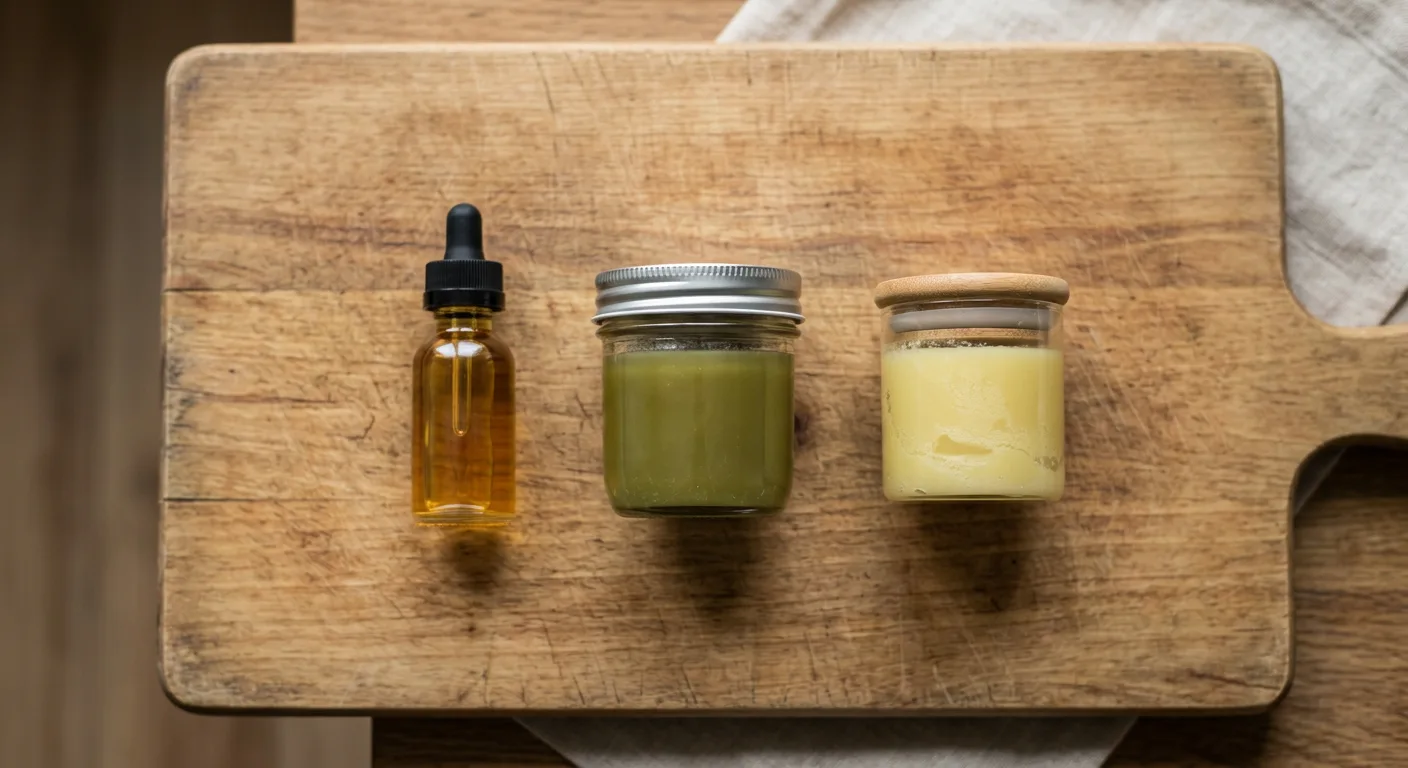
The infusion method you choose is the single biggest factor in whether your cannabis gummies have even THC distribution. Alcohol-based tincture outperforms oil and butter for gummies because it's partially water-miscible, meaning it blends into the water-based gummy mixture far more uniformly than a fat.
Why Tincture Wins for Gummies
An alcohol-based cannabis tincture disperses evenly throughout the heated liquid base because ethanol mixes with water. When the alcohol evaporates during heating, it leaves behind cannabinoids distributed throughout the mixture rather than floating in oil droplets. This produces the most consistent dose per gummy without any additional emulsification steps.
If you don't have a tincture ready, check out our cannabis-infused coffee guide for a primer on alcohol extraction methods that apply directly to gummy making.
When You Must Use Oil or Cannabutter
Cannabis-infused coconut oil and cannabutter are far more common in home kitchens, and they absolutely work — they just need help. The problem: oil and water don't mix. Without an emulsifier, your THC-rich fat floats to the top or pools into certain molds while others get almost nothing.
The lecithin fix: Add 1 teaspoon of liquid sunflower lecithin per batch. Lecithin is a natural emulsifier that binds fat molecules to water molecules, preventing separation. Stir it into your melted oil before adding it to the gummy base, then whisk continuously for 2 full minutes after combining.
| Infusion Type | Dosing Consistency | Emulsifier Needed? | Taste Impact | Best For |
|---|---|---|---|---|
| Alcohol tincture | Excellent (9/10) | No | Mild, evaporates off | Precise dosing, beginners |
| Cannabis coconut oil | Good with lecithin (7/10) | Yes — sunflower lecithin | Moderate cannabis flavor | Available ingredients |
| Cannabutter | Fair with lecithin (5/10) | Yes — sunflower lecithin | Strong, buttery + herbal | When it's all you have |
Science note: Lecithin contains phospholipids that have both hydrophilic (water-loving) and lipophilic (fat-loving) ends. This dual nature allows them to create stable bridges between oil-based cannabinoids and water-based gummy mixtures, preventing the phase separation that causes uneven dosing.
Gelatin vs Pectin: The Head-to-Head Comparison
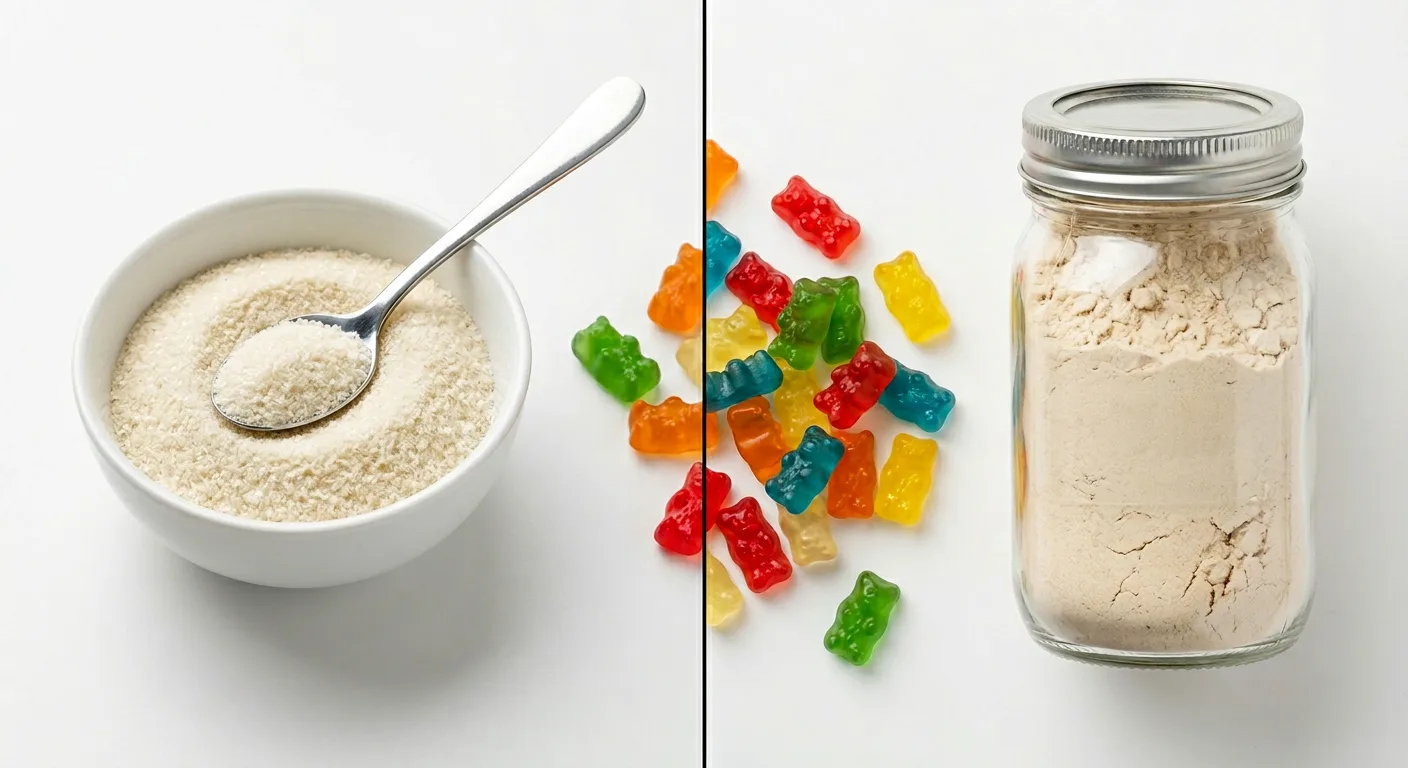
Gelatin and pectin are the two gelling agents used in virtually every cannabis gummy recipe. Gelatin is animal-derived (from collagen) and produces the classic chewy, bouncy gummy bear texture. Pectin is plant-derived (from fruit cell walls) and creates a softer, slightly crumbly bite like fruit snacks. Your choice depends on dietary needs, desired texture, and ease of use.
Gelatin: The Classic Choice
Unflavored gelatin powder (like Knox brand) is the industry standard for gummy candy. It sets at room temperature, is very forgiving of mistakes, and produces gummies that hold their shape well in moderate heat (up to about 90°F). Use 2 tablespoons of gelatin per 1/2 cup of liquid for firm gummies.
Pectin: The Vegan Alternative
Fruit pectin requires both sugar and acid (like citric acid or lemon juice) to gel properly. This makes the recipe slightly more finicky, but the result is a delicious vegan gummy with a natural fruit-forward flavor. Use a high-methoxyl (HM) pectin for traditional gummies, not low-methoxyl.
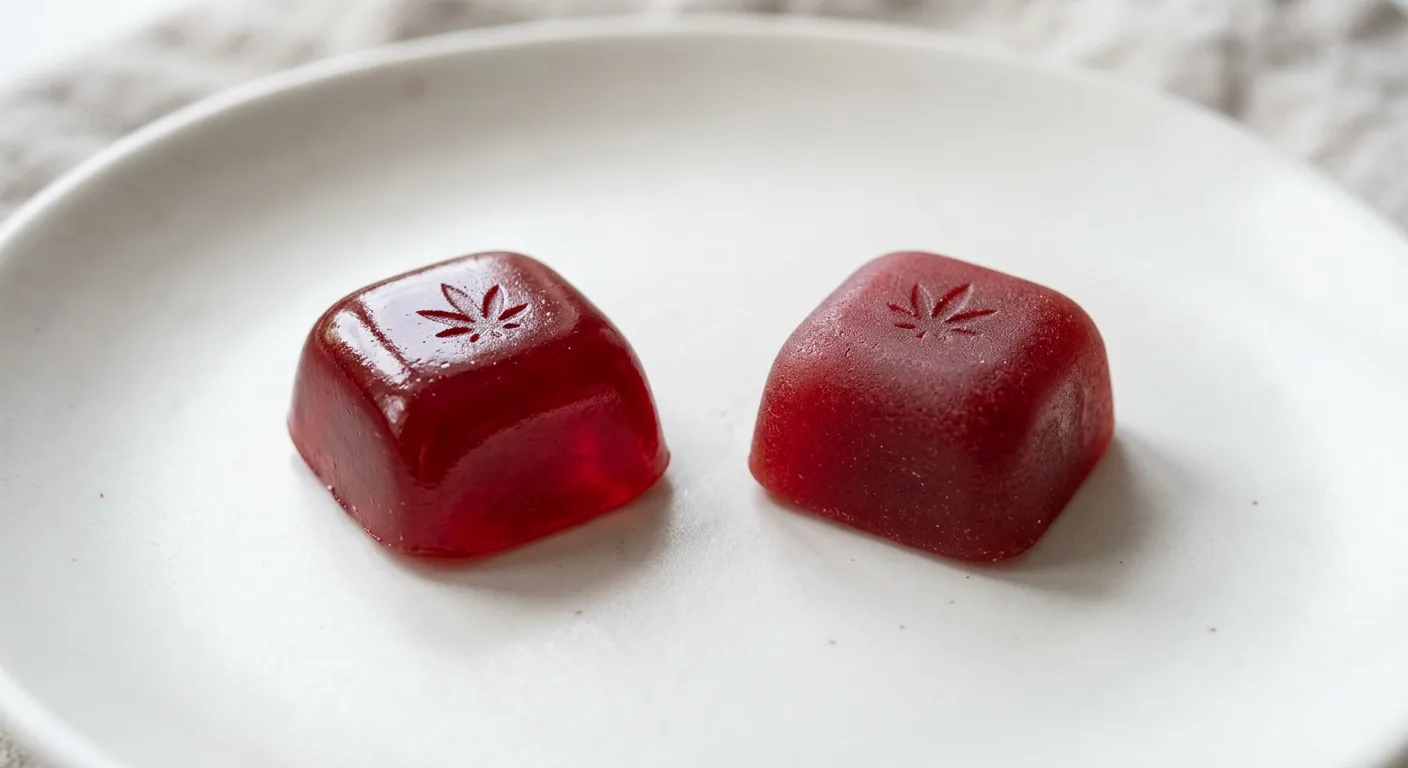
| Feature | Gelatin | Pectin |
|---|---|---|
| Source | Animal (bovine/porcine collagen) | Plant (apple/citrus fruit) |
| Vegan? | No | Yes |
| Texture | Chewy, bouncy, elastic | Soft, slightly crumbly, fruity |
| Setting temp | Room temp (sets below 59°F/15°C) | Requires refrigeration initially |
| Sugar required? | Optional (for flavor only) | Yes — needed for gel structure |
| Acid required? | Optional | Yes — citric acid or lemon juice |
| Melting point | ~90°F (32°C) | ~130°F (54°C) — more heat-stable |
| Beginner-friendly? | Very — hard to mess up | Moderate — requires precise sugar/acid ratios |
| Amount per 1/2 cup liquid | 2 tablespoons (14g) | 1 tablespoon (8g) + 1/4 cup sugar + acid |
| Set time | 2–4 hours in fridge | 4–6 hours in fridge |
| Shelf life (fridge) | 2–3 weeks | 3–4 weeks |
Verdict: Choose gelatin if you want classic gummy bear texture and the easiest process. Choose pectin if you need vegan gummies, want better heat stability, or prefer a fruit-snack bite. Both produce excellent cannabis gummies when the recipe is followed precisely.
Classic Gelatin Cannabis Gummies: Full Recipe
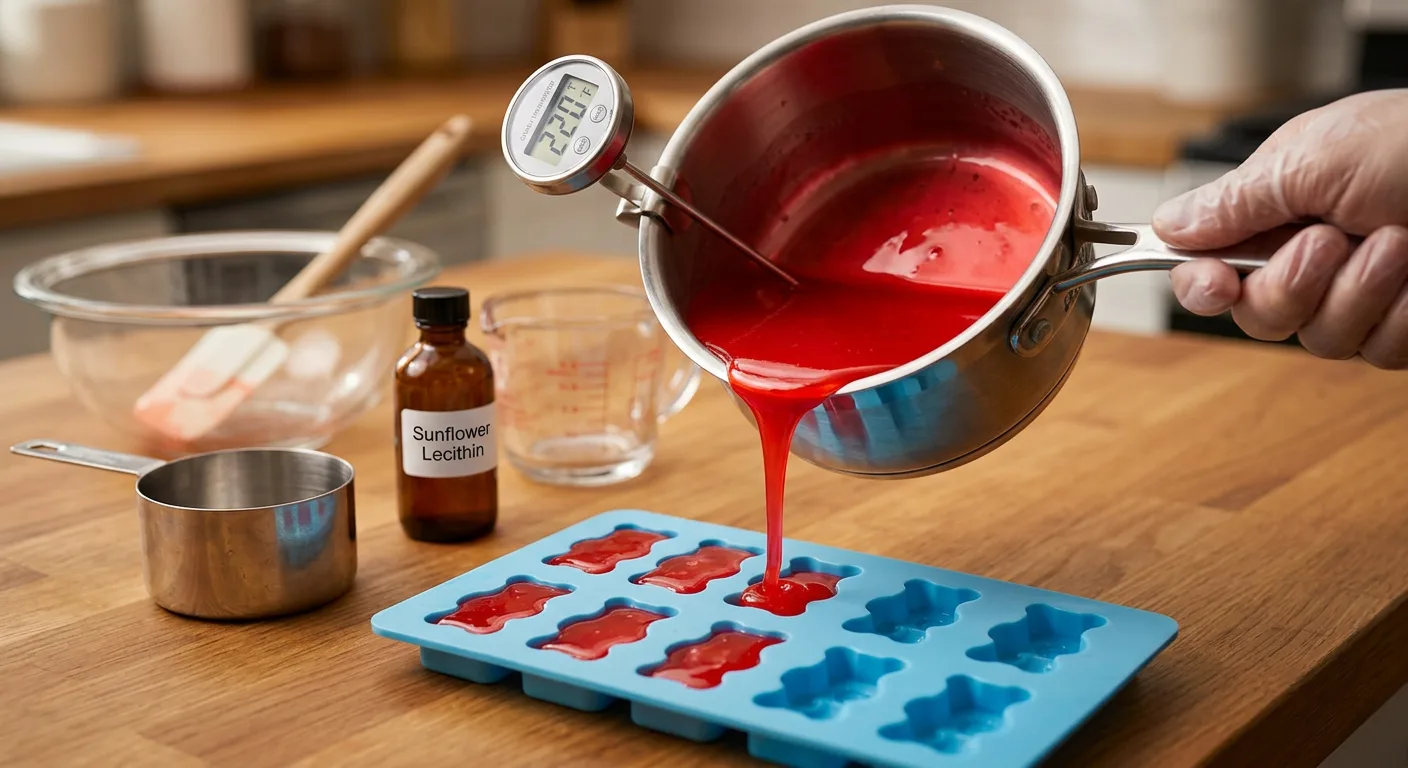
This gelatin-based THC gummies recipe produces approximately 50 gummies at 10 mg THC each (adjustable — see dosing section below). Total active time is about 30 minutes, plus 2–4 hours of setting time. This is the most forgiving recipe for first-timers making weed gummies at home.
Ingredients
- 1/2 cup fruit juice (tart cherry or grape work best — avoid pineapple, kiwi, or papaya as they contain enzymes that break down gelatin)
- 1 tablespoon cannabis tincture containing 500 mg total THC (or equivalent cannabis oil + 1 tsp sunflower lecithin)
- 2 tablespoons (14g) unflavored gelatin powder
- 2 tablespoons honey or agave syrup
- 1/2 teaspoon flavored extract (optional — lemon, strawberry, or watermelon)
- 1/4 teaspoon citric acid (for sour coating — applied AFTER setting, not during)
- Coconut oil spray (for mold release)
Equipment
- Small saucepan
- Silicone gummy molds (50 cavities)
- Whisk or silicone spatula
- Dropper or small measuring cup for pouring
- Candy thermometer (optional but recommended)
- Digital kitchen scale
Step-by-Step Instructions
Bloom the Gelatin
Pour 1/2 cup cold fruit juice into a small saucepan. Sprinkle 2 tablespoons of gelatin evenly over the surface. Let it sit for 5 minutes without stirring — this "blooming" step hydrates the gelatin granules and prevents lumps.
Heat Gently
Place the saucepan on low heat (never above 160°F/71°C). Stir continuously until the gelatin dissolves completely, about 3–5 minutes. The mixture should be smooth with no visible granules. Do NOT let it boil — boiling destroys gelatin's gelling ability.
Add Sweetener and Flavoring
Stir in 2 tablespoons of honey and your optional flavored extract. Mix for 30 seconds until fully incorporated.
Add Cannabis Tincture (The Critical Step)
Remove the saucepan from heat. Wait 60 seconds for the temp to drop below 150°F. Add your measured cannabis tincture and whisk vigorously for a full 2 minutes. This is not optional — this continuous whisking ensures even cannabinoid distribution throughout the batch.
Pour Into Molds
Lightly spray your silicone molds with coconut oil. Using a dropper or small measuring cup, fill each cavity evenly. Work quickly — gelatin begins setting within minutes once it cools. If the mixture thickens, briefly return it to low heat for 30 seconds.
Set and Cure
Place molds in the refrigerator for a minimum of 2 hours (4 hours is ideal). Once firm, pop gummies out of the molds and place them on a parchment-lined tray. Leave uncovered in the fridge for an additional 24–48 hours — this "curing" step removes surface moisture and dramatically improves shelf life.
Critical timing: Do NOT apply citric acid or sugar coating until after the 24–48 hour cure. Coating wet gummies with citric acid draws out moisture, creating a soggy, melting mess. This single mistake is why most homemade weed gummies fail.
Vegan Pectin Cannabis Gummies: Full Recipe
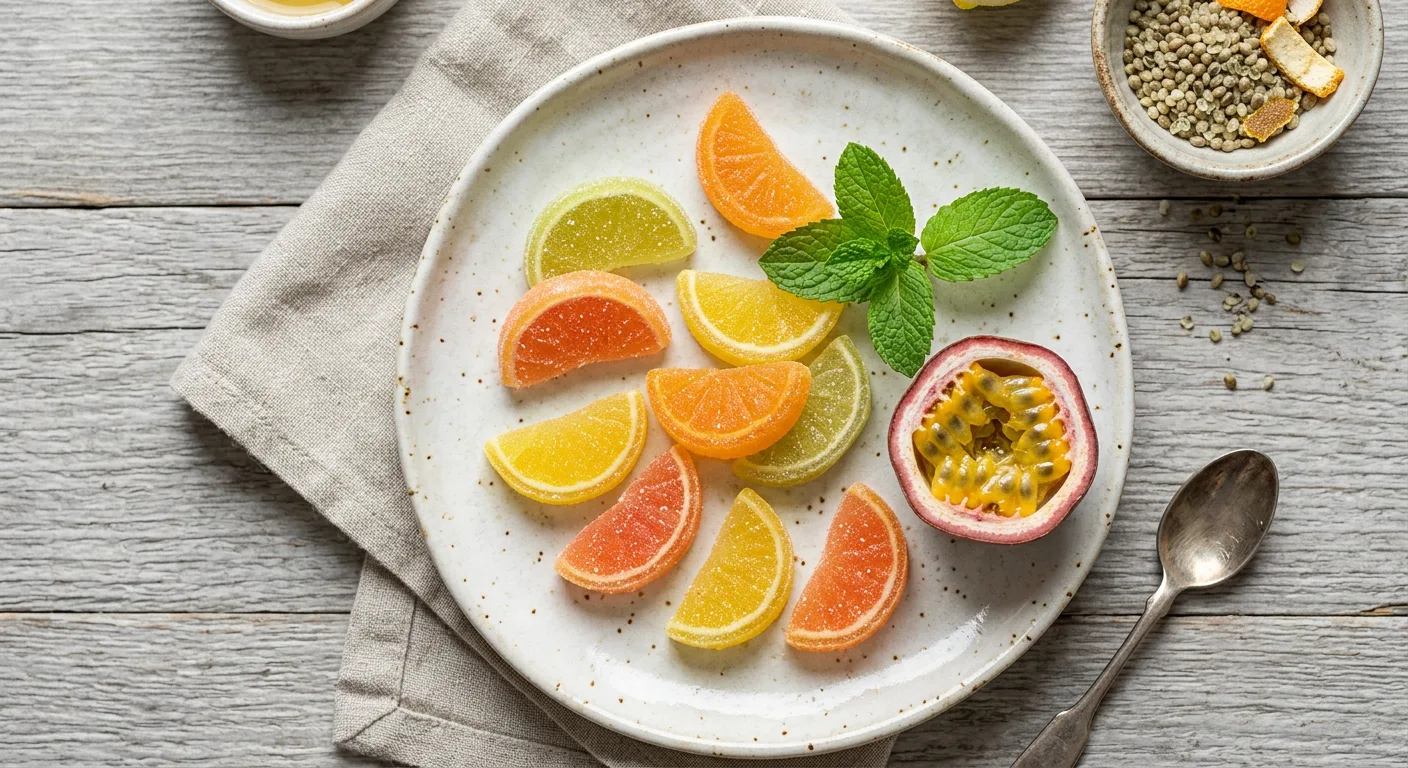
This vegan cannabis gummies recipe with pectin produces approximately 50 gummies at 10 mg THC each. Pectin gummies require more precision than gelatin — you need the right sugar-to-acid ratio for the gel to set. But the result is a naturally fruity, heat-stable gummy that won't melt as easily at room temperature.
Ingredients
- 1/2 cup fruit juice (apple or white grape — high-acid juices like orange work too)
- 1/4 cup granulated sugar (required for gel structure — cannot be omitted)
- 1 tablespoon (8g) high-methoxyl fruit pectin powder
- 1 tablespoon cannabis tincture containing 500 mg total THC
- 1 tablespoon fresh lemon juice or 1/4 teaspoon citric acid (for gelling reaction)
- 1 teaspoon sunflower lecithin (extra insurance for even distribution)
- 1/2 teaspoon flavored extract (optional)
- Coconut oil spray (for mold release)
Step-by-Step Instructions
Mix Pectin and Sugar Dry
In a small bowl, whisk together the pectin powder and 2 tablespoons of the sugar. This dry-mixing step prevents the pectin from clumping when it hits liquid. Set the remaining 2 tablespoons of sugar aside.
Heat Juice and Dissolve Pectin
Pour the fruit juice into a saucepan over medium heat. Gradually whisk in the pectin-sugar mixture. Bring to a rolling boil (unlike gelatin, pectin needs a full boil to activate). Boil for exactly 2 minutes while stirring constantly.
Add Remaining Sugar and Acid
Remove from heat. Stir in the remaining sugar and the lemon juice (or citric acid). The acid triggers the pectin's gelling reaction. Stir for 60 seconds.
Add Cannabis Tincture and Lecithin
Wait 2 minutes for the mixture to cool slightly (below 180°F). Add the cannabis tincture and sunflower lecithin. Whisk vigorously for 2 full minutes. The lecithin is extra insurance here since pectin mixtures are slightly more prone to separation than gelatin ones.
Pour and Set
Fill lightly oiled silicone molds. Pectin sets more slowly than gelatin — refrigerate for a minimum of 4 hours, ideally 6. Cure uncovered in fridge for 48 hours before coating or storing.
Pectin-specific tip: If your pectin gummies come out too soft, you either didn't boil long enough (need a full 2-minute rolling boil), didn't use enough sugar (it's structural, not just for sweetness), or didn't add enough acid. Adjust one variable at a time in your next batch.
The Dosing Calculator: How to Calculate THC Per Gummy
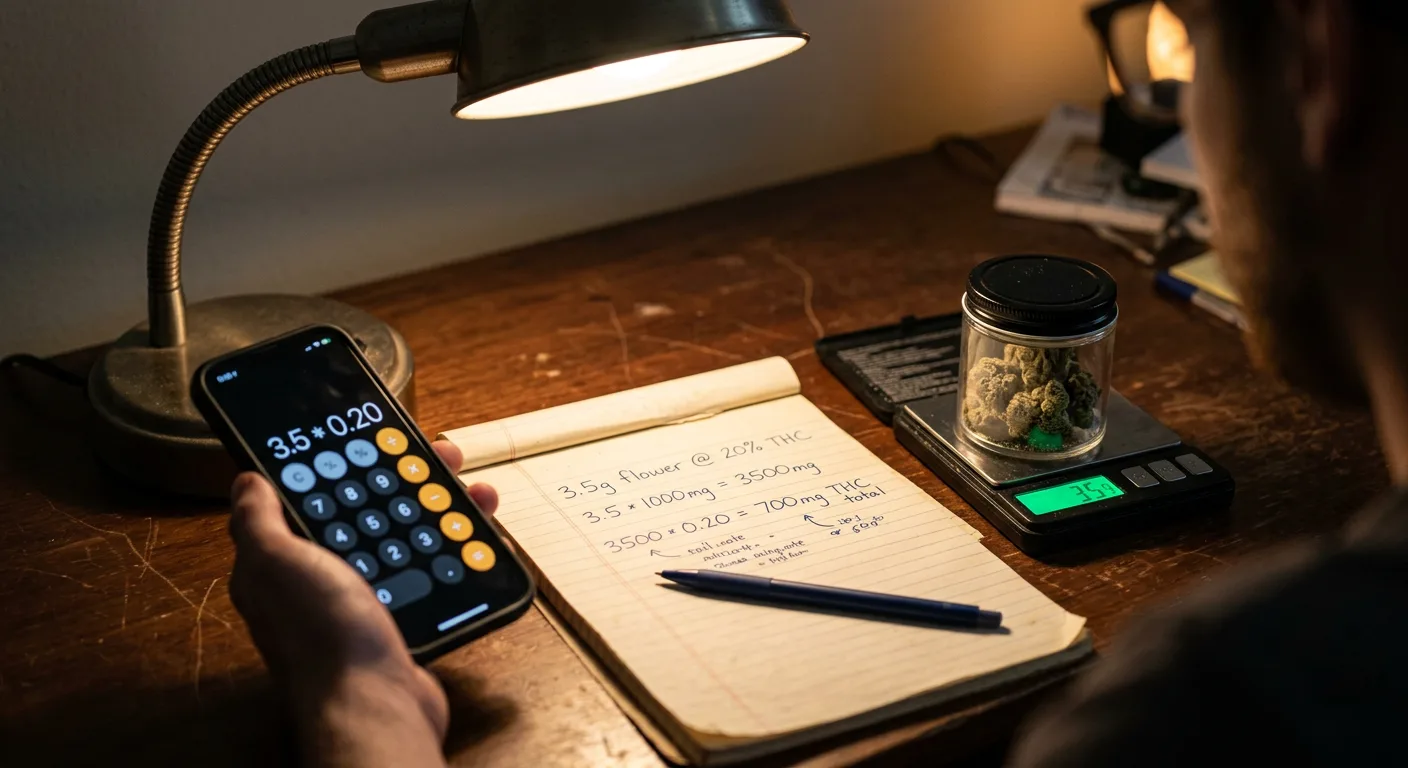
Precise cannabis gummy dosing requires three numbers: the THC percentage of your starting material, the amount of material used to make your infusion, and the number of gummies in your batch. This calculator-style breakdown eliminates the guesswork that makes most homemade edible gummies unreliable.
The Universal THC Dosing Formula
Here's the math, broken into simple steps anyone can follow:
Find Total THC in Your Starting Material
Formula: Weight of cannabis (in grams) × THC percentage × 10 = total mg of THC.
Example: 7 grams of flower at 20% THC → 7 × 0.20 × 1000 = 1,400 mg total THC.
Account for Extraction Efficiency
No infusion captures 100% of available THC. Alcohol tincture extracts roughly 80–90%. Oil infusion extracts roughly 60–80%. Multiply your total THC by the efficiency rate.
Example: 1,400 mg × 0.85 (tincture) = 1,190 mg extracted THC.
Divide by Number of Gummies
Formula: Total extracted THC ÷ number of gummies = mg per gummy.
Example: 1,190 mg ÷ 50 gummies = ~23.8 mg per gummy.
Adjust to Your Target Dose
If 23.8 mg per gummy is too strong, either use less starting material or make more gummies. For 10 mg gummies from the same tincture: 1,190 ÷ 10 = 119 gummies needed. Alternatively, use 3 grams of flower instead of 7 to get approximately 510 mg extracted THC, yielding ~10 mg per gummy across 50 pieces.
For a quicker calculation, use our edible dosage calculator — plug in your flower weight, THC percentage, and batch size to get instant mg-per-gummy results.
Dosing Tiers by Experience Level
| Experience Level | Dose Per Gummy | Expected Effects | Flower Needed (20% THC, 50 gummies) |
|---|---|---|---|
| Microdose / Beginner | 2.5 mg | Mild mood lift, subtle relaxation | ~0.75 grams |
| Low / Casual user | 5 mg | Noticeable euphoria, light body relaxation | ~1.5 grams |
| Standard / Regular user | 10 mg | Strong euphoria, full-body effects | ~3 grams |
| High / Experienced user | 25 mg | Intense effects, strong sedation potential | ~7.5 grams |
| Very High / Medical patients | 50 mg+ | Very strong — only for high-tolerance users | ~15 grams |
Important: Edibles take 30–120 minutes to take effect and last 4–8 hours. Never redose before the 2-hour mark. Start low (2.5–5 mg) if you're new to edibles, even if you're experienced with smoking. Oral THC is metabolized by the liver into 11-hydroxy-THC, which is 2–3× more psychoactive than inhaled Delta-9 THC.
Why Homemade Weed Gummies Melt and How to Fix It
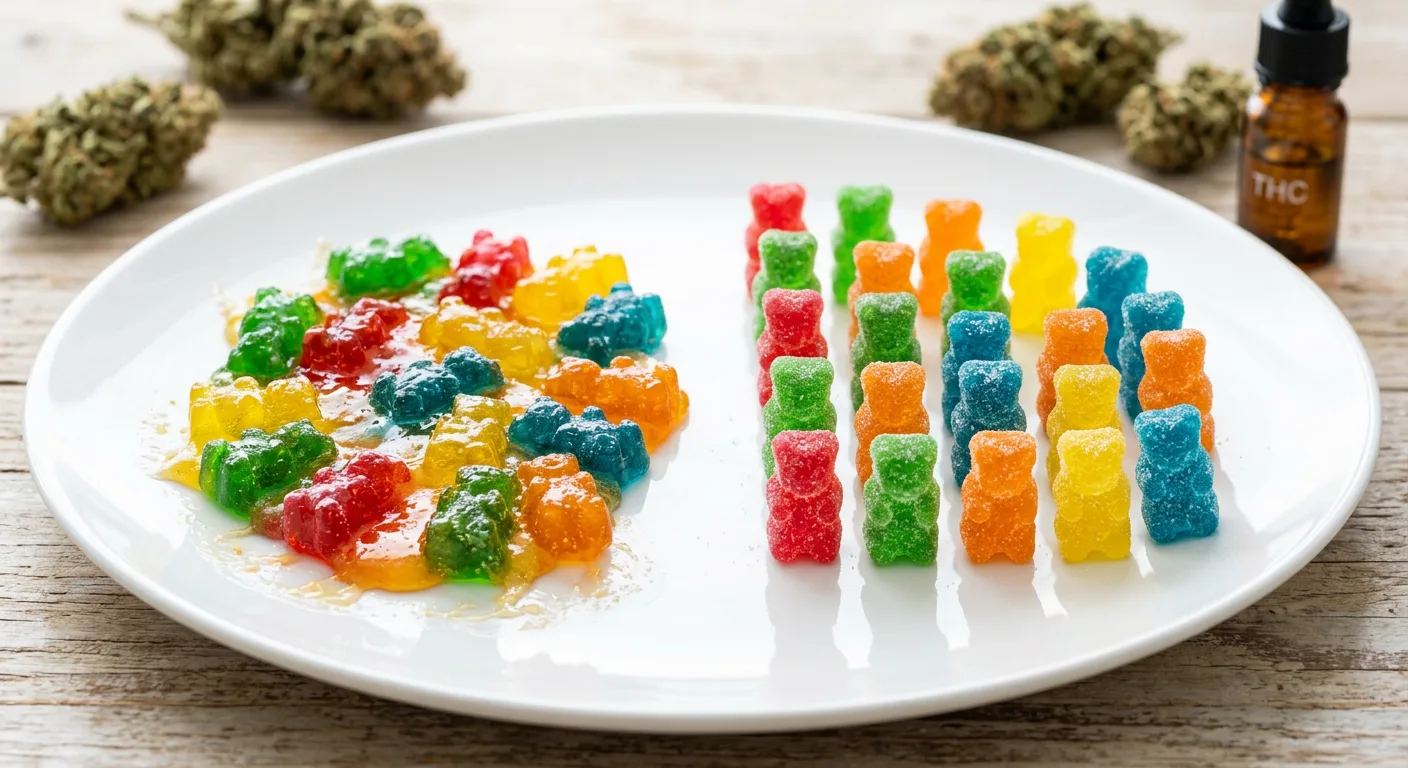
The number one complaint on cannabis forums about homemade edible gummies is melting. Gummies left on a countertop turn into a sticky puddle within hours in warm weather. This happens because of excess water content, insufficient gelling agent, or the most common mistake: applying citric acid coating too early.
The 4 Causes of Melting (and the Fix for Each)
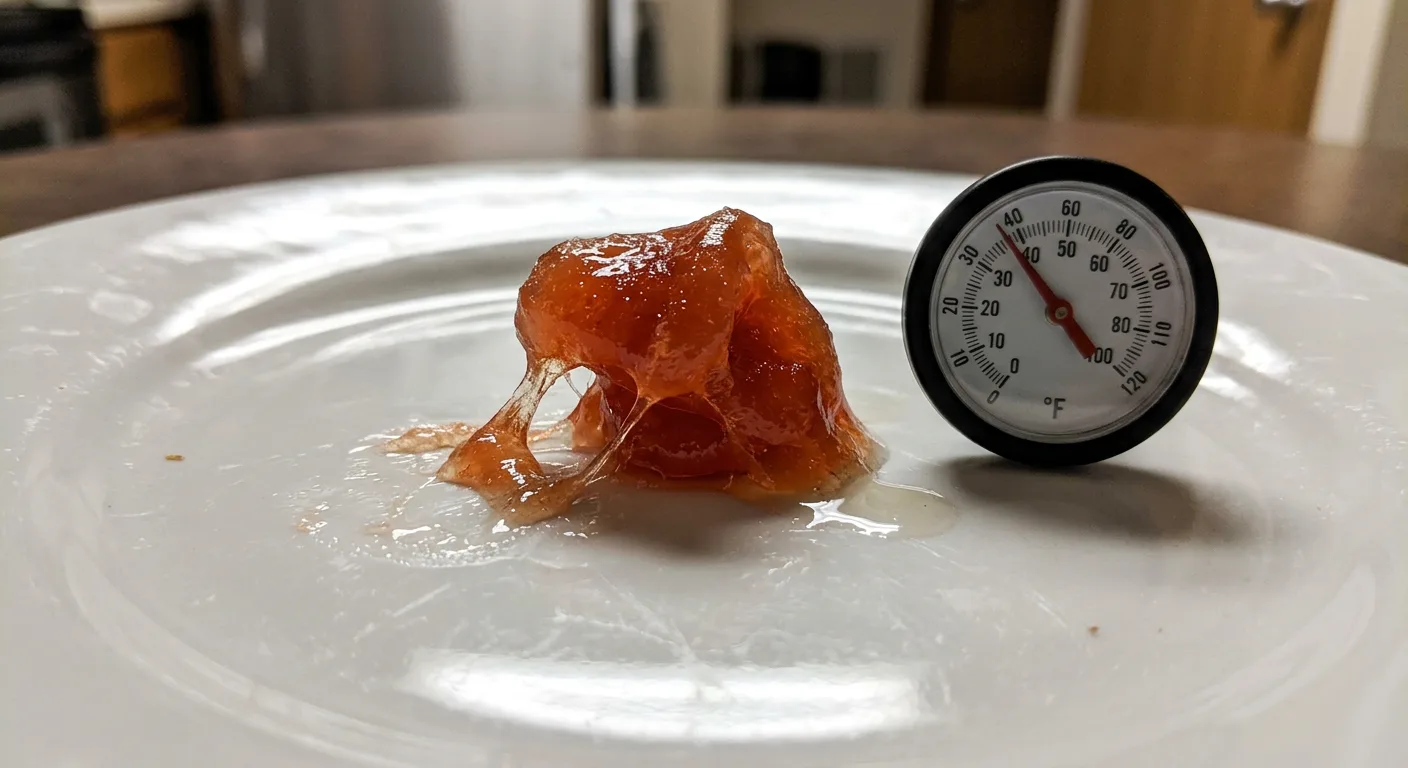
| Cause | Why It Happens | The Fix |
|---|---|---|
| Too little gelatin/pectin | Weak gel structure can't hold shape above 75°F | Use 2 Tbsp gelatin per 1/2 cup liquid (minimum). For pectin, ensure full 2-min boil. |
| Excess moisture | Gummies weren't cured — water stays trapped inside | Cure uncovered in fridge 24–48 hours after demolding. Surface should feel dry and matte, not tacky. |
| Citric acid applied too early | Citric acid is hygroscopic — it pulls water OUT of the gummy, causing weeping and structural collapse | Only coat gummies AFTER the full 24–48 hour cure. Toss in a 4:1 sugar:citric acid mix. |
| Cannabis oil separation | Unbound oil weakens gel matrix from the inside | Always use lecithin with oil-based infusions. Tincture avoids this entirely. |
The Citric Acid Timing Rule
This deserves its own callout because it's the single most Googled problem. "Why do homemade weed gummies melt and how to fix" almost always comes down to this:
Never add citric acid to your gummy mixture or coat gummies with it before they're fully cured. Citric acid is hygroscopic (it absorbs moisture from the air AND from whatever it touches). Apply it to a wet gummy, and it will extract water from the surface, creating a sticky film that cascades into structural failure. Wait 48 hours, then toss fully cured gummies in a 4:1 mixture of granulated sugar and citric acid.
Extra Stability Tricks
- Add 1 teaspoon of cornstarch to your gelatin mixture — it reinforces gel structure and absorbs residual moisture
- Use less liquid: Instead of 1/2 cup, try 1/3 cup of juice. Denser gummies are more shelf-stable.
- Double-bloom gelatin: After blooming, let the gelatin sit an extra 5 minutes before heating. This produces a tighter molecular network.
- Pectin advantage: Pectin gummies have a higher melting point (~130°F vs ~90°F for gelatin). If room-temperature stability is critical for you, pectin is the better choice.
Flavor, Color, and Coating: Masking the Taste Without Losing Potency
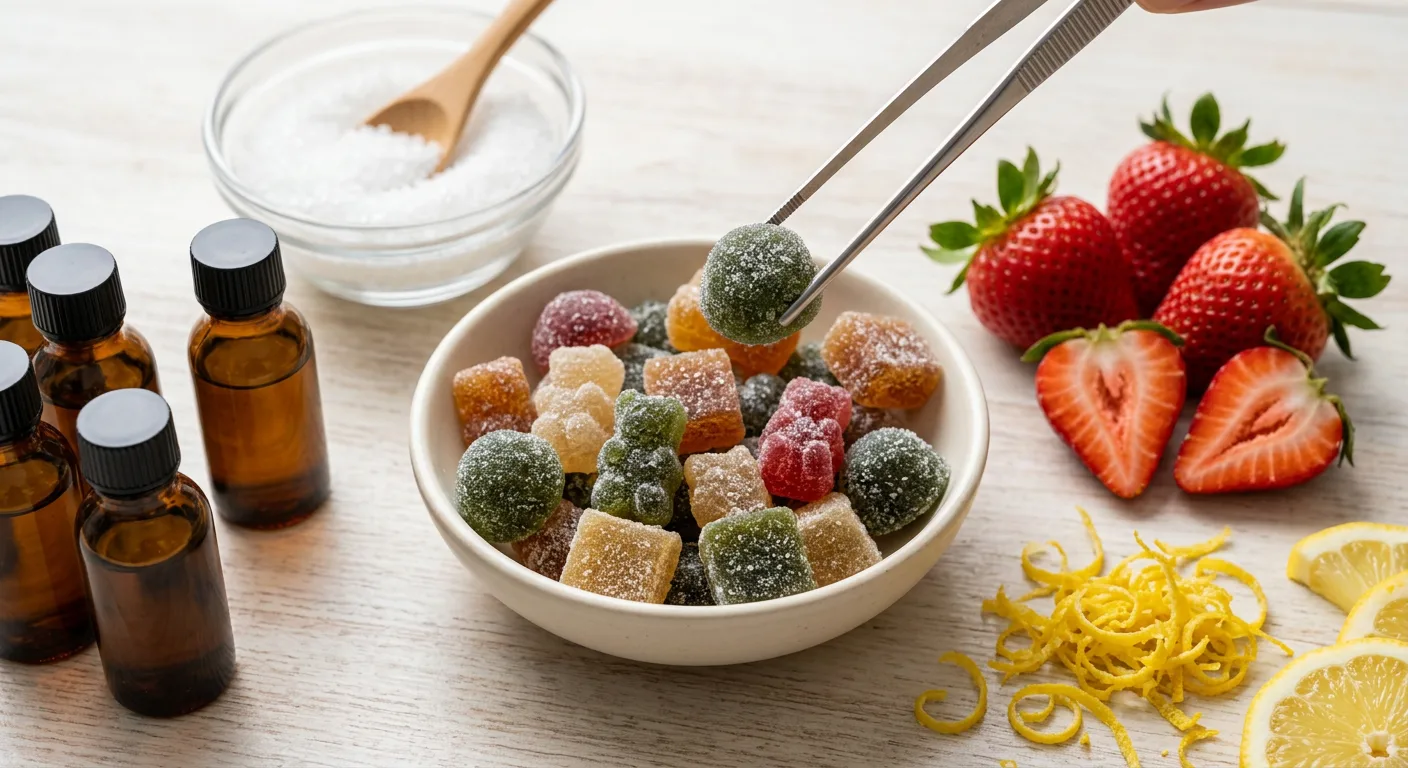
Cannabis flavor in gummies comes from chlorophyll and terpenes in your infusion. You can't eliminate it entirely, but you can reduce it to a subtle background note without affecting THC potency. The key is using tart, bold flavors that compete with the herbal taste.
Best Flavor Strategies
- Tart cherry juice as the base liquid — its strong, slightly sour flavor is the best natural mask for cannabis taste
- Concentrated flavor extracts (LorAnn brand or similar) — use 1/4 to 1/2 teaspoon per batch. These are 3–4× stronger than standard baking extracts
- Lemon juice + honey — the sweet-sour combination distracts the palate from herbal notes
- Avoid subtle flavors like vanilla or plain apple — they can't compete with cannabis taste
Natural Coloring
Skip artificial food coloring. Instead, match your juice to your desired color:
- Red: Tart cherry or cranberry juice
- Purple: Grape or blueberry juice
- Orange: Mango or passion fruit juice
- Green: Just use the natural cannabis tint — embrace it
Coating options that add shelf life: After the 48-hour cure, toss gummies in one of these coatings: (1) 4:1 sugar + citric acid for a sour gummy, (2) pure granulated sugar for a sweet coating, or (3) cornstarch + powdered sugar for a matte, non-sticky finish. All three coatings reduce surface moisture and extend shelf life by 3–5 days.
Mold Selection Tips
Your gummy mold matters more than you might think:
- Silicone molds are the only recommended option — they flex for easy removal and are food-safe at gummy-making temperatures
- Cavity size matters for dosing: Standard gummy bear molds hold ~2 mL per cavity. If your recipe targets 10 mg per gummy, ensure your math accounts for the exact number of cavities you're filling.
- Avoid novelty shapes with thin appendages — arms and legs on bear shapes break easily. Simple shapes (squares, circles, hearts) have the best structural integrity.
- Dropper bottles or pipettes give you far more control than pouring from a saucepan. A $3 set of plastic pipettes eliminates overflow and ensures equal fill volumes.
Storage and Shelf Life: Fridge vs Freezer vs Room Temperature
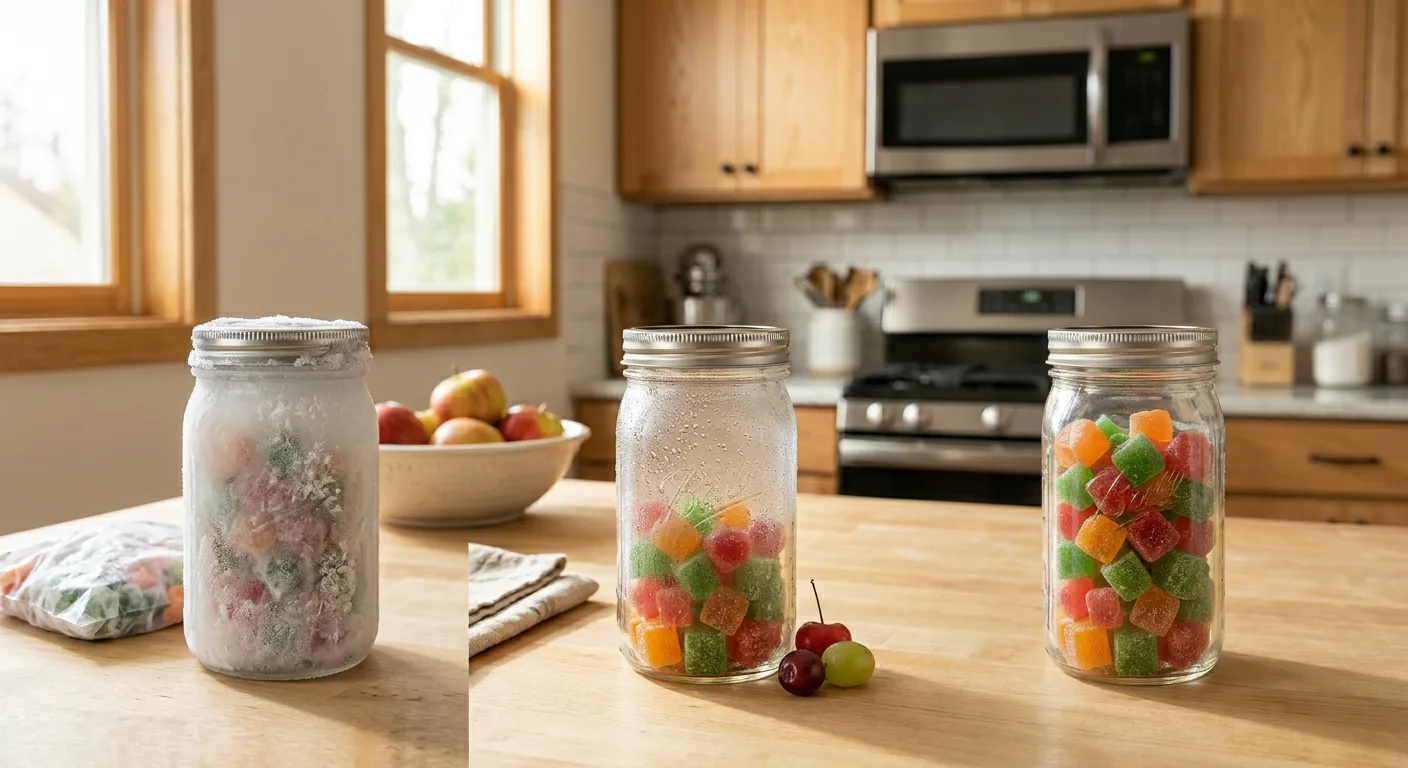
Proper storage determines whether your homemade cannabis gummies last 3 days or 6 months. Gelatin and pectin gummies have different ideal storage conditions, but both should be refrigerated as a baseline. Room temperature storage is not recommended for either type unless they'll be consumed within 48 hours.
| Storage Method | Gelatin Gummies | Pectin Gummies | Notes |
|---|---|---|---|
| Room temperature | 1–3 days max | 2–4 days max | Risk of melting (gelatin) and mold (both). Only for short-term. |
| Refrigerator (35–40°F) | 2–3 weeks | 3–4 weeks | Best balance of convenience and shelf life. Store in airtight container. |
| Freezer (0°F) | Up to 6 months | Up to 6 months | Wrap individually or separate layers with parchment. Thaw in fridge, not on counter. |
Storage Best Practices
- Use airtight glass containers or resealable bags with air squeezed out
- Place parchment paper between layers to prevent sticking
- Label every container with: date made, mg per gummy, strain used
- Add a small silica gel packet to absorb excess moisture (food-grade only)
- Keep out of direct sunlight — UV degrades THC into CBN over time
- Never store in a hot car, near a stove, or on a windowsill
For more on how light and humidity degrade cannabinoids, our long-term cannabis storage guide covers the science in detail. The same principles that preserve flower potency apply to THC-infused gummies.
Water activity and mold risk: Gummies with a water activity (Aw) above 0.65 are at risk for mold growth at room temperature. The curing step reduces surface Aw, but internal moisture can still promote mold if stored unsealed. For a deeper understanding of water activity science, see our water activity curing guide.
Best Cannabis Strains for Gummies by Desired Effect
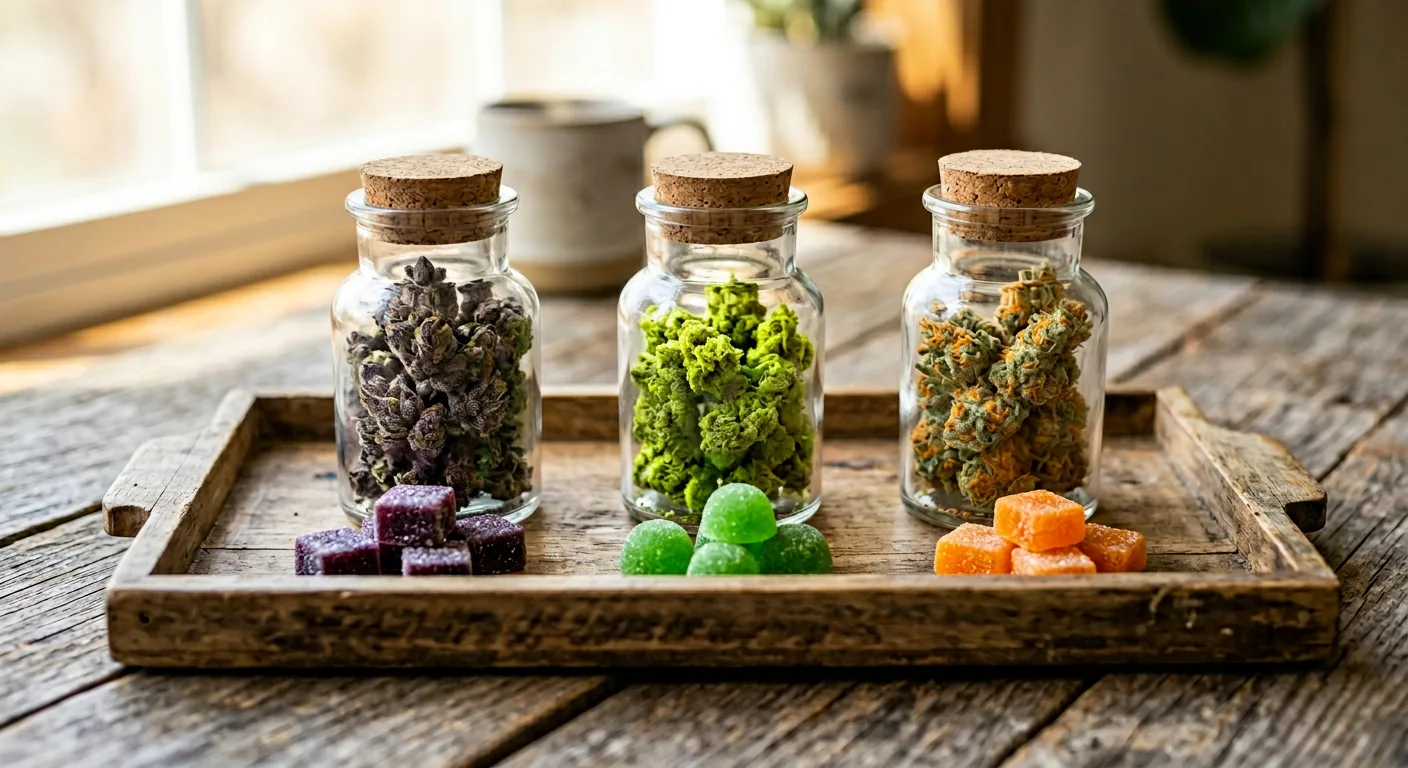
The strain you use to make your tincture or infusion determines the effect profile of your finished gummies. THC percentage matters for potency, but the terpene profile shapes whether your gummies are relaxing, energizing, or somewhere in between. Here are our top recommendations organized by desired effect.
Relaxing Gummies (Indica-Dominant, Myrcene-Heavy)
For nighttime or stress-relief gummies, choose strains high in myrcene and linalool. These terpenes enhance the sedative qualities of THC and promote a heavy body effect. For more on strains for relaxation and strains for sleep, see our dedicated guides.
| Strain | THC | Dominant Terpenes | Why It's Great for Relaxing Gummies |
|---|---|---|---|
| OG Kush Feminized | 26% | Myrcene, limonene, caryophyllene | High potency with classic heavy relaxation. Excellent for strong nighttime gummies. |
| Granddaddy Purple | 20% | Myrcene, pinene, caryophyllene | Deep body sedation with grape flavor that complements berry-based gummies perfectly. |
| Northern Lights x Big Bud Feminized | 20% | Myrcene, caryophyllene | Legendary relaxation genetics. Produces large yields for big tincture batches. |
| Bubba Kush | 22% | Myrcene, limonene, caryophyllene | Heavy tranquilizing effect ideal for sleep-focused gummies. |
| Purple Kush Feminized | 27% | Myrcene, pinene | Our most potent pure indica — a little goes a long way in dosing. |
Energizing Gummies (Sativa-Dominant, Limonene-Forward)
For daytime or social gummies, choose sativa-dominant strains rich in limonene and terpinolene. These promote an uplifting, cerebral high that pairs well with citrus-flavored gummy bases. Explore more strains for energy and strains for creativity.
| Strain | THC | Dominant Terpenes | Why It's Great for Energizing Gummies |
|---|---|---|---|
| Super Lemon Haze Feminized | 23% | Limonene, terpinolene, caryophyllene | Citrus terpene profile complements lemon gummy flavors. Uplifting cerebral effect. |
| Durban Poison | 20% | Terpinolene, myrcene, ocimene | Pure sativa energy — clean and focused. The daytime gummy gold standard. |
| Sour Diesel Feminized | 24% | Myrcene, limonene, caryophyllene | Energizing despite myrcene presence. Creates gummies with a creative, euphoric edge. |
| Jack Herer | 21% | Terpinolene, pinene, caryophyllene | Balanced uplift with mental clarity — perfect for functional daytime gummies. |
| Tangerine Haze Feminized | 18% | Limonene, myrcene | Lower THC makes dosing easier for beginners. Citrus terpenes pair naturally with orange-flavored gummies. |
Balanced / Social Gummies (Hybrid, Caryophyllene-Rich)
For gummies that work in any social setting without being too sedating or too heady, look for balanced hybrids with caryophyllene as a dominant terpene. Caryophyllene also binds to CB2 receptors, potentially adding anti-inflammatory benefits. See our best strains for social situations for more options.
- Wedding Cake — 25% THC, caryophyllene/limonene dominant. Relaxing but mentally clear.
- Gelato — 21% THC, caryophyllene/limonene/humulene. Euphoric and smooth.
- White Widow Feminized — 25% THC, myrcene/caryophyllene. Classic balanced hybrid that's been a gummy favorite for decades.
- White Cookies Feminized — 22% THC, well-rounded terpene profile. Great for a mellow, happy gummy effect.
Growing your own flower for tinctures gives you complete control over your gummy's effect profile. If you're starting from seed, our germination guarantee ensures your investment is protected, and our seedling care guide walks you through the first critical weeks.
Troubleshooting Common Cannabis Gummy Problems
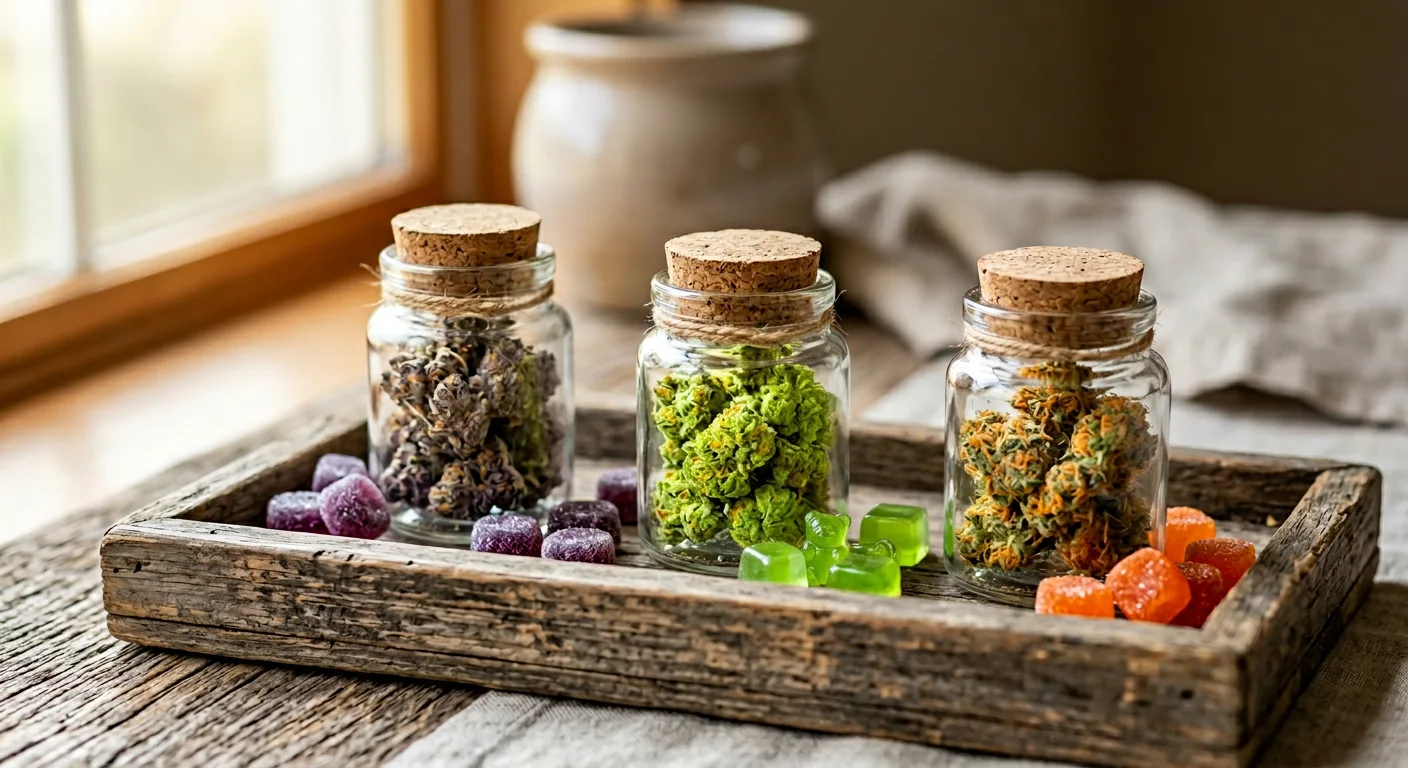
Even experienced gummy makers run into issues. Here's a quick-reference troubleshooting table for the most common problems and their immediate fixes.
| Problem | Likely Cause | Fix |
|---|---|---|
| Gummies won't set | Gelatin was boiled (destroys proteins) or pectin didn't reach a full boil | Gelatin: remelt gently, add 1 more Tbsp gelatin. Pectin: reboil for 2 full minutes. |
| Gummies are too hard/chewy | Too much gelatin or too little liquid | Reduce gelatin by 1/2 Tbsp next batch, or increase juice by 2 Tbsp. |
| Oil pools on top of molds | Cannabis oil separated — no emulsifier used | Remelt, add 1 tsp sunflower lecithin, whisk 3 minutes. Re-pour. |
| Inconsistent potency | Inadequate stirring after adding tincture/oil | Whisk for minimum 2 minutes. Stir the mixture in the mold tray with a toothpick after pouring. |
| Surface is sticky/tacky | Not cured long enough or stored without airflow | Return to fridge uncovered for 24 more hours. Coat in cornstarch when dry. |
| Sour coating dissolved | Applied citric acid before full cure | Let gummies cure fully (48 hrs), pat dry, then re-coat with sugar:citric acid mix. |
| Bitter/harsh cannabis taste | Oil infusion with too much plant material or chlorophyll | Use tincture instead. If using oil, switch to a cleaner extraction (shorter infusion time at lower temp). |
| White film on surface | "Sugar bloom" from humidity fluctuation | Cosmetic only — safe to eat. Store in airtight container to prevent. |
Understanding proper decarboxylation is essential for potent gummies. If your gummies feel weak despite correct dosing math, your flower may not have been fully decarbed. Our harvesting for maximum potency guide explains how cannabinoid development works from the plant stage forward.
Advanced Tips: Taking Your Cannabis Gummies to the Next Level
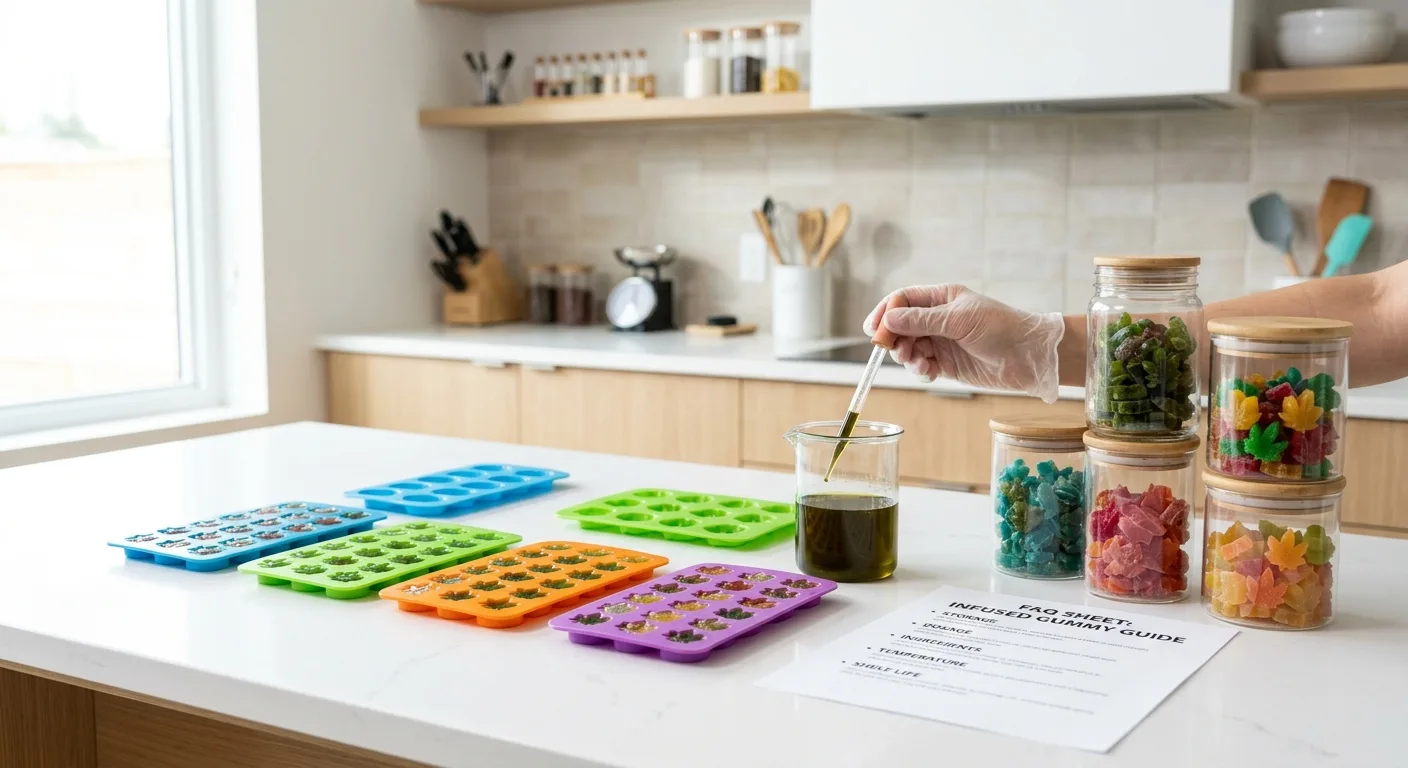
Once you've mastered the basic gelatin and pectin recipes, these advanced techniques will elevate your homemade edible gummies to dispensary quality and beyond.
Layered Dual-Effect Gummies
Pour a relaxing indica-infused layer (half-fill each mold), let it set for 1 hour in the fridge, then pour an energizing sativa-infused layer on top. The result: a two-tone gummy with distinct terpene profiles in each half. Label them clearly so you know which side is up.
Nano-Emulsion for Faster Onset
Commercial gummies use nano-emulsification technology to reduce cannabinoid particle size, allowing faster absorption (15–30 minutes vs 60–120 minutes for standard edibles). Home cooks can approximate this by blending their oil infusion with lecithin using an immersion blender on high speed for 5 minutes, creating a crude emulsion with smaller fat droplets.
CBD:THC Ratio Gummies
Create balanced-ratio gummies by combining a THC tincture with a CBD tincture. A 1:1 CBD:THC ratio (e.g., 5 mg CBD + 5 mg THC per gummy) produces a gentler, less anxious effect. A 2:1 CBD:THC ratio further reduces psychoactivity while preserving therapeutic benefits.
Using Concentrates for Precision
If you have access to tested cannabis concentrates (distillate, RSO, or CO2 oil), you can skip the flower-to-tincture step entirely. Distillate is already decarboxylated and comes with a lab-tested THC percentage, making your dosing math far more accurate. Simply warm the distillate slightly, mix with lecithin, and add to your gummy base.
For those growing their own flower to process into concentrates, our dry ice hash vs bubble hash guide covers extraction methods suitable for home growers, and our freeze-drying guide explores more advanced processing options.
Frequently Asked Questions About Homemade Cannabis Gummies
How many milligrams of THC should I put in each gummy for a beginner?
Beginners should start with 2.5–5 mg of THC per gummy. This allows you to gauge your tolerance before increasing the dose. Wait at least 2 hours after eating one gummy before consuming another, since edibles take 30–120 minutes to reach full effect. Use our edible dosage calculator to dial in exact amounts for your batch.
Why do my homemade cannabis gummies melt at room temperature?
Homemade gummies melt because of three main issues: excess moisture from insufficient curing (fix: cure uncovered in fridge for 48 hours), too little gelatin or pectin (fix: use 2 Tbsp gelatin per 1/2 cup liquid minimum), or applying citric acid coating before gummies are fully set (fix: coat only after the full 48-hour cure). Pectin gummies have a higher melting point than gelatin gummies if heat stability is your priority.
Can I use cannabis oil instead of tincture to make gummies?
Yes, but tincture produces more even dosing because alcohol is partially water-miscible. If using cannabis oil, add 1 teaspoon of liquid sunflower lecithin as an emulsifier and whisk vigorously for at least 2 minutes after combining with the gummy base. Without lecithin, oil separates from the water-based mixture and pools in certain molds, creating wildly inconsistent THC levels between gummies.
How long do homemade cannabis gummies last?
Refrigerated gelatin gummies last 2–3 weeks; pectin gummies last 3–4 weeks. Both types last up to 6 months in the freezer when stored in airtight containers with parchment paper between layers. Room temperature storage is not recommended beyond 48 hours due to melting risk (gelatin) and mold risk (both types). Always label containers with the date made and dose per piece.
What is the difference between using gelatin and pectin for cannabis gummies?
Gelatin (animal-derived) produces a chewy, bouncy texture like commercial gummy bears and sets at room temperature. Pectin (plant-derived) creates a softer bite like fruit snacks, is vegan-friendly, and has a higher melting point (~130°F vs ~90°F). Gelatin is more forgiving for beginners. Pectin requires precise sugar and acid ratios to gel properly but offers better heat stability and suits dietary restrictions.