Why Cannabis-Infused Honey Deserves Its Own Playbook
Cannabis-infused honey — also called cannahoney — occupies a unique space in the edibles world that most guides completely overlook. Unlike cannabutter or infused coconut oil, honey contains zero fat. That single fact changes everything about how cannabinoids bind, how you dose, and how long your finished product lasts on the shelf.
Most competing guides online treat cannabis honey as a footnote tacked onto butter recipes. Meanwhile, Reddit's r/treedibles is flooded with contradictory advice about whether cannahoney even works without a fat-soluble carrier. The short answer: it absolutely works, but the science and technique differ from every other infusion method you've tried.
This guide covers two proven methods — the slow-cooker lipid-bypass technique and the concentrate-dissolve method — plus full decarboxylation steps, precise dosing math per tablespoon, strain recommendations that complement honey's flavor, and storage practices that prevent crystallization and potency loss. By the end, you'll have the most thorough cannahoney recipe available anywhere online.
Honey's hygroscopic (water-attracting) properties and naturally low pH of 3.2–4.5 create an environment that preserves cannabinoids and resists microbial growth — making it one of the longest-lasting edible infusion mediums available to home cooks.
What Makes Honey Unique as a Cannabis Infusion Medium
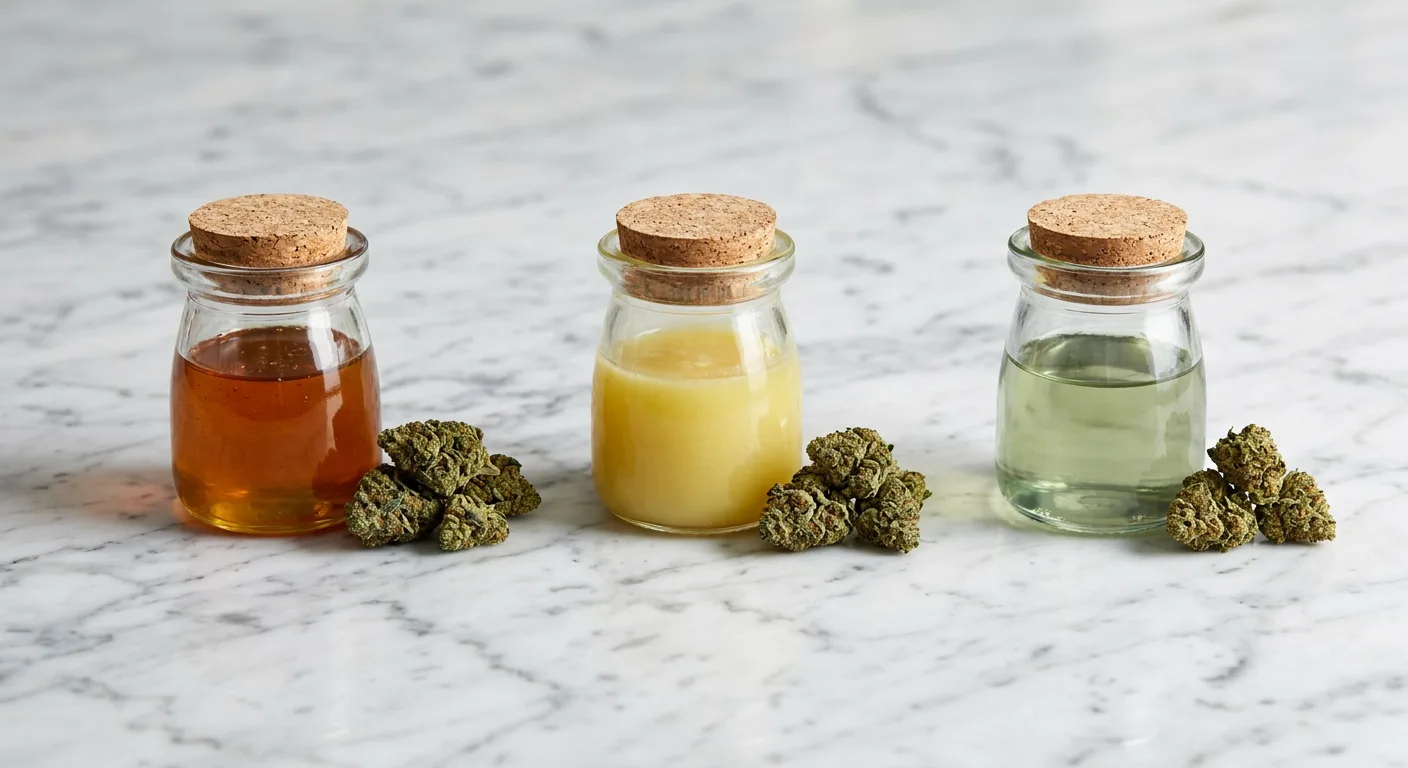
Honey is not a fat-based carrier like butter, coconut oil, or MCT oil. THC and CBD are fat-soluble molecules, so many people assume honey can't carry them effectively. That assumption is incomplete. Extended low-heat contact, emulsification via lecithin, or dissolving a concentrate directly all bypass the fat requirement.
Honey's Natural Properties That Benefit Infusions
- Hygroscopic nature: Honey absorbs and retains moisture from the air, which helps prevent the dry, crumbly texture that plagues some edibles.
- Low water activity (aw ~0.56–0.62): This falls within the safe zone for long-term storage. Bacteria, yeast, and mold cannot proliferate below 0.65 aw. Learn more about this principle in our water activity curing guide.
- Acidic pH (3.2–4.5): Further inhibits microbial growth and helps preserve THC from degrading into CBN.
- Natural antioxidants: Raw honey contains flavonoids and phenolic compounds that may slow oxidation of cannabinoids.
- Viscosity: Thick honey suspends fine plant particulates and dissolved cannabinoids more evenly than thin oils.
How Cannabinoids Actually Bind to Honey
In a slow-cooker infusion, decarbed flower steeps in warm honey for hours. The cannabinoids don't dissolve into fat — they become suspended in the sugar matrix. Adding sunflower lecithin (an emulsifier) dramatically improves distribution and bioavailability. In the concentrate method, you dissolve a pre-made extract directly, which sidesteps the binding question entirely.
Lecithin is the unsung hero of cannahoney. It's a phospholipid that creates tiny micelles around THC molecules, keeping them evenly distributed throughout the honey rather than pooling or settling. Use 1 teaspoon of sunflower lecithin per cup of honey for best results.
| Infusion Medium | Fat Content | Shelf Life (Room Temp) | Binding Mechanism | Best For |
|---|---|---|---|---|
| Cannabutter | ~80% | 2–4 weeks (refrigerated) | Fat-soluble absorption | Baking, cooking |
| Coconut Oil | ~100% | 2–3 months | Fat-soluble absorption | Capsules, baking |
| Cannabis Honey | 0% | 6–12+ months | Sugar matrix suspension + lecithin emulsification | Tea, toast, glazes, direct dosing |
| Cannabis Tincture (alcohol) | 0% | 12+ months | Alcohol dissolution | Sublingual, mixing |
Step-by-Step Decarboxylation for Cannahoney
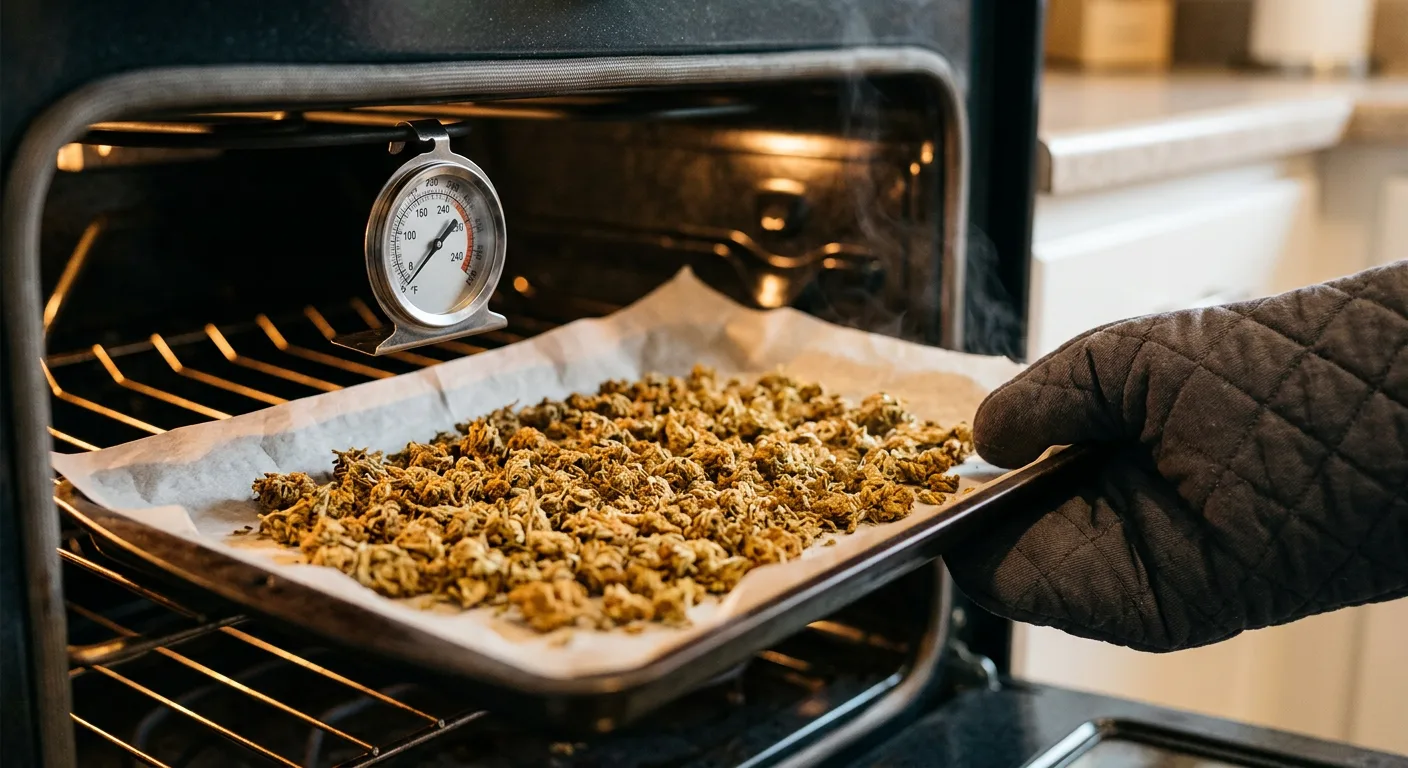
Decarboxylation converts THCA (non-psychoactive) into THC (psychoactive) through controlled heat. Skip this step and your cannabis honey will have minimal effect. Every cannahoney recipe starts here — no exceptions.
What You Need for Decarb
- 3.5–7 grams of dried cannabis flower
- Baking sheet with parchment paper
- Oven thermometer (don't trust your oven's dial)
- Aluminum foil for tenting
- Herb grinder (medium-coarse grind)
The Decarb Process: 240°F for 40 Minutes
Preheat and Verify Temperature
Set your oven to 240°F (115°C). Place an oven thermometer on the middle rack and wait 15 minutes. Most home ovens run 10–25°F hotter or cooler than the dial indicates. Adjust until the thermometer reads 240°F.
Grind and Spread
Break flower into rice-grain-sized pieces using a grinder on a coarse setting. Spread evenly on a parchment-lined baking sheet in a single layer. Don't powder it — fine dust burns easily and tastes harsh.
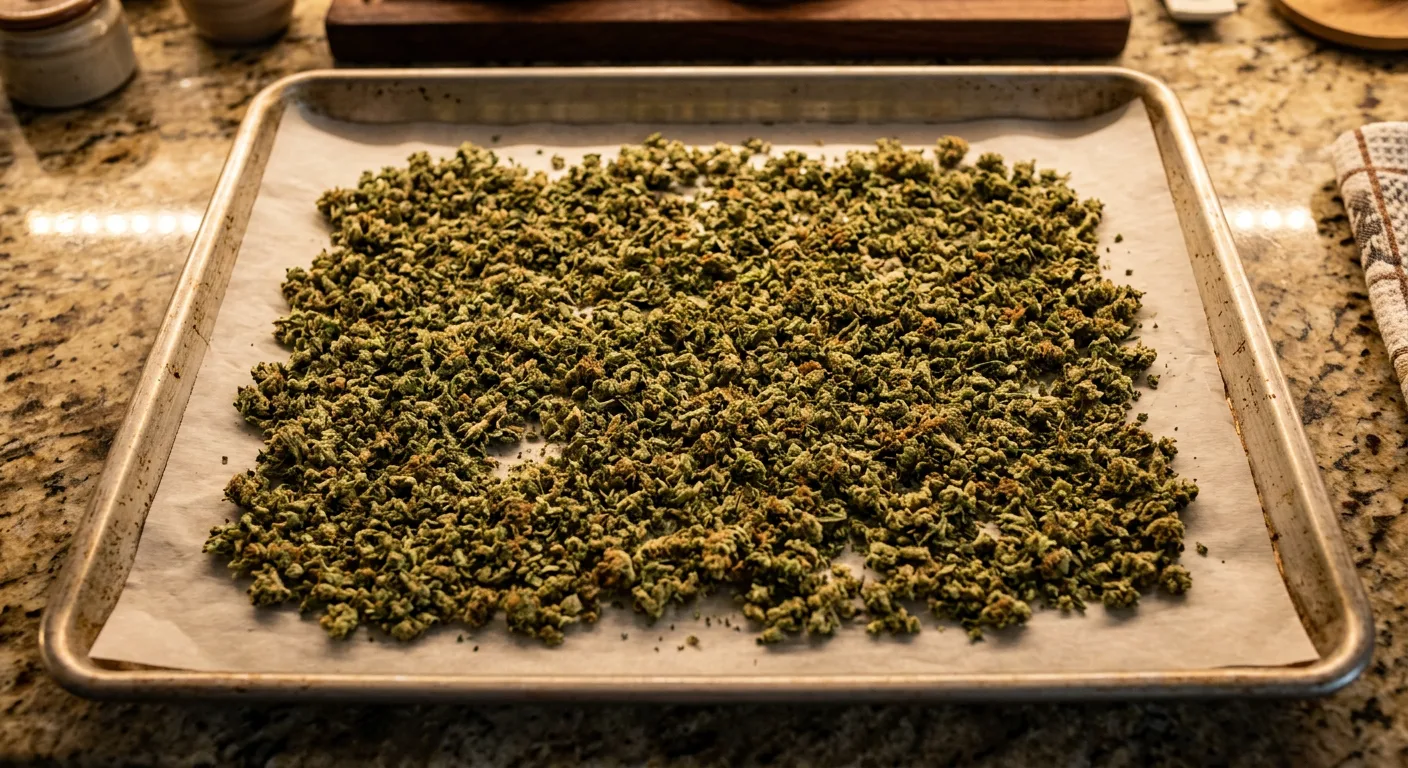
Tent with Foil and Bake
Loosely tent the baking sheet with aluminum foil to trap terpenes and prevent burning. Place on the middle rack. Bake for exactly 40 minutes. The flower should turn from green to a golden-brown color and smell toasted, not burnt.
Cool Completely Before Infusing
Remove from the oven and keep the foil tent on while cooling for 10 minutes. This captures volatile terpenes as they condense. Once cool, the flower should crumble easily between your fingers.
Common failure: Overheating above 300°F destroys THC rapidly. Even 260°F for too long degrades potency. If your flower looks dark brown or black, you've gone too far. Always use an oven thermometer — this single tool prevents the most common cannahoney mistake.
Method 1: Slow-Cooker Cannahoney (Lipid-Bypass)
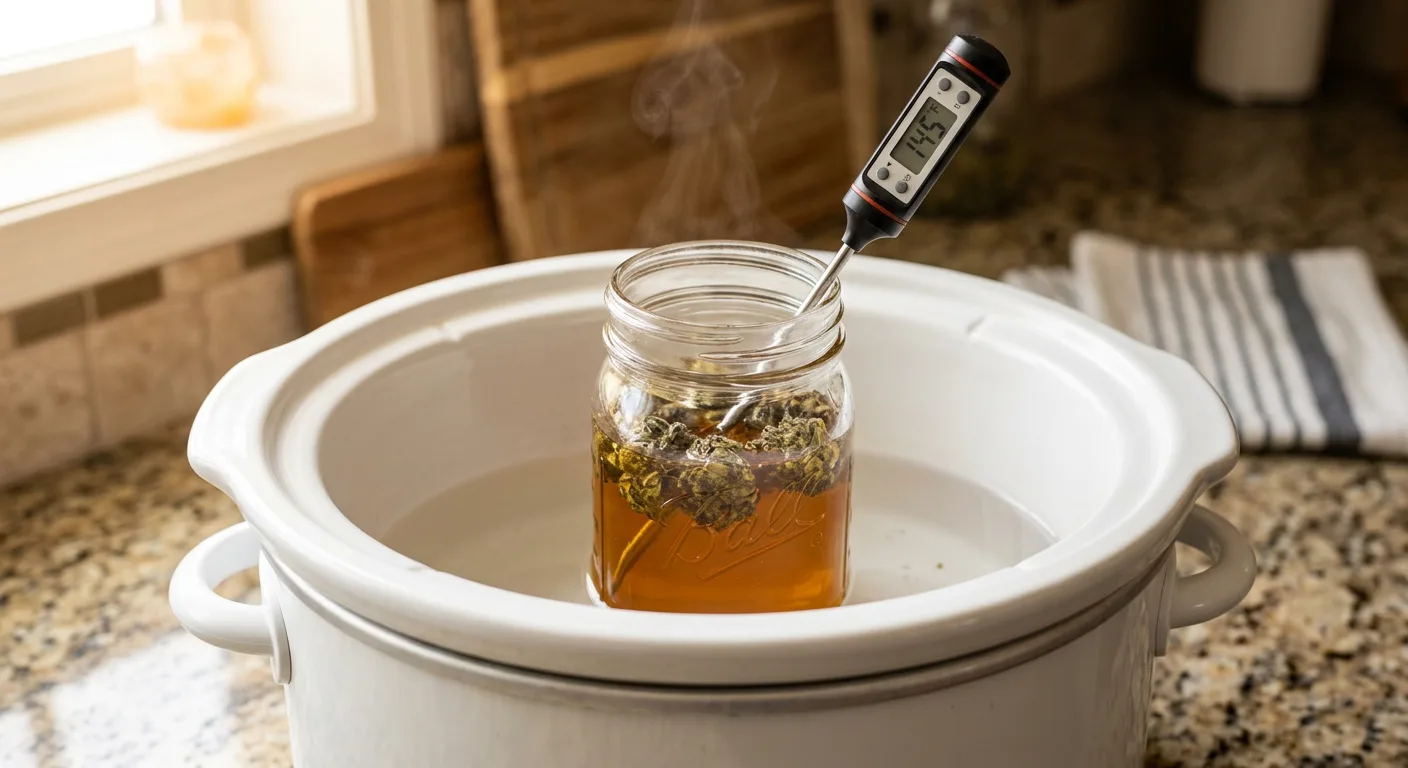
The slow-cooker method is the most popular way to make cannabis-infused honey at home. It uses extended low heat to suspend decarbed cannabinoids directly into the honey matrix. Adding lecithin dramatically improves potency and consistency.
Ingredients and Equipment
- 1 cup (340g) raw, unfiltered honey
- 3.5g decarbed cannabis flower (adjust for desired potency — see dosing section)
- 1 teaspoon sunflower lecithin
- Slow cooker or double boiler
- Cheesecloth or fine mesh strainer
- Mason jar (8 oz or 16 oz)
- Candy or probe thermometer
- Rubber band or kitchen twine
Full Instructions
Combine Honey, Flower, and Lecithin
Add honey to a mason jar. Stir in the decarbed flower and sunflower lecithin. Mix thoroughly until the flower is fully coated and submerged. The lecithin will start cloudy but will dissolve with heat.
Set Up the Water Bath
Place a folded kitchen towel on the bottom of your slow cooker to prevent the jar from direct contact with the heating element. Set the open mason jar on the towel. Fill the slow cooker with warm water until it reaches the honey level inside the jar. Do not submerge the jar.
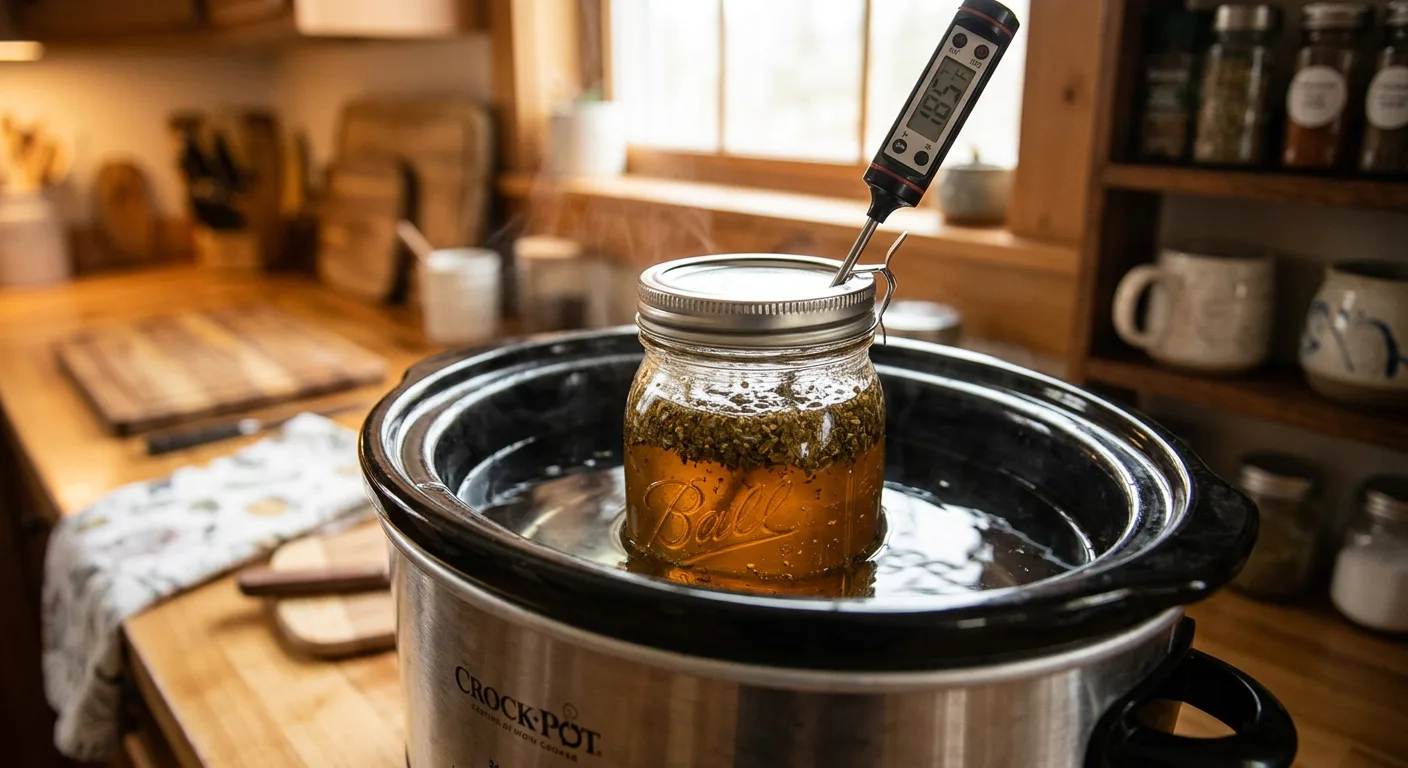
Heat on Low for 4–8 Hours
Set the slow cooker to LOW. Monitor the honey temperature with a probe thermometer — keep it between 150–170°F (65–77°C). Stir every 30–60 minutes. Never let the honey exceed 185°F, as this degrades both cannabinoids and the beneficial enzymes in raw honey.
Strain Through Cheesecloth
After 4–8 hours, remove the jar carefully (it's hot). Secure a double layer of cheesecloth over a clean mason jar with a rubber band. Pour the infused honey through slowly. Squeeze the cheesecloth gently to extract remaining honey — but don't press hard, or you'll push through excess chlorophyll and plant material.
Cool, Seal, and Label
Let the strained honey cool to room temperature. Seal with an airtight lid. Label with the date, strain used, amount of flower, and estimated mg per tablespoon. This label is critical for safe dosing later.
Pro tip: For a cleaner flavor and smoother texture, wrap your decarbed flower in a cheesecloth sachet before placing it in the honey. This acts like a tea bag — the cannabinoids leach out during heating, but you skip the straining step entirely and get a clearer final product.
Method 2: Concentrate-Dissolve Cannahoney (Precision Method)
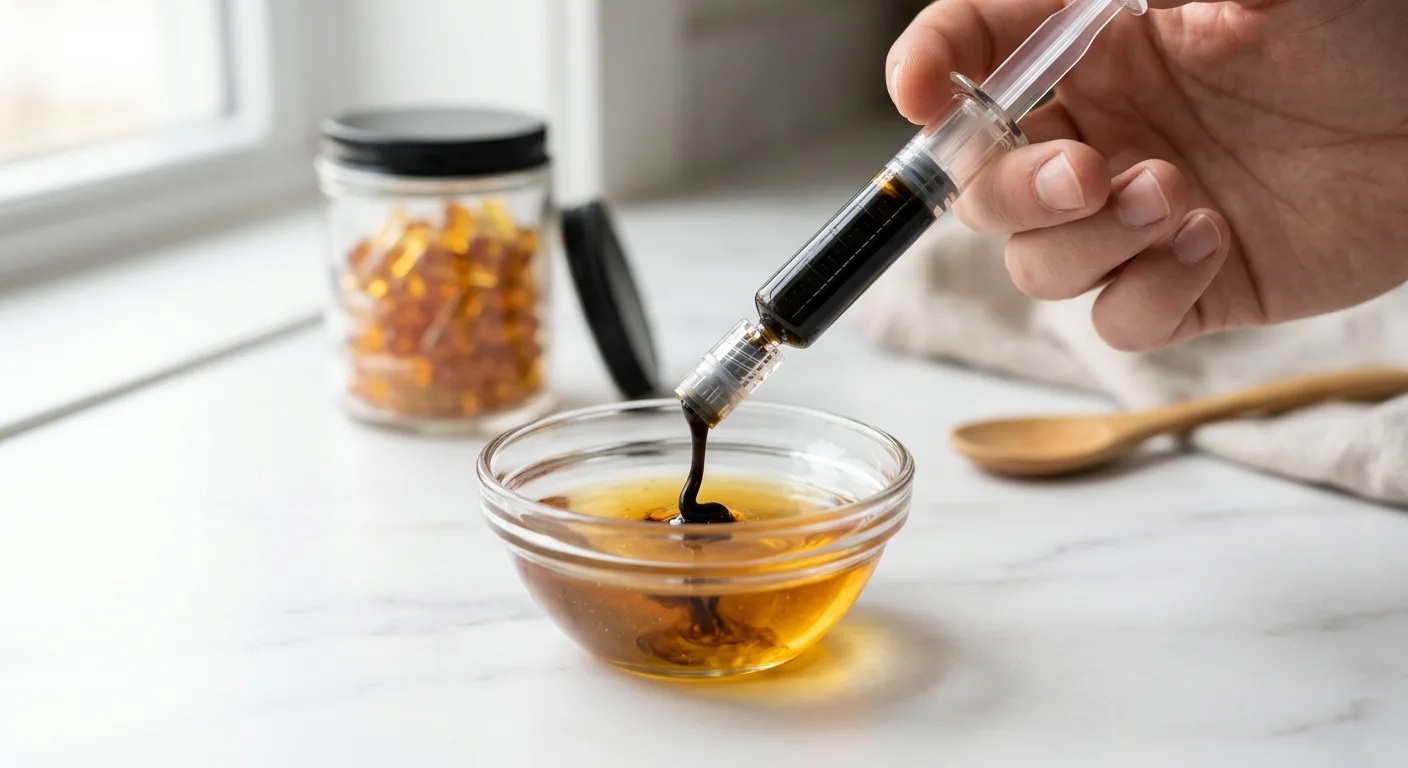
The concentrate-dissolve method skips flower entirely and uses a cannabis concentrate — RSO (Rick Simpson Oil), distillate, or FECO (full-extract cannabis oil) — dissolved directly into warm honey. This is the fastest, most precise, and cleanest-tasting approach to making THC honey.
Why This Method Exists
The biggest criticism of slow-cooker cannahoney is inconsistency. Flower-based infusions can vary by 20–40% in potency from batch to batch depending on grind size, steep time, and strain variability. Concentrates solve this because they come with lab-tested THC percentages.
Instructions
Choose Your Concentrate
RSO and FECO are already decarbed — no oven step needed. Distillate is also pre-activated. If using shatter, wax, or rosin, you must decarb it first: place it in a small oven-safe dish at 240°F for 25 minutes until it stops bubbling.
Warm the Honey
Gently heat 1 cup of honey in a double boiler or a jar in warm water until it reaches 150°F and becomes very fluid. Do not microwave — microwaves create hot spots that degrade THC unevenly.
Add Concentrate and Lecithin
Squeeze or drop 1 gram of RSO/distillate (typically 600–800 mg THC per gram) into the warm honey. Add 1 teaspoon of sunflower lecithin. Stir vigorously for 3–5 minutes until fully incorporated. The honey should be uniformly colored with no visible oil streaks.
Cool and Store
Pour into a clean jar, seal, and label with exact mg of THC per tablespoon (see dosing math below). This method takes under 30 minutes total and produces the most consistently dosed cannahoney possible.
The concentrate method is ideal for precise dosers, microdosers, and anyone who wants THC honey without any herbal taste. The slow-cooker method preserves a broader terpene profile and is better for whole-plant enthusiasts who value the entourage effect.
Cannahoney Dosing: Exact Math Per Tablespoon
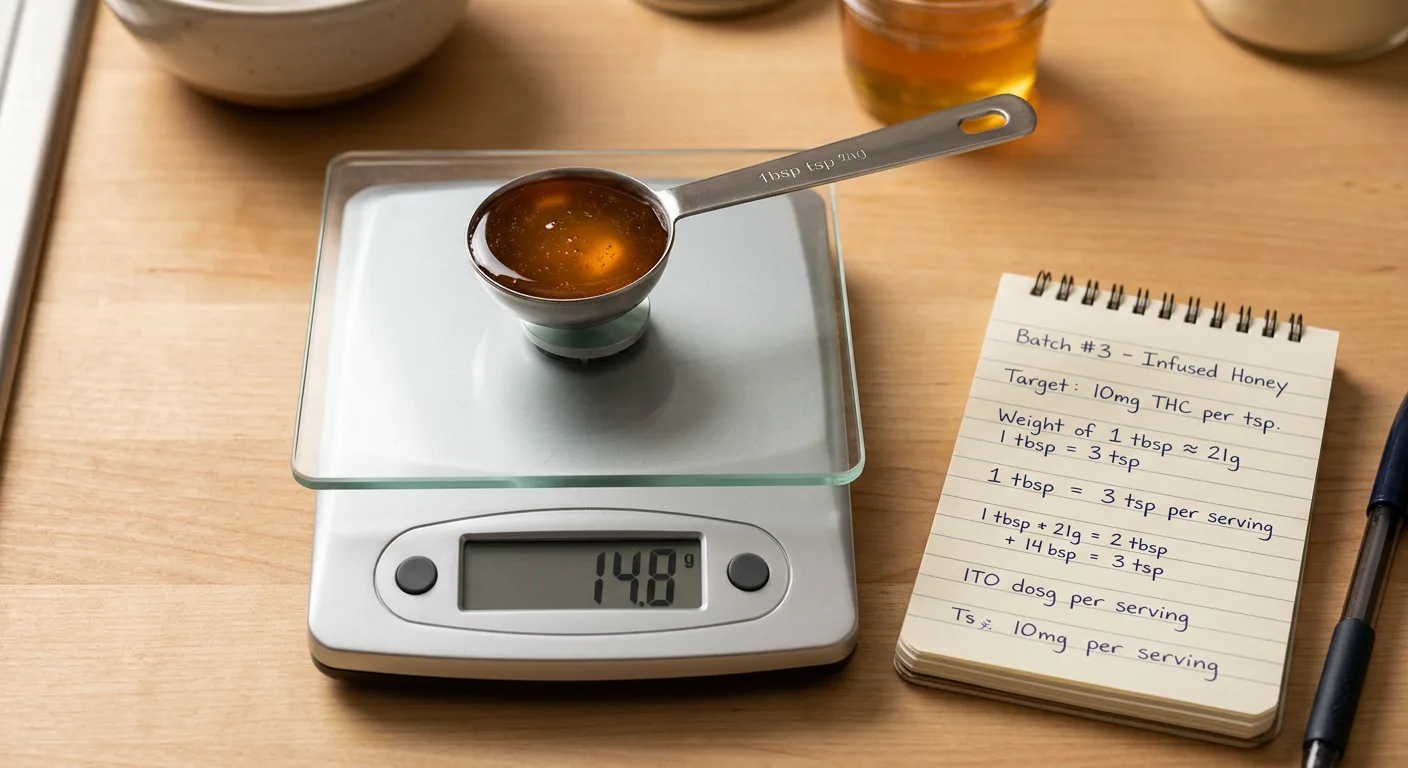
Infused honey dosing requires simple math, but getting it wrong is the most common cause of unpleasant edible experiences. Here's the precise formula for calculating THC per tablespoon in your cannahoney — the single most important number in this entire guide.
Dosing Formula for Flower-Based Infusions
Start with this equation:
(Flower weight in mg) × (THC% as decimal) × 0.88 = Total THC in mg
The 0.88 factor accounts for the CO₂ lost during decarboxylation. Then divide by the number of tablespoons in your batch.
Example: 3.5g of 20% THC flower in 1 cup of honey:
- 3,500 mg × 0.20 × 0.88 = 616 mg total THC
- 1 cup of honey = 16 tablespoons
- 616 ÷ 16 = ~38.5 mg THC per tablespoon
That's a strong dose. For a more moderate ~10 mg per tablespoon, use approximately 1 gram of 20% flower per cup of honey. Use our edible dosage calculator to dial in your exact numbers.
Dosing Formula for Concentrate-Based Infusions
Concentrates are simpler because potency is already lab-tested:
- 1g of RSO at 70% THC = 700 mg THC
- Dissolved in 1 cup honey = 16 tablespoons
- 700 ÷ 16 = ~43.75 mg per tablespoon
| Flower Amount (20% THC) | Honey Volume | Total THC (est.) | mg per Tablespoon | Experience Level |
|---|---|---|---|---|
| 1 gram | 1 cup (16 Tbsp) | 176 mg | ~11 mg | Standard dose |
| 2 grams | 1 cup | 352 mg | ~22 mg | Experienced users |
| 3.5 grams | 1 cup | 616 mg | ~38.5 mg | High tolerance only |
| 3.5 grams | 2 cups | 616 mg | ~19.3 mg | Moderate-strong |
| 7 grams | 2 cups | 1,232 mg | ~38.5 mg | Very experienced |
Start low, go slow. If you're new to edibles, aim for 5–10 mg per tablespoon and wait at least 90 minutes before taking more. Honey-based edibles can have a slightly delayed onset of 45–90 minutes because the sugars may speed gastric emptying, but this varies by individual.
Accounting for Extraction Efficiency
Not all THC transfers from flower to honey. Slow-cooker infusions typically achieve 60–80% extraction efficiency depending on steep time, temperature, and whether you used lecithin. A conservative estimate uses 70% efficiency:
- 616 mg theoretical × 0.70 = 431 mg actual
- 431 ÷ 16 = ~27 mg per tablespoon
Without lab testing, always assume lower efficiency and dose conservatively. The concentrate method achieves near 95–100% efficiency since the cannabinoids are already extracted.
Best Strains for Cannabis-Infused Honey
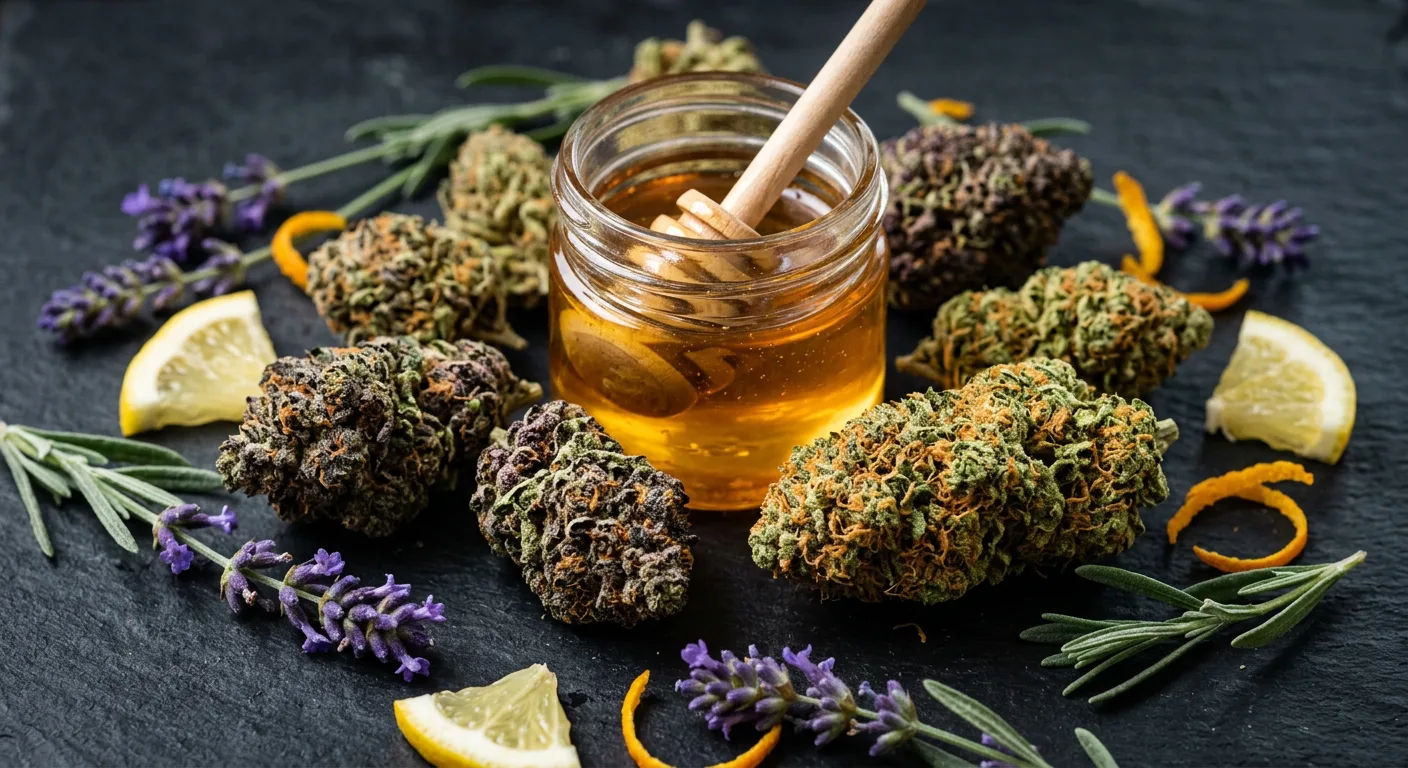
The best strains for infused honey pair terpene profiles — floral, citrus, and fruity — with honey's natural sweetness. High-myrcene and linalool-forward genetics complement honey's flavor rather than fighting it, while citrus-dominant strains create a bright, versatile cannahoney perfect for teas and dressings.
Floral and Sweet Strains
- Lavender — High linalool content (the same terpene in actual lavender). 19% THC. The floral terpene profile merges seamlessly with wildflower honey. Excellent for relaxation-focused cannahoney.
- Papaya Feminized — 25% THC with tropical fruit and sweet mango notes driven by myrcene. Creates a rich, dessert-quality honey ideal for drizzling on yogurt or pancakes.
- Granddaddy Purple — Berry and grape terpenes with heavy myrcene. 20% THC. Pairs beautifully with darker honeys like buckwheat or manuka.
- White Berry Feminized — 18% THC with blueberry sweetness. The fruity profile makes an approachable, mild-flavored cannahoney for beginners.
Citrus-Dominant Strains
- Super Lemon Haze Feminized — 23% THC, loaded with limonene and terpinolene. Creates a bright, zesty honey perfect for lemon tea infusions and salad dressings.
- Tangerine Haze Feminized — 18% THC with sharp tangerine citrus notes. A daytime-oriented cannahoney with an uplifting, energetic character.
- Clementine — Intense orange terpenes, 17% THC. One of the best citrus profiles available for honey infusions — the natural orange pairing is a classic.
- California Orange Bud Feminized — 15% THC with a sweet orange aroma. Lower THC makes dosing easier for moderate users who want a flavorful, approachable cannahoney.
High-Potency Options for Experienced Users
- OG Kush Feminized — 26% THC with earthy-lemon-pine complexity. Creates a savory-leaning honey great for glazes on roasted vegetables or meat.
- Wedding Cake — 25% THC with vanilla and sweet dough terpenes. The dessert-forward profile was practically designed for honey infusions.
- Northern Lights x Amnesia Haze Feminized — 24% THC combining relaxing indica traits with hazy sativa energy. The complex terpene mix creates a multi-layered honey.
Pro tip: Match your honey type to your strain. Use light, mild acacia or clover honey with delicate floral strains. Use robust buckwheat or wildflower honey with earthy, high-myrcene genetics. The pairing matters as much as wine and cheese.
If you grow your own flower for infusions, plan your grow with our free grow planner tool and estimate yields with the yield estimator to know exactly how much cannahoney your harvest will produce.
How Long Does THC Honey Last? Storage and Shelf Stability
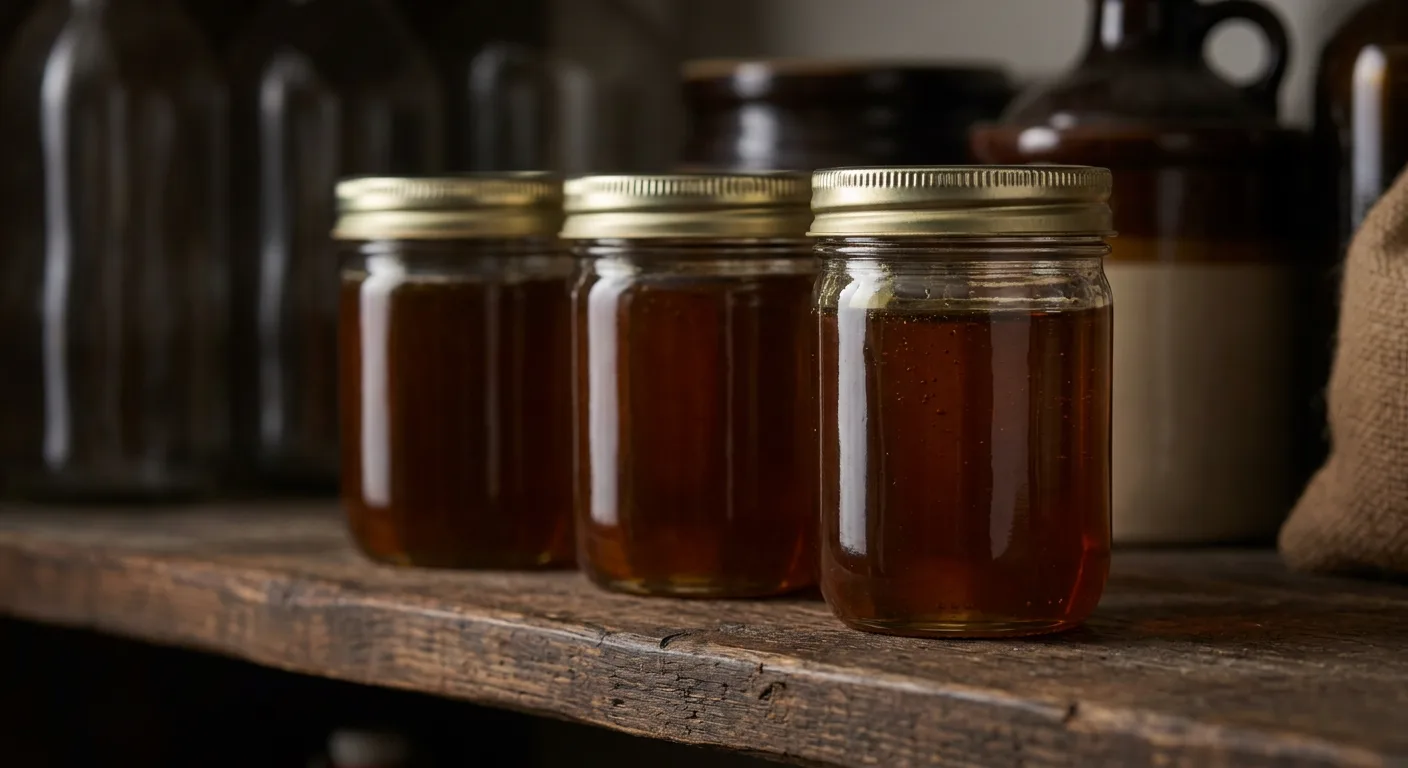
Properly made and stored cannabis-infused honey lasts 6–12 months at room temperature and potentially longer when refrigerated. Honey's natural antimicrobial properties — low water activity, acidic pH, and hydrogen peroxide production — make it one of the most shelf-stable edible bases available.
Storage Best Practices
- Use airtight glass mason jars — not plastic, which can leach and absorb cannabinoids
- Store in a cool, dark location (60–75°F ideal) away from direct sunlight
- Never introduce water or wet utensils into the jar — moisture raises water activity and invites fermentation
- Label every jar with date, strain, flower amount, and estimated mg/Tbsp
- If storing for 6+ months, consider refrigeration to slow THC-to-CBN degradation
What Degrades Cannahoney Over Time
- Light: UV radiation converts THC to CBN (less psychoactive, more sedating). Use amber jars or store in a dark cabinet. For more on this principle, see our long-term cannabis storage guide.
- Heat: Temperatures above 100°F accelerate degradation. Never leave cannahoney in a hot car or near a stove.
- Oxygen: Fill jars as full as possible to minimize headspace. Consider vacuum sealing for long-term batches.
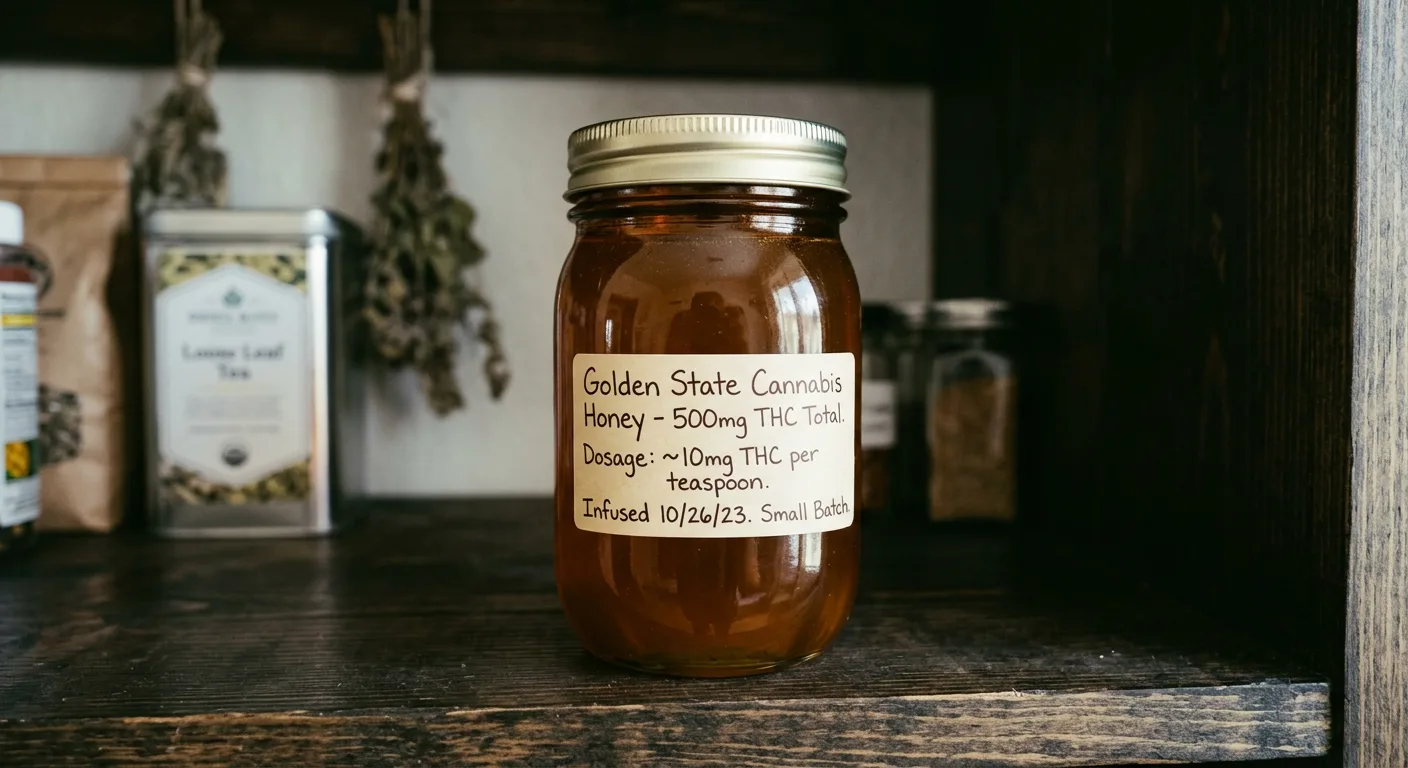
THC honey stored in sealed amber glass at room temperature retains approximately 85–90% of its original potency at the 6-month mark. After 12 months, expect a 15–25% potency decline as THC slowly converts to CBN — your honey will still work, but it may feel more sedating than euphoric.
Troubleshooting Common Cannahoney Failures
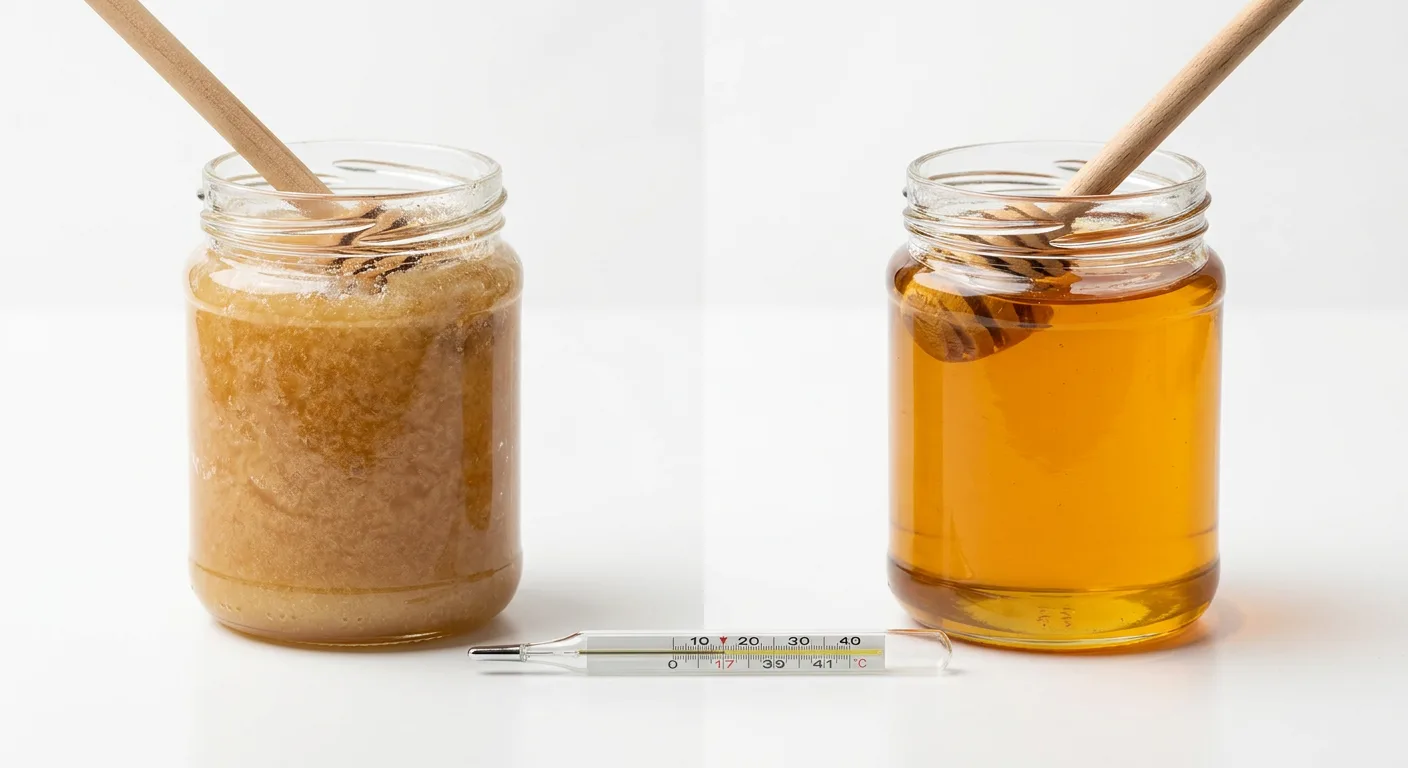
Three problems account for 90% of cannahoney failures reported in online forums: crystallization, potency loss, and uneven distribution. Each has a clear cause and a straightforward fix.
Crystallization
Honey naturally crystallizes over time as glucose molecules come out of solution. Cannabis flower particles accelerate this by providing nucleation sites. Fix and prevent it with these steps:
- Prevention: Strain thoroughly through fine cheesecloth or a 100-micron mesh. Use the sachet method to minimize loose particles.
- Fix: Place the sealed jar in a warm water bath at 110–120°F and stir every few minutes until crystals dissolve. Do not exceed 150°F or you risk degrading both honey enzymes and cannabinoids.
- Honey choice matters: Acacia honey has a high fructose-to-glucose ratio and resists crystallization longer than clover or wildflower varieties.
Potency Loss from Overheating
This is the most frustrating failure because you won't know until you dose. THC begins degrading above 300°F and degrades meaningfully even at 200°F+ with prolonged exposure. In the slow-cooker method:
- Never set the slow cooker to HIGH — always use LOW
- Monitor honey temperature with a probe thermometer; keep it 150–170°F
- Don't extend steep time beyond 8 hours hoping for more potency — diminishing returns set in around 6 hours, and degradation accelerates after 8
Uneven Distribution (Hot Spots)
One tablespoon hits like a freight train, the next barely registers. This happens when cannabinoids clump together instead of dispersing evenly.
- Root cause: Skipping lecithin. Without an emulsifier, cannabinoid-rich resin clusters rather than distributing uniformly.
- Fix: Always add 1 teaspoon of sunflower lecithin per cup of honey. Stir vigorously every 30 minutes during infusion. Stir again before each use.
- The concentrate method produces the most even distribution because the cannabinoids are already in liquid form when they enter the honey.
Shake or stir before every use. Even well-made cannahoney can settle slightly over weeks of storage. A 10-second stir with a clean, dry spoon before each dose ensures consistency. This one habit eliminates most "my dosing is all over the place" complaints.
Recipe Applications: Using Your Cannahoney
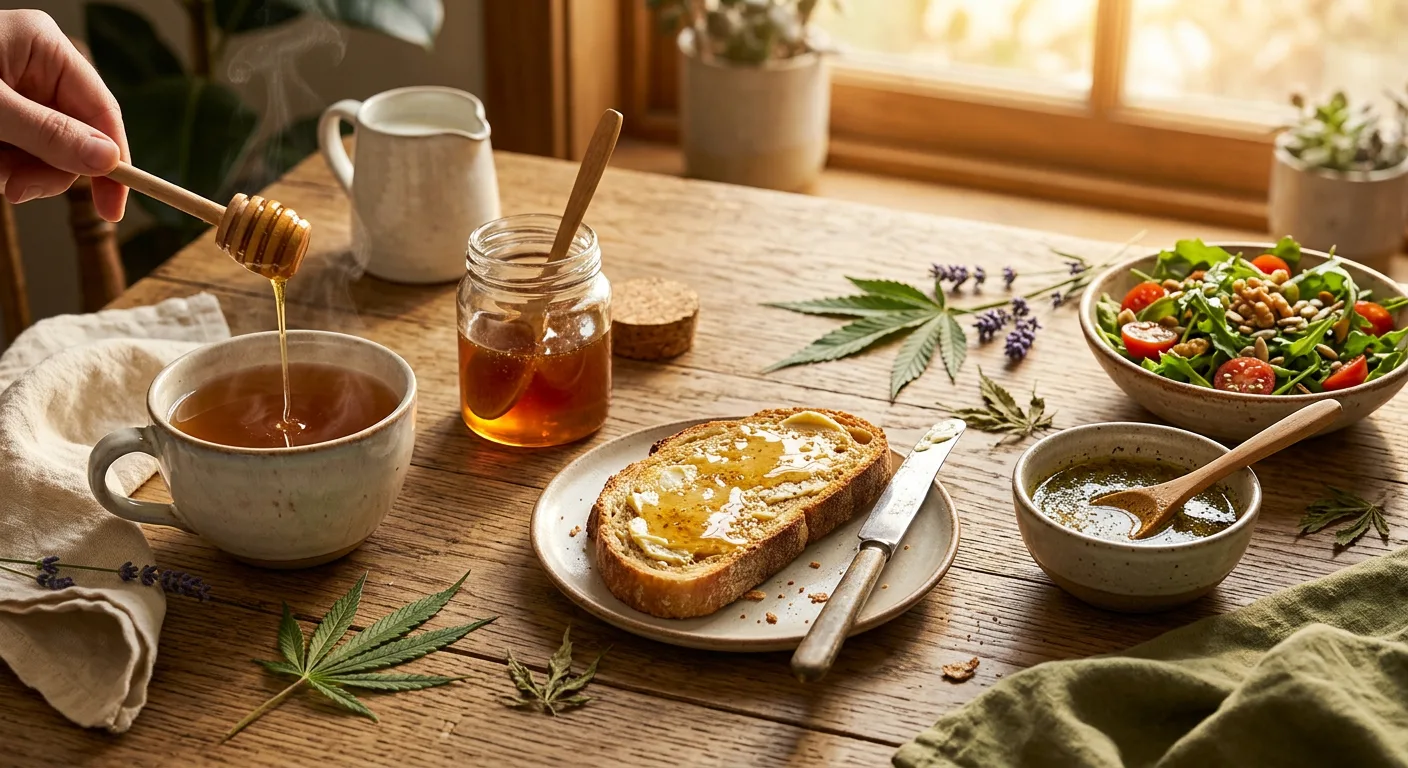
Cannabis honey shines in applications where fat-based infusions fail. You can add it to beverages, drizzle it on finished dishes, and use it in glazes — all situations where cannabutter would be out of place.
Cannabis Honey Tea
The most popular use. Add 1 tablespoon of cannahoney to any hot (not boiling) tea. Stir thoroughly. The key detail most guides miss: let your tea cool to drinking temperature (around 140–160°F) before adding the honey. Boiling water (212°F) will degrade THC if the honey sits at that temperature.
Pair with chamomile for relaxation, green tea for a balanced buzz, or chai for a spiced experience. This pairs exceptionally well with cannahoney made from Super Lemon Haze — the citrus terpenes echo the bright notes in Earl Grey or lemon tea.
Toast, Yogurt, and Breakfast
Spread cannahoney on warm toast, swirl it into Greek yogurt with granola, or drizzle over oatmeal. These no-cook applications preserve every milligram of THC because there's zero additional heat exposure.
Salad Dressings and Vinaigrettes
Whisk 1 tablespoon cannahoney with 2 tablespoons olive oil, 1 tablespoon apple cider vinegar, and a pinch of salt. The lecithin already in your honey helps emulsify the dressing naturally. This is a sophisticated way to dose that avoids the "weed brownie" cliché.
Glazes for Meat, Vegetables, and Bread
- Salmon glaze: Mix cannahoney with soy sauce, garlic, and ginger. Brush on salmon in the last 2 minutes of cooking (minimal heat exposure).
- Roasted carrot glaze: Toss roasted carrots with cannahoney after removing from the oven, not before.
- Fresh bread drizzle: Drizzle over warm (not hot) fresh bread with flaky salt.
The golden rule with cannahoney in cooking: add it last, never first. Any application that exposes your honey to temperatures above 300°F (baking, broiling, sautéing) will destroy THC. Use cannahoney as a finishing element, not a cooking ingredient.
For THC-infused coffee recipes that also pair well with cannahoney as a sweetener, see our cannabis coffee guide. And if you want to explore gelatin and pectin-based edibles instead, our cannabis gummies guide covers that method in full.
Health Benefits and Wellness Uses of Cannabis Honey
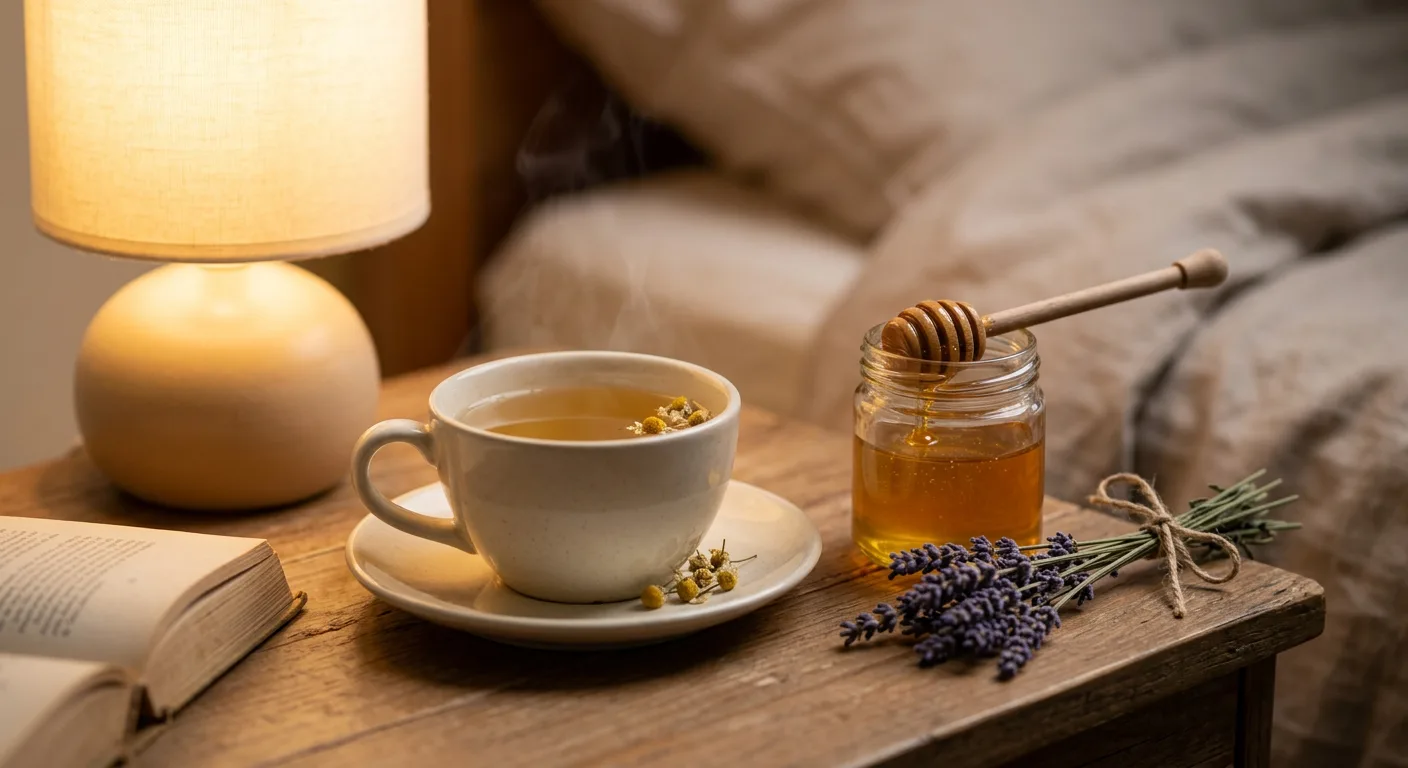
Cannabis honey combines the documented wellness properties of raw honey — soothing sore throats, providing antioxidants, and supplying quick energy — with the therapeutic potential of cannabinoids. Many users report using cannahoney for specific wellness purposes.
Common Reported Uses
- Sleep support: A tablespoon of THC honey in chamomile tea 60–90 minutes before bed is a popular ritual among users on r/treedibles. Strains high in myrcene and linalool enhance the sedating effect. See our best strains for sleep page for genetics that support this use.
- Sore throat relief: Honey has been used for centuries to coat and soothe inflamed throats. Adding low-dose THC or CBD may provide additional comfort.
- Anxiety and stress management: Low-dose cannahoney (2.5–5 mg THC per serving) is used by some as a daily microdose. Our best strains for anxiety guide covers genetics that tend to produce calming effects.
- Pain and inflammation: Users with chronic discomfort sometimes prefer cannahoney over smoking because the onset is slower and the effects last longer (4–8 hours vs. 1–3 hours).
THC vs. CBD Cannahoney
You can make cannahoney with CBD-dominant flower or CBD concentrates for non-psychoactive wellness honey. A 1:1 THC:CBD ratio is also popular — the CBD modulates the THC high, creating a milder, more functional experience. Simply split your flower 50/50 between a THC strain and a CBD strain during infusion.
Cannahoney vs. Cannabutter vs. Tinctures: When to Choose What
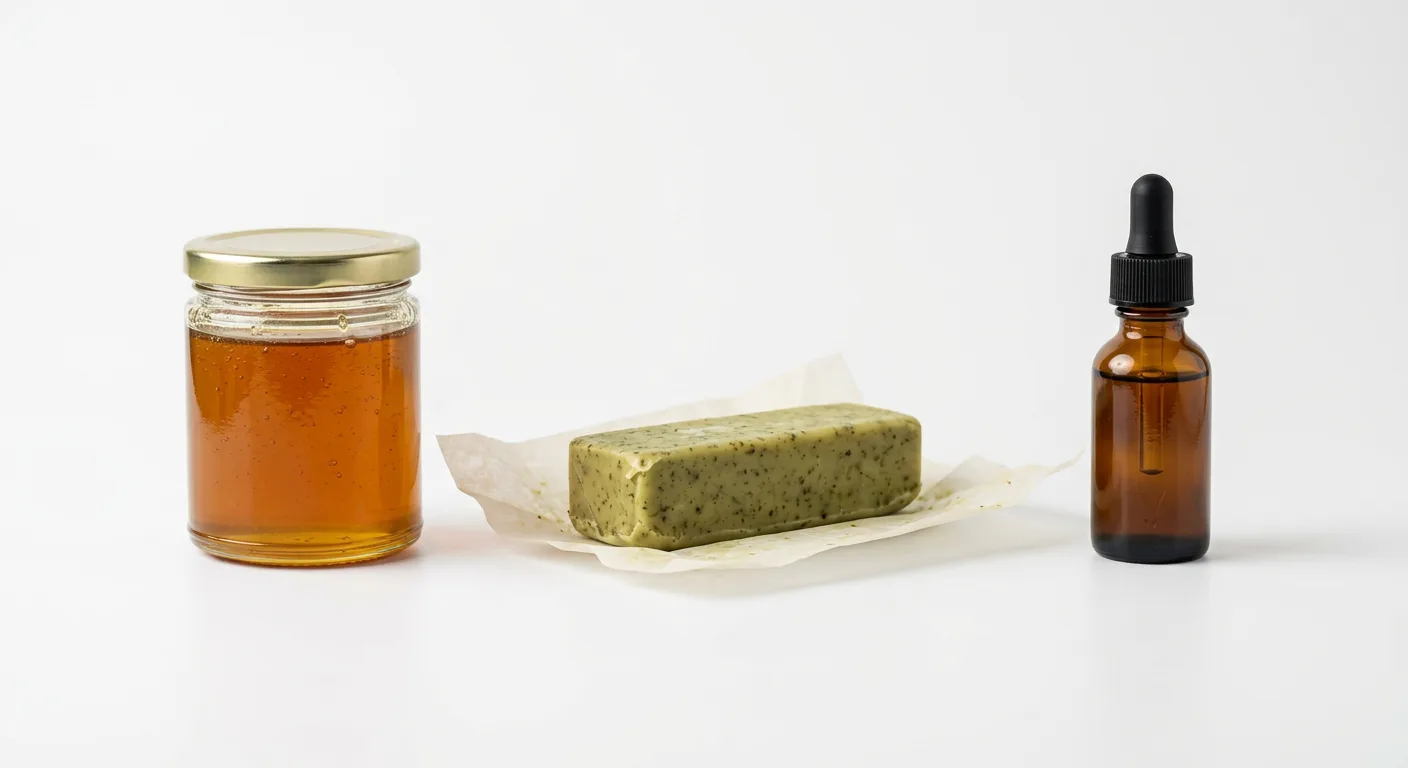
Cannabis honey isn't always the right choice. Understanding when to use honey versus butter versus a tincture will save you time and improve your results.
| Factor | Cannabis Honey | Cannabutter | Alcohol Tincture |
|---|---|---|---|
| Fat required? | No | Yes (80%+ fat) | No |
| Shelf life (room temp) | 6–12 months | 2–4 weeks (must refrigerate) | 12+ months |
| Onset time | 45–90 min | 60–120 min | 15–45 min (sublingual) |
| Best for | Beverages, toppings, glazes | Baking, cooking | Precise dosing, sublingual |
| Taste | Sweet, pleasant | Buttery, herbal | Bitter, alcohol burn |
| Dosing precision | Moderate (concentrate method: high) | Moderate | High |
| Difficulty | Easy | Easy | Moderate |
Choose honey when: you want a shelf-stable, sweet infusion for beverages, direct consumption, or finishing dishes. It's also the most gift-worthy and shareable form of edible.
Choose butter when: you're baking cookies, brownies, or cooking dishes that call for fat. Cannabinoids bind more efficiently to butter's saturated fat.
Choose tinctures when: you need fast onset (sublingual absorption), precise dropper-based dosing, or a calorie-free option.
Complete Cannahoney Checklist
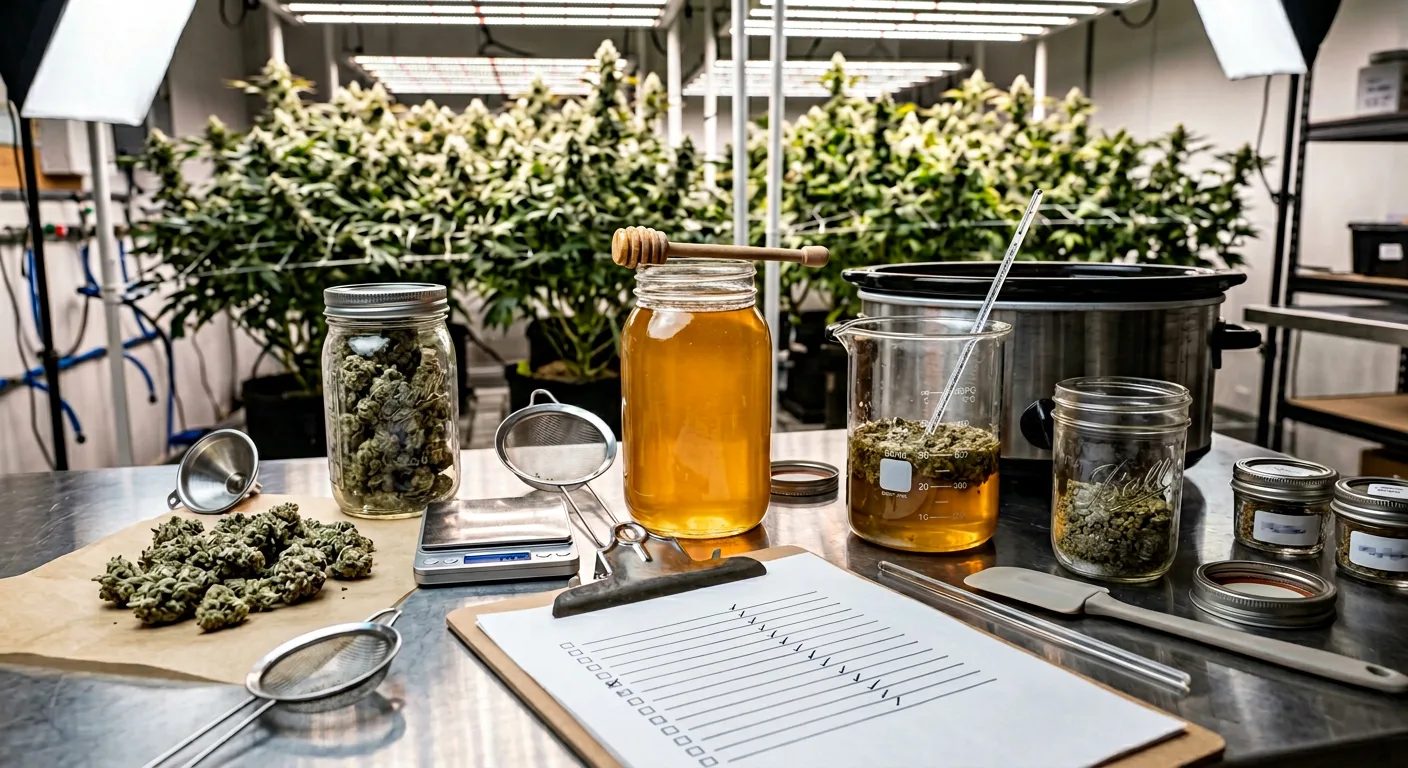
Print this or bookmark it. Run through every item before, during, and after your infusion to ensure a perfect batch every time.
Before You Start
- Oven thermometer calibrated and verified
- Flower ground to medium-coarse consistency (not powder)
- Decarb completed: 240°F for 40 minutes, cooled
- Sunflower lecithin measured (1 tsp per cup of honey)
- Clean, dry mason jars ready
- Dosing math calculated and written down
During Infusion
- Honey temperature stays between 150–170°F
- Stirring every 30–60 minutes
- Slow cooker set to LOW (never HIGH)
- Infusion time: 4–8 hours (flower method) or 15–30 minutes (concentrate method)
After Infusion
- Strained through fine cheesecloth or 100-micron mesh
- Cooled to room temperature before sealing
- Jar labeled with: date, strain, flower weight, estimated mg/Tbsp
- Stored in cool, dark location in airtight glass
- Test dose taken: start with ½ tablespoon, wait 90 minutes
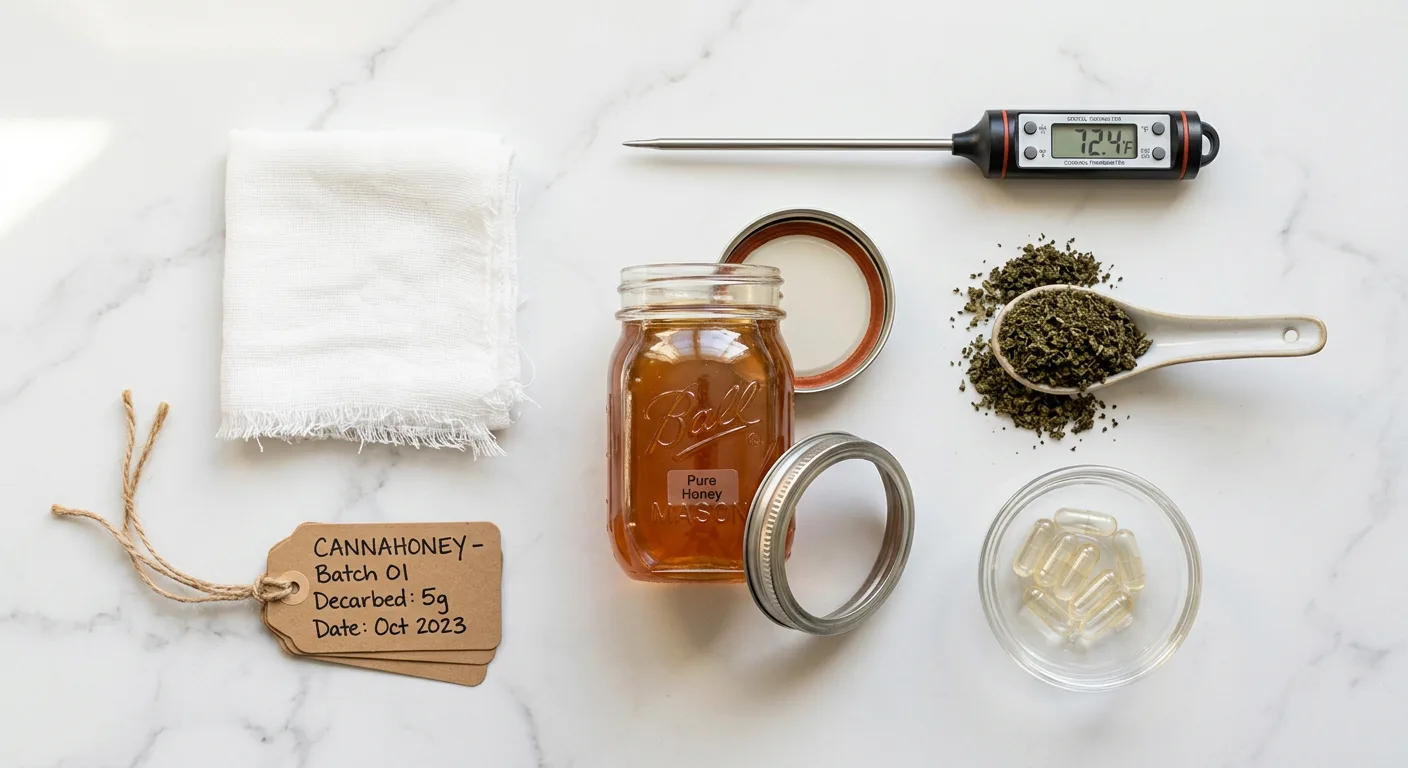
Frequently Asked Questions
How long does THC honey last before losing potency?
Cannabis-infused honey stored in a sealed, airtight amber glass jar in a cool, dark location retains approximately 85–90% of its original THC potency for 6 months. After 12 months, expect a 15–25% decline as THC gradually converts to CBN. Refrigeration slows this degradation further. The honey itself remains safe to eat indefinitely due to its low water activity and acidic pH, but the psychoactive effects will diminish over time.
How many mg of THC are in a tablespoon of cannahoney?
It depends on how much cannabis you infuse. Using 1 gram of 20% THC flower per cup of honey yields approximately 11 mg THC per tablespoon (at 100% efficiency) or about 7–8 mg per tablespoon assuming realistic 70% extraction efficiency. The concentrate method is more precise: 1 gram of RSO at 70% THC in 1 cup of honey produces approximately 43.75 mg per tablespoon. Always calculate your specific batch using the dosing formula in this guide or our edible dosage calculator.
Does cannabis honey work without fat? How do cannabinoids bind to honey?
Yes, cannabis honey works without fat through two mechanisms. In the slow-cooker method, decarbed cannabinoids become suspended in honey's thick sugar matrix — they don't need to dissolve into fat to be orally active. Adding sunflower lecithin creates phospholipid micelles that encapsulate THC molecules, improving both distribution and bioavailability. In the concentrate-dissolve method, pre-extracted cannabinoids mix directly into warm honey, bypassing the fat question entirely.
Can I make cannahoney with CBD flower instead of THC flower?
Absolutely. The process is identical — decarb your CBD flower at 240°F for 40 minutes, then infuse using either the slow-cooker or concentrate method. CBD honey won't produce psychoactive effects but offers the same wellness-oriented benefits that CBD users seek: potential support for relaxation, sleep, and general well-being. You can also create a 1:1 THC:CBD honey by mixing equal amounts of both types of flower.
What's the best type of honey to use for cannahoney?
Raw, unfiltered honey preserves the most beneficial enzymes and antioxidants. For flavor, match honey type to strain: light acacia or orange blossom honey pairs with citrus strains, while robust buckwheat or wildflower honey complements earthy, high-myrcene genetics. For crystallization resistance, choose acacia honey — its high fructose-to-glucose ratio keeps it liquid significantly longer than clover or wildflower varieties.