Why Cannabis and Coffee Work Together (and Sometimes Don't)
Cannabis coffee combines Earth's two most popular psychoactive substances into a single cup. Over 1 billion people drink coffee daily, and cannabis use continues to surge across legal markets. The combination — sometimes called a "hippie speedball" — creates a unique interplay between caffeine's stimulating effects and THC's relaxing, euphoric properties.
But making THC-infused coffee at home is more than just dropping a nug into your French press. You need to understand fat solubility, precise dosing, and how caffeine actually alters your cannabis experience at the neurochemical level. This guide covers four proven methods, the science behind the pairing, and specific strain-to-roast combinations that elevate both flavors.
Cannabis coffee works best when THC is dissolved into a fat carrier (butter, MCT oil, or cream) and emulsified into your brew. Without fat, THC cannot absorb efficiently, and you waste most of your infusion.
The Fat-Solubility Problem: Why You Can't Just Drop THC into Black Coffee
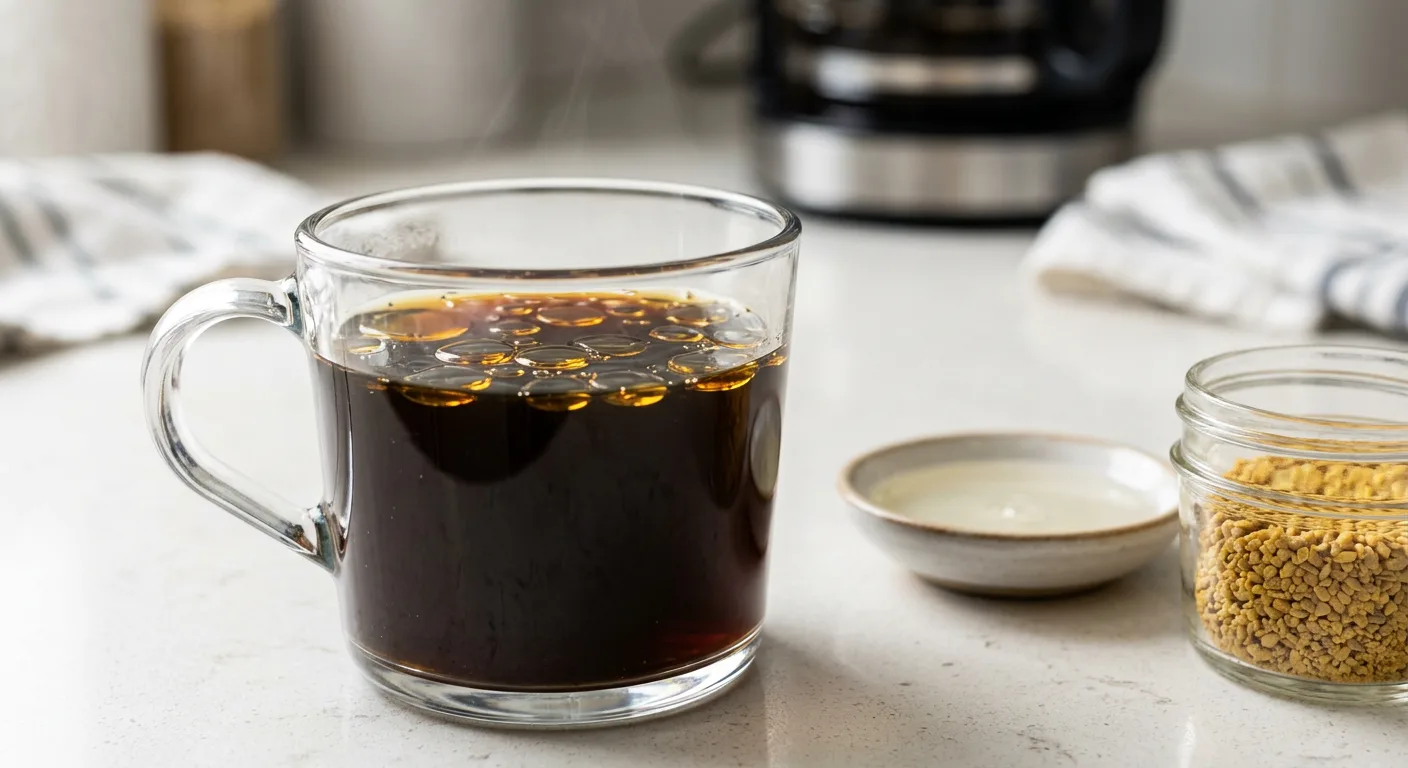
THC is a hydrophobic molecule. It repels water and bonds only to fats and lipids. Coffee is 98% water. When you try to stir raw cannabis oil into black coffee, the THC floats on the surface in oily globules, resists mixing, and passes through your digestive system largely unabsorbed.
This is the single biggest mistake people make with cannabis coffee. Here are the three solutions that actually work:
- MCT oil or cannabutter — Dissolves THC into a fat that can be emulsified into hot coffee with a frother
- Sunflower lecithin — A natural emulsifier that binds fat and water molecules together, preventing separation
- Full-fat dairy or cream — Provides enough milkfat (minimum 3.5%) to carry THC into suspension
- Alcohol-based tincture — Ethanol is water-miscible, so tinctures mix into coffee without fat (the only fat-free option)
Sunflower lecithin (not soy) is the preferred emulsifier for cannabis edibles. Add 1 teaspoon per cup. It contains phospholipids that form micelles around THC molecules, keeping them suspended in water-based liquids and potentially increasing bioavailability by 20–30%.
Method 1: Cannabutter or Cannabis MCT Oil Stirred into Hot Coffee
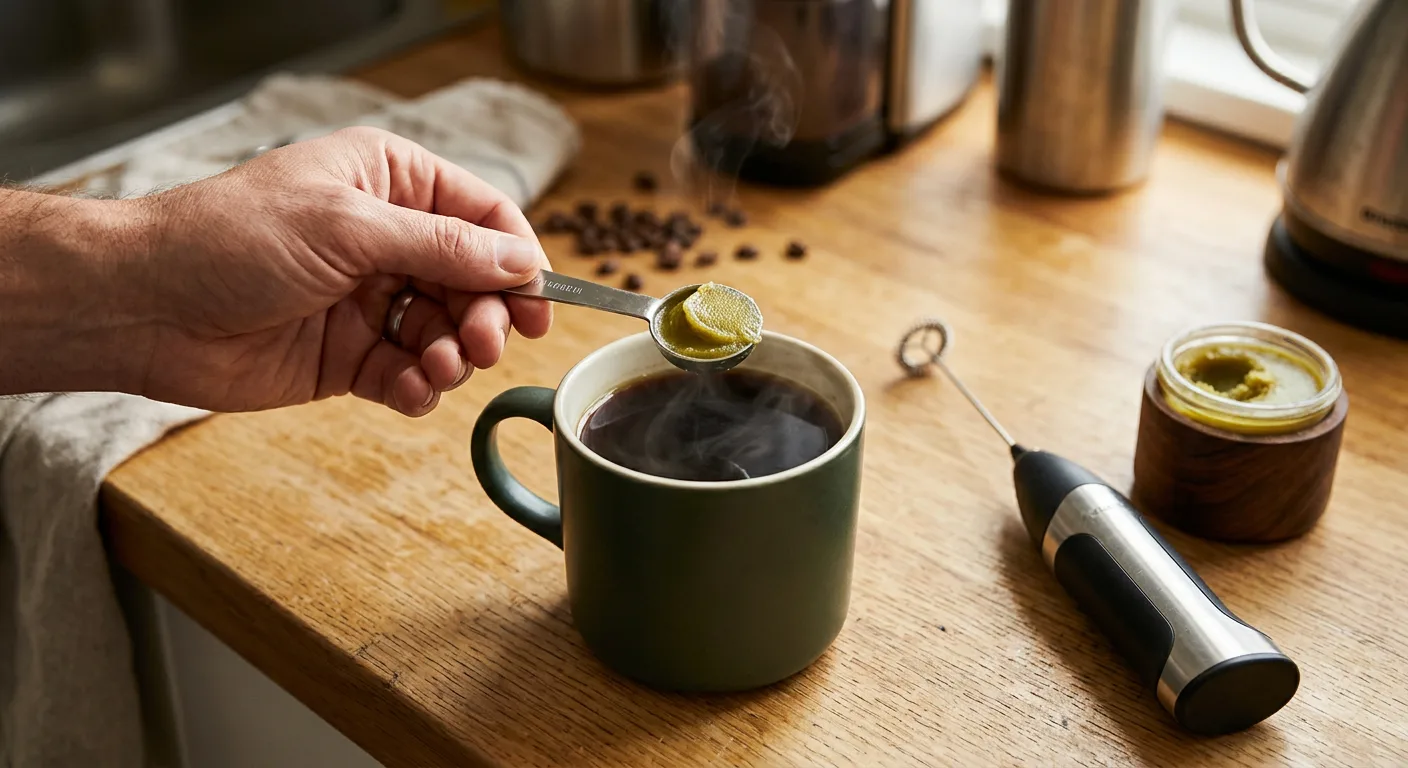
This is the most popular method for making cannabis coffee at home. If you already have cannabutter or cannabis-infused MCT oil prepared, you can have a THC coffee ready in under 3 minutes. The key is proper emulsification — without it, you get an oily film on top and inconsistent dosing.
What You Need
- 8–12 oz freshly brewed hot coffee (any method: drip, pour-over, French press)
- 1 teaspoon cannabis-infused MCT oil or cannabutter (pre-dosed — see our edible dosage calculator to dial in your target mg)
- 1 teaspoon sunflower lecithin (optional but strongly recommended)
- Handheld milk frother or blender
- Sweetener or creamer to taste
Step-by-Step Instructions
Brew Your Coffee
Make your coffee as you normally would. Any brew method works. Use water between 195–205°F for optimal extraction. Pour into a large mug with at least 2 inches of headroom for frothing.
Add Your Cannabis Fat and Lecithin
Drop 1 measured teaspoon of cannabutter or cannabis MCT oil into the hot coffee. Add 1 teaspoon sunflower lecithin. The heat helps melt the butter and activate the lecithin's emulsifying properties.
Emulsify for 30 Seconds
Use a handheld milk frother directly in the mug for 20–30 seconds. You should see the coffee turn from dark black to a creamy, opaque tan color with a slight foam on top. No visible oil slick should remain. Alternatively, blend in a countertop blender for 15 seconds.
Add Extras and Serve
Stir in sweetener, flavored syrup, vanilla extract, or additional cream. Drink within 20 minutes — emulsions can separate as the coffee cools. If it separates, a quick 10-second re-froth fixes it.
Pro tip: For a "Bulletproof" style cannabis coffee, blend 1 tsp cannabis MCT oil + 1 tbsp regular unsalted butter + coffee in a blender for 30 seconds. The extra fat creates a thick, latte-like body that stays emulsified longer and tastes remarkably smooth.
Method 2: Cannabis-Infused Creamer (Make-Ahead Batch Recipe)
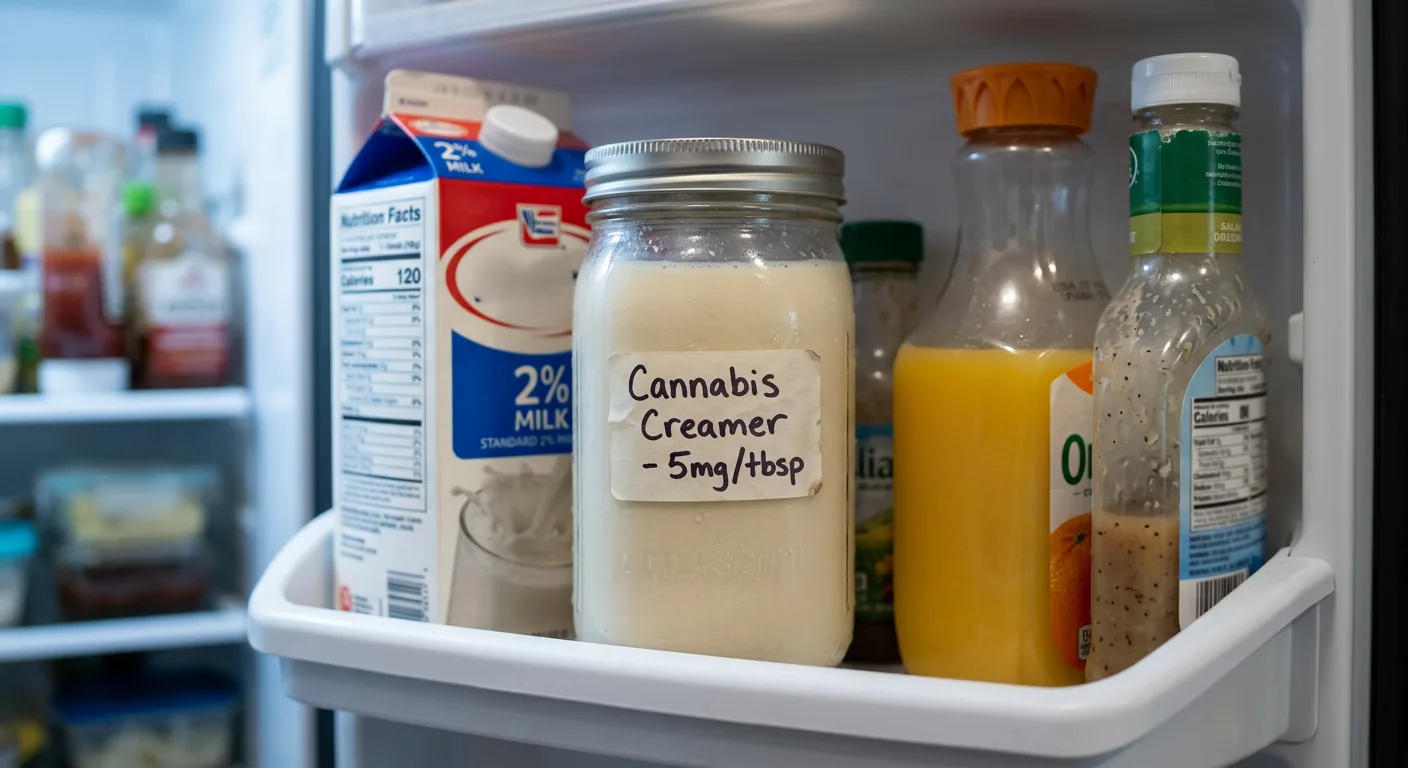
Making a batch of cannabis-infused creamer lets you dose your morning coffee in seconds — just pour and stir. This is the best approach for daily microdosers who want consistency without measuring cannabutter every morning. One batch lasts 7–10 days refrigerated.
Ingredients
- 2 cups heavy cream or half-and-half
- 2 tablespoons cannabis-infused MCT oil or melted cannabutter (calculate your total THC to determine per-tablespoon dosing)
- 2 teaspoons sunflower lecithin
- 1 teaspoon vanilla extract (optional)
- 2 tablespoons maple syrup or sweetener of choice (optional)
Step-by-Step Instructions
Warm the Cream
Pour 2 cups of heavy cream into a small saucepan. Heat over medium-low until it reaches 150°F (steaming but not simmering). Do not boil — boiling can cause separation and damages the cream's protein structure.
Blend in Cannabis Oil and Lecithin
Add the cannabis MCT oil, sunflower lecithin, vanilla, and sweetener to the warm cream. Use an immersion blender directly in the saucepan for 60 seconds until fully combined. The mixture should look uniform with no oil streaks.
Jar, Label, and Refrigerate
Pour into a clean glass jar. Label clearly with the total THC content and per-tablespoon dose. Refrigerate immediately. Shake the jar vigorously before each use, as some separation is natural after 24+ hours.
Dosing Your Cannabis Creamer
If your batch contains 200 mg total THC across 32 tablespoons (2 cups), each tablespoon delivers approximately 6.25 mg THC. Use our edible dosage calculator to determine the exact per-serving dose based on your specific cannabutter or oil potency.
Labeling is critical. Always mark your cannabis creamer clearly and store it where children, guests, or roommates cannot accidentally use it. A plain unmarked jar in the fridge is a recipe for an unintended experience. Use bright colored tape or a dedicated cannabis storage container.
Method 3: THC Tincture Drops — The Fastest Method
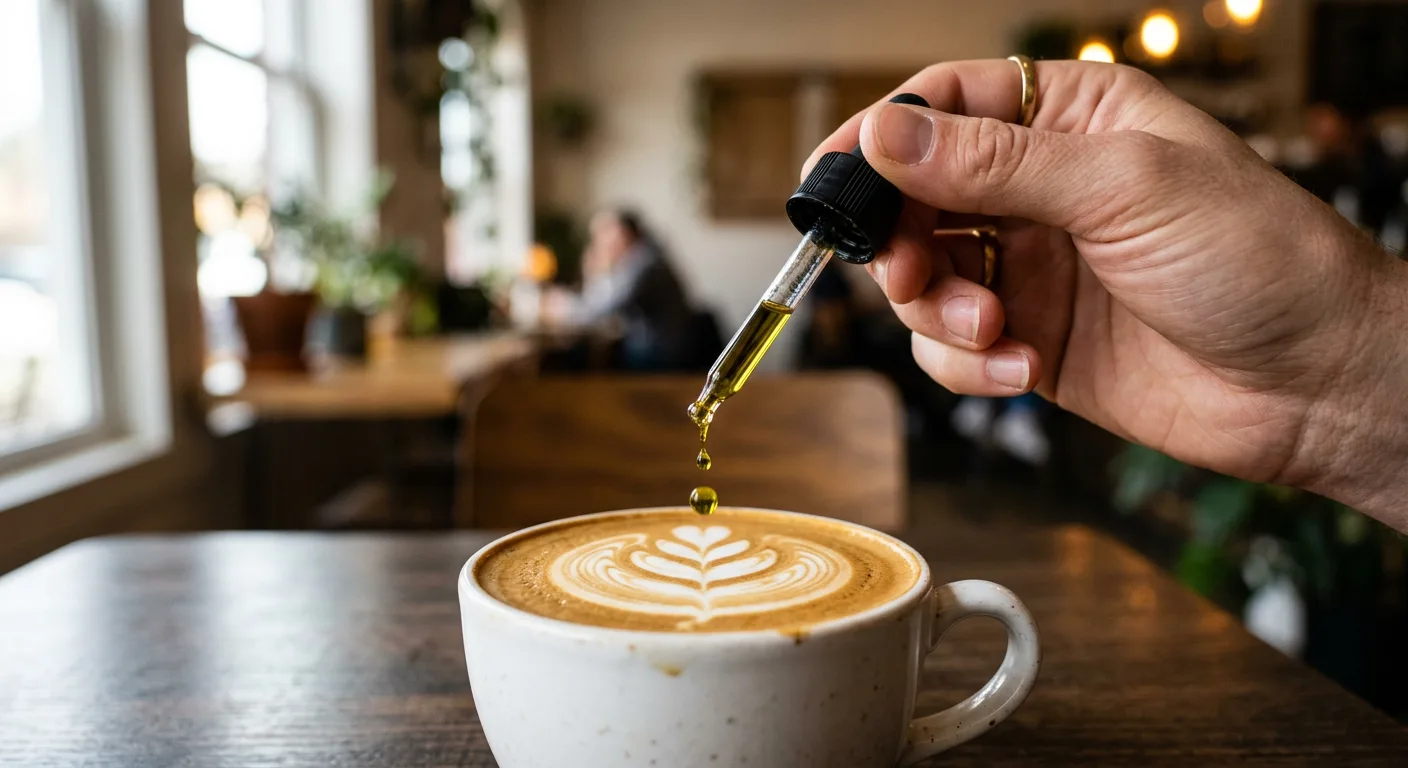
Cannabis tinctures are the simplest way to make THC coffee. Alcohol-based tinctures are water-miscible, meaning they dissolve directly into coffee without needing fat or emulsifiers. This is the only method that works cleanly with black coffee, making it ideal for people who avoid dairy or added fats.
How to Use Tincture in Coffee
Brew Your Coffee Normally
Any method, any roast. Let it cool for 1–2 minutes below 180°F. Extreme heat can degrade some terpenes in the tincture, though THC itself is heat-stable at coffee temperatures.
Add Your Measured Dose
Use the tincture dropper to add your target dose. Most commercial tinctures deliver 1–5 mg THC per dropper (check your product label). For a microdose morning coffee, 1 dropper of a 2.5 mg tincture is ideal. Stir for 10 seconds.
Taste and Adjust
Alcohol-based tinctures can add a slight herbal, bitter note. A splash of cream, flavored syrup, or honey masks this effectively. MCT-based tinctures may leave a minor oil film on black coffee — add lecithin or cream if using an oil-based tincture.
Sublingual hack: For faster onset, hold half your tincture dose under your tongue for 60 seconds before drinking your coffee. The sublingual THC absorbs in 15–20 minutes through the mucous membranes, while the rest absorbs through digestion at the normal 30–90 minute pace. This creates a layered, extended experience.
Method 4: THC Cold Brew Coffee (Fat-Washing Technique)
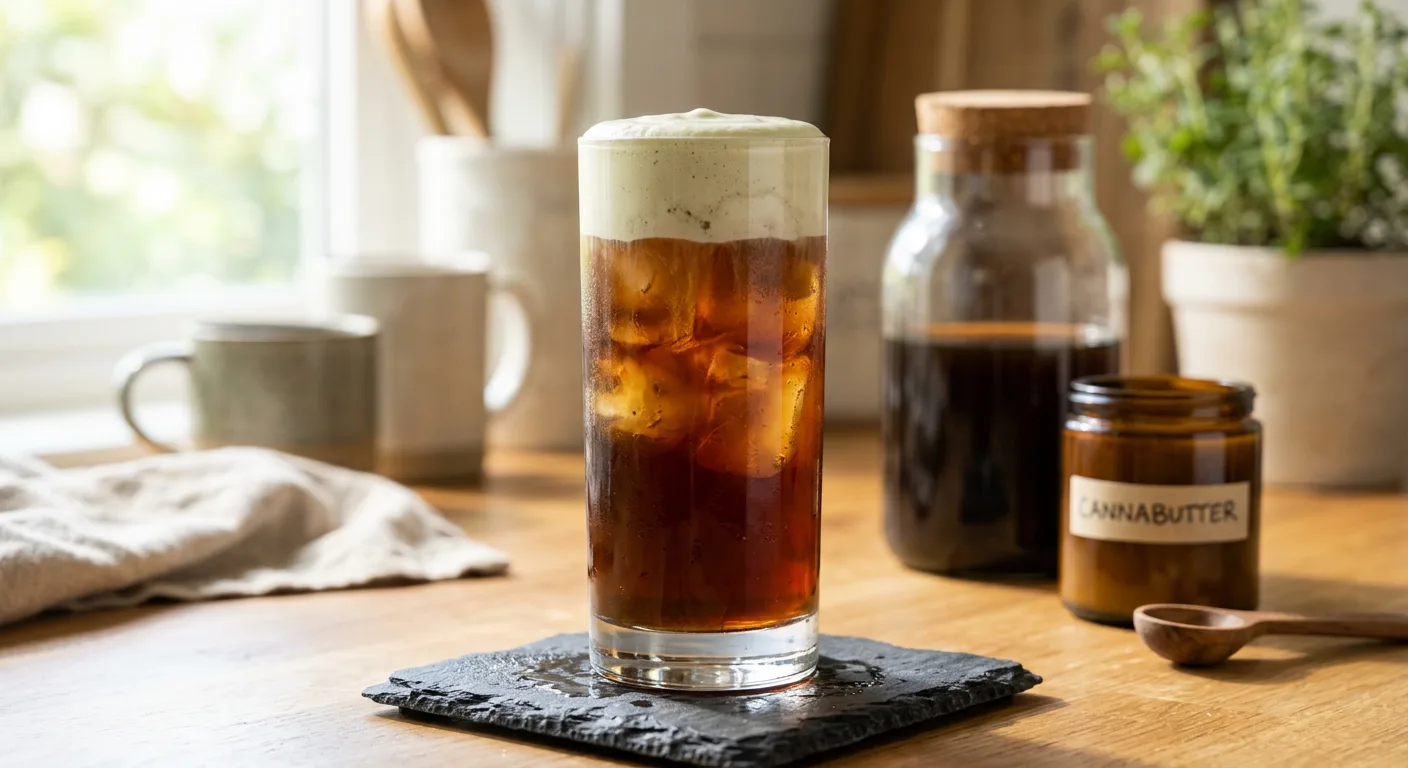
Cannabis cold brew requires a technique called fat-washing — infusing melted cannabutter into cold brew concentrate, chilling it so the fat solidifies, then straining it off. The THC and other cannabinoids transfer from the fat into the coffee during the infusion period. This produces a clean, smooth cold brew with no oily residue.
Ingredients and Equipment
- 4 cups cold brew coffee concentrate (homemade or store-bought)
- 2 tablespoons melted cannabutter (with known THC content)
- 1 teaspoon sunflower lecithin
- Large mason jar (32 oz minimum)
- Fine mesh strainer or cheesecloth
- Refrigerator space for 24 hours
Step-by-Step Fat-Washing Process
Melt and Combine
Gently melt your cannabutter until fully liquid (microwave for 20 seconds or warm in a saucepan). Pour the cold brew concentrate into a large mason jar. Add the melted cannabutter and lecithin. Seal the jar tightly.
Shake Vigorously for 2 Minutes
Shake the sealed jar hard for at least 2 full minutes. You need to force the fat and water phases to make contact so THC can transfer into the water-soluble compounds in the coffee. The lecithin helps maintain this contact.
Refrigerate for 12–24 Hours
Place the jar in the refrigerator. Over 12–24 hours, the cannabutter will solidify into a fat cap on top of the coffee. During this time, THC molecules migrate into the coffee below. Longer infusion (24 hours) yields more complete transfer.
Remove the Fat Cap
Open the jar and use a spoon to lift off the solidified butter cap. It should come off in one or two pieces. Discard the fat cap (most THC has transferred out of it). Strain the remaining coffee through a fine mesh strainer or cheesecloth to catch any small fat particles.
Dilute, Dose, and Serve
The resulting concentrate contains THC but minimal fat. Dilute with water or milk to your preferred cold brew strength (typically 1:1 or 1:2 concentrate to water). Calculate per-serving THC based on your total cannabutter input divided by number of servings. Serve over ice.
Fat-washing transfers approximately 60–70% of the THC from cannabutter into the cold brew. If you start with 100 mg total THC in your butter, expect roughly 60–70 mg in the finished cold brew. Divide by your number of servings for per-cup dosing.
Cannabis Coffee Dosing: How Much THC per Cup
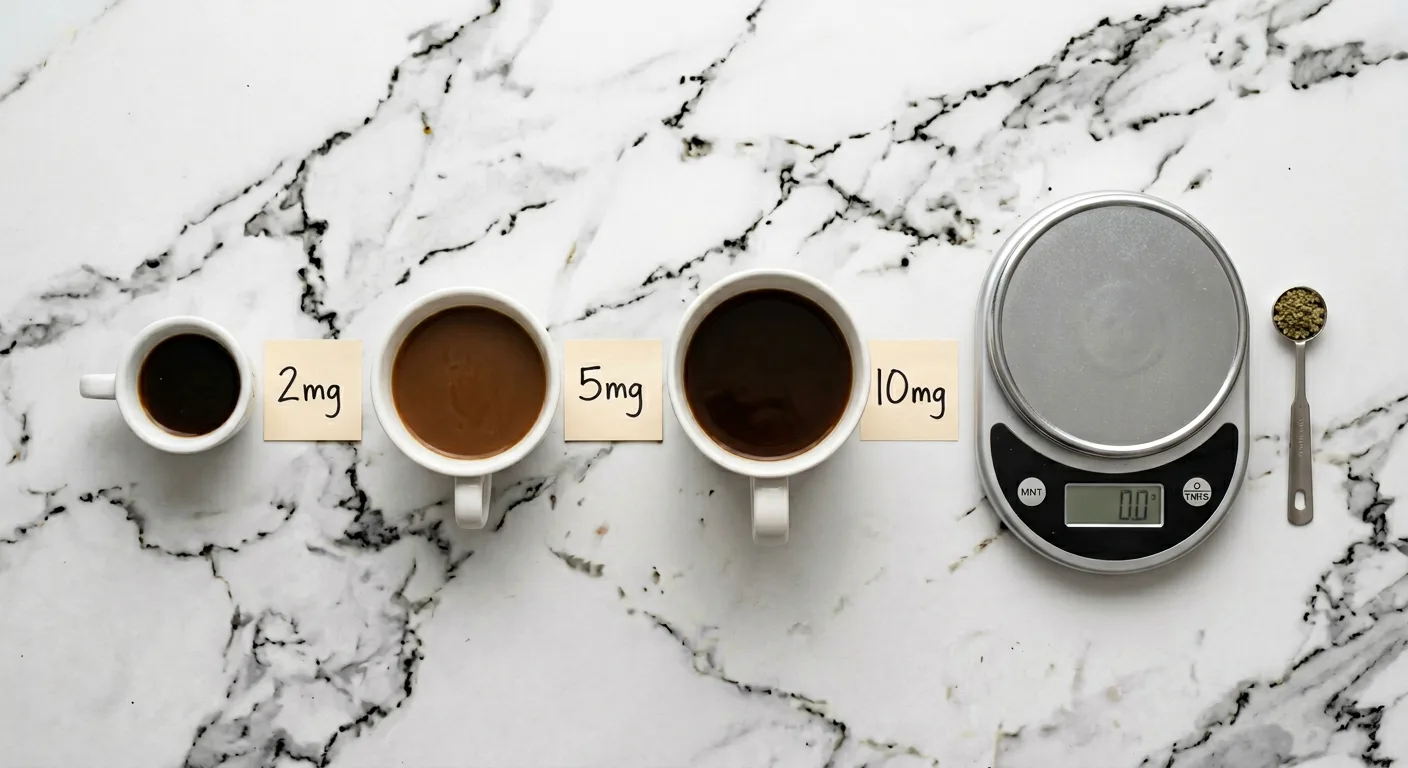
Dosing is the most critical part of making cannabis coffee at home. Too little and you feel nothing. Too much and your relaxing morning ritual becomes a 4-hour anxiety spiral amplified by caffeine. The combination of THC and caffeine demands more precise dosing than edibles alone.
| Experience Level | THC per Cup | Expected Effects | Best For |
|---|---|---|---|
| Microdose | 2–5 mg | Subtle mood lift, mild focus enhancement, no impairment | Work mornings, creative tasks, daily use |
| Low dose | 5–10 mg | Noticeable euphoria, enhanced sensory perception, mild relaxation | Weekend mornings, social brunch, light recreation |
| Standard dose | 10–15 mg | Full psychoactive effects, potential couch-lock depending on strain | Experienced users, no-obligation days |
| High dose | 15–25 mg+ | Strong intoxication, possible anxiety with caffeine, long duration | High-tolerance users only |
Dosing Rules for Cannabis Coffee Specifically
- Start 25% lower than your normal edible dose. Caffeine can amplify THC's anxiogenic (anxiety-producing) effects. If you normally take 10 mg edibles comfortably, start with 7–8 mg in coffee.
- Wait the full 90 minutes before re-dosing. Cannabis coffee onset is identical to other edibles — 30–90 minutes. Coffee's fast caffeine hit can trick you into thinking the THC isn't working.
- Account for your caffeine tolerance. High caffeine tolerance (3+ cups daily) means less jitteriness from the caffeine-THC interaction. Low caffeine tolerance amplifies the stimulating combo.
Use our edible dosage calculator to determine exact per-serving milligrams based on your flower's THC percentage, the amount you infused, and your total batch volume.
Morning routine dosing: For a daily functional cannabis coffee, stay in the 2–5 mg range. This "sub-perceptual" dose range is where most people report enhanced focus and mood without impairment — the sweet spot where caffeine and THC complement rather than compete with each other.
Best Strains for Cannabis Coffee Pairing: Terpenes Meet Roast Profiles
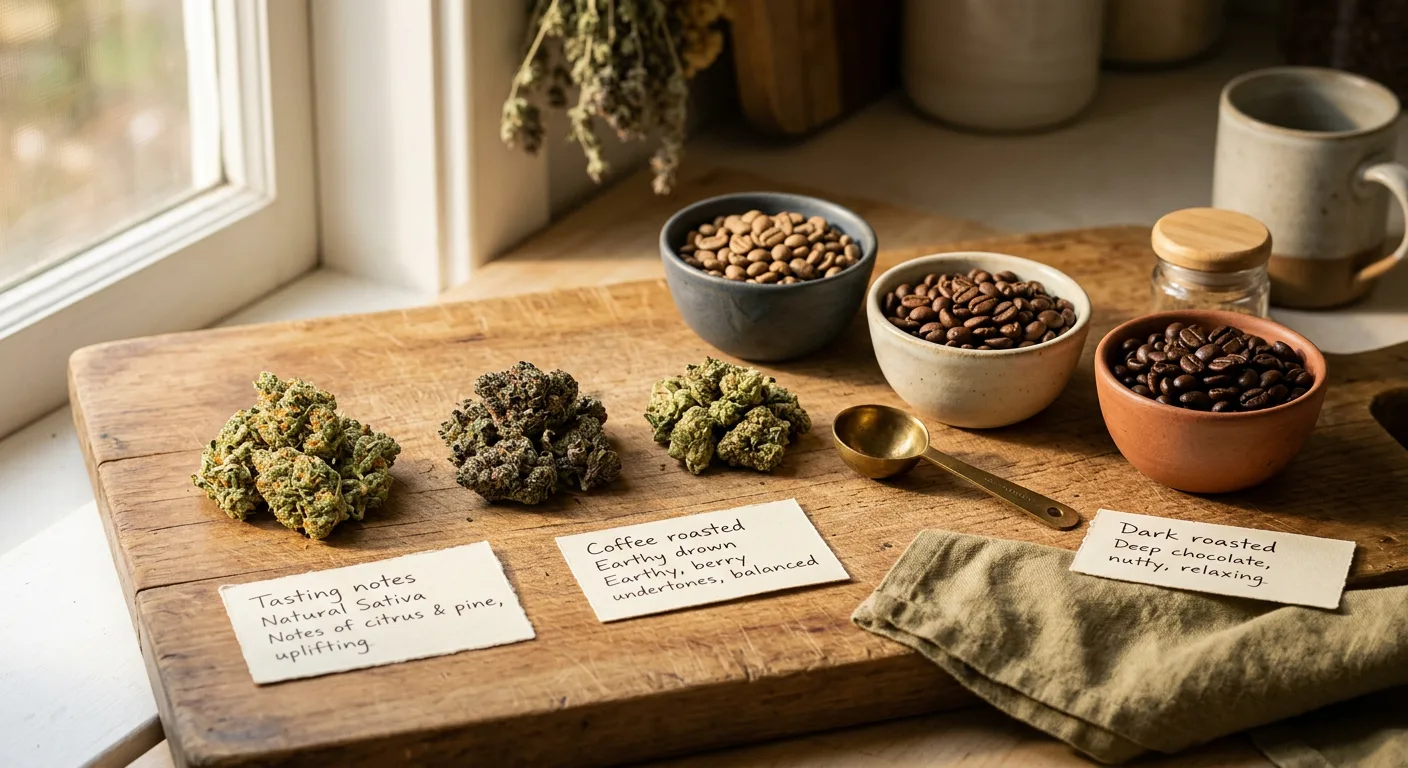
The best cannabis coffee pairing matches the dominant terpene profile of your strain to the flavor notes and intensity of your coffee roast. Just as wine sommeliers pair grape varietals with food, cannabis coffee enthusiasts can create dramatically different experiences by matching citrusy sativas with bright African coffees or earthy indicas with bold dark roasts.
Limonene-Dominant Strains × Light Roast African Coffees
Limonene delivers citrus, lemon, and orange notes that harmonize beautifully with the bright, fruity acidity of Ethiopian Yirgacheffe or Kenyan AA coffees. These pairings feel energizing, uplifting, and clean on the palate.
- Super Lemon Haze (23% THC) — Intense lemon-citrus terpene profile, pairs perfectly with washed Ethiopian light roasts
- Tangerine Haze (18% THC) — Sweet tangerine notes that echo the bergamot and tropical fruit flavors in Kenyan coffees
- Durban Poison (20% THC) — A pure sativa with limonene and terpinolene that creates an electric, focused experience with a light-roast pour-over
- California Orange Bud (15% THC) — Gentle orange zest flavor at a moderate potency ideal for microdosed morning pairings
Caryophyllene-Dominant Strains × Dark Roast and Espresso
Beta-caryophyllene produces spicy, peppery, and woody notes that complement the chocolatey, smoky depth of Sumatran and Brazilian dark roasts. These strains also activate CB2 receptors, potentially adding an anti-inflammatory component to your morning cup.
- OG Kush (26% THC) — Earthy, spicy, fuel-forward terpenes that stand up to intense Italian espresso roasts
- GSC (Girl Scout Cookies) (25% THC) — Sweet yet spicy with caryophyllene and limonene — outstanding with a medium-dark Brazilian Santos
- Sour Diesel (24% THC) — Diesel-fuel and pepper notes that cut through creamy lattes and dark roast americanos
- GG4 (Gorilla Glue) (28% THC) — Heavy caryophyllene and myrcene create a rich, sedating pairing best reserved for weekend dark roast sessions
Myrcene-Dominant Strains × Medium Roast Central American Coffees
Myrcene's herbal, earthy, slightly fruity character aligns with the nutty, caramel, cocoa tones of Guatemalan and Colombian medium roasts. These strains tend toward relaxation, making them better for leisurely weekend cannabis coffee.
- Northern Lights x Big Bud (20% THC) — Classic myrcene-heavy indica profile, pairs beautifully with Colombian Supremo
- Granddaddy Purple (23% THC) — Berry and grape myrcene notes complement the chocolate and dried fruit in Guatemalan Huehuetenango
- White Widow (25% THC) — Balanced hybrid with earthy myrcene and spicy caryophyllene, versatile across medium roasts
Full Strain-to-Coffee Pairing Quick Reference
| Dominant Terpene | Flavor Profile | Recommended Strains | Best Coffee Pairing | Best Brew Method |
|---|---|---|---|---|
| Limonene | Citrus, lemon, orange | Super Lemon Haze, Tangerine Haze, Durban Poison | Ethiopian Yirgacheffe, Kenyan AA (light roast) | Pour-over, Chemex |
| Caryophyllene | Pepper, spice, wood | OG Kush, GSC, Sour Diesel | Sumatran, Italian espresso (dark roast) | Espresso, Moka pot |
| Myrcene | Earthy, herbal, mango | Northern Lights x Big Bud, GDP, White Widow | Colombian Supremo, Guatemalan (medium roast) | French press, drip |
| Pinene | Pine, rosemary, fresh | Jack Herer, Blue Dream | Costa Rican, Panamanian (light-medium) | Cold brew, Aeropress |
| Terpinolene | Floral, herbal, fruity | Dutch Treat, Golden Goat | Rwandan, Burundi (light roast, floral notes) | Pour-over |
For strains that support energy and focus, limonene and pinene-dominant cultivars tend to produce the most synergistic pairing with morning coffee. If you want a relaxing evening cannabis cold brew, look at top relaxation strains with high myrcene content.
Does Caffeine Change How THC Feels? The Pharmacology Explained
Yes — caffeine meaningfully alters the THC experience through competing and complementary mechanisms in your brain. Understanding this interaction helps you dose smarter and choose the right strain-caffeine balance for your goals.
Caffeine's Mechanism: Adenosine Antagonism
Caffeine works by blocking adenosine receptors (primarily A1 and A2A) in your brain. Adenosine is a neurotransmitter that accumulates throughout the day and makes you feel sleepy. By blocking these receptors, caffeine prevents drowsiness and increases alertness, dopamine signaling, and norepinephrine release.
THC's Mechanism: CB1 Receptor Agonism
THC activates cannabinoid type 1 (CB1) receptors throughout the central nervous system. This triggers dopamine release in the nucleus accumbens (euphoria), modulates GABA and glutamate signaling (relaxation and altered perception), and affects memory consolidation in the hippocampus. To learn more about how terpenes like pinene may counteract some of THC's memory effects, see our terpene science articles.
The Interaction: Why It Can Go Either Way
Research from a 2018 study in the Journal of Internal Medicine found that caffeine consumption suppresses endocannabinoid metabolites in the blood — the opposite direction of cannabis. This suggests caffeine may partially counteract the relaxing, sedating aspects of THC while amplifying the stimulating, euphoric, and potentially anxiety-producing effects.
- Low THC (2–5 mg) + moderate caffeine (80–120 mg / 1 cup): Typically produces enhanced focus, creativity, and mild euphoria. The caffeine counteracts THC-related sedation while THC smooths caffeine's jitteriness. This is the "sweet spot" most users report.
- Moderate THC (10–15 mg) + high caffeine (200+ mg / 2+ cups): Can amplify anxiety, racing thoughts, and heart rate in sensitive individuals. The dual stimulation of dopamine pathways from both substances can overshoot into dysphoria.
- High THC (20+ mg) + any caffeine: The THC dominates. Caffeine may prevent THC-induced sleepiness but won't prevent impairment. Some users report a "wired but unable to function" feeling that is unpleasant.
A 2014 animal study in the Journal of Neuroscience found that low-dose caffeine made squirrel monkeys seek less THC, while high-dose caffeine made them seek more. This dose-dependent relationship may explain why the caffeine-THC combo feels focused at low doses but chaotic at high doses — the two compounds modulate each other's reward pathways in opposing, dose-sensitive ways.
Practical Takeaways for Dosing the Combo
| Goal | Suggested THC Dose | Suggested Caffeine | Strain Type |
|---|---|---|---|
| Focused productivity | 2–3 mg | 80–100 mg (1 cup) | Sativa-dominant, limonene/pinene |
| Creative flow state | 5–7 mg | 80–120 mg (1 cup) | Hybrid, terpinolene/limonene |
| Social/recreational | 8–12 mg | 60–80 mg (smaller cup or half-caf) | Balanced hybrid |
| Relaxing weekend ritual | 10–15 mg | 40–60 mg (decaf blend or cold brew) | Indica-dominant, myrcene/caryophyllene |
The golden rule: as THC goes up, bring caffeine down. The most consistently enjoyable cannabis coffee experiences pair low THC doses (2–7 mg) with a single normal cup of coffee (80–120 mg caffeine). Exceeding both simultaneously is where anxiety and overstimulation start.
Troubleshooting Your Cannabis Coffee
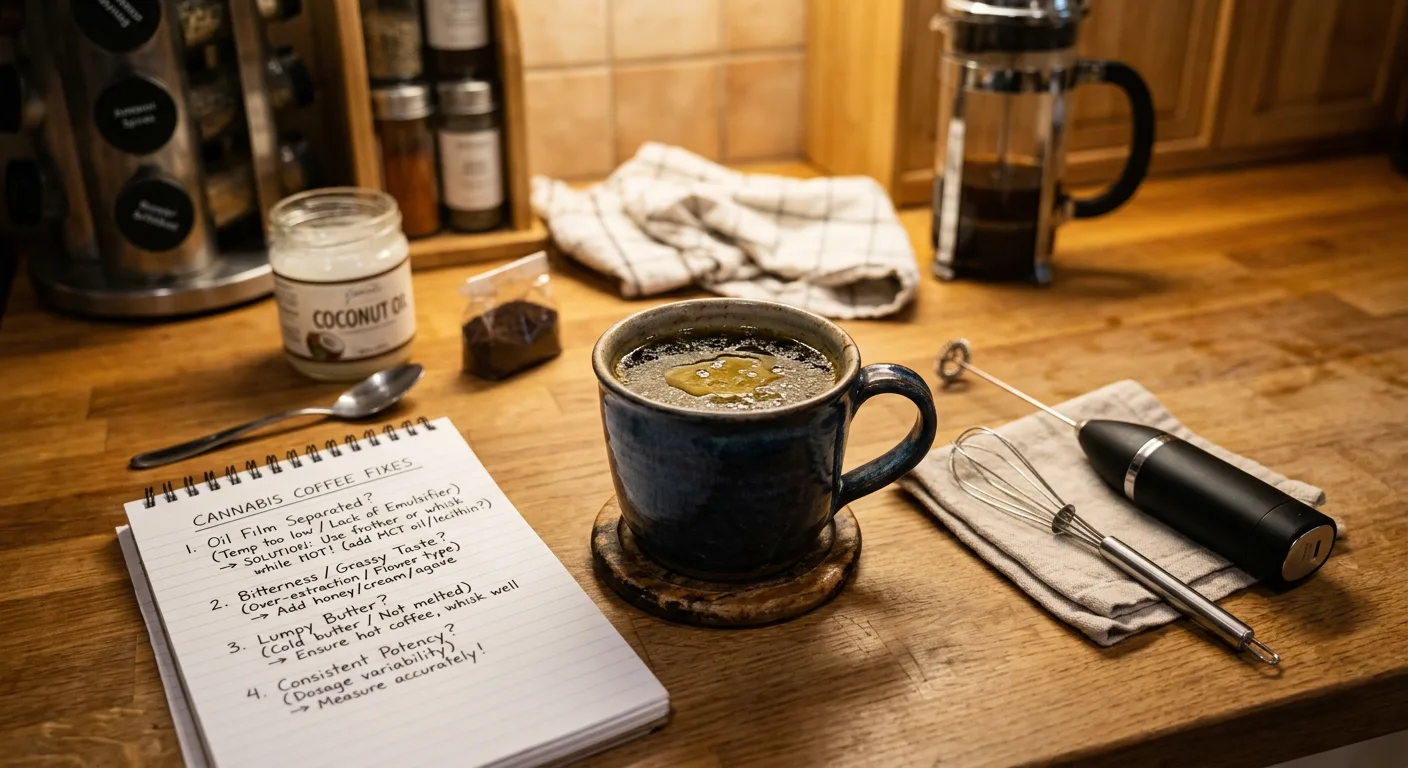
Even experienced edible makers hit common problems with cannabis coffee. Here are the most frequent issues and their solutions.
Oil Slick Floating on Top
This means your fat isn't emulsified. Add 1 teaspoon sunflower lecithin and re-froth for 30 seconds with a milk frother. If the problem persists, use a countertop blender — handheld frothers sometimes lack the power to fully emulsify cannabutter with large fat globules.
Grassy or "Weed" Flavor Overwhelming the Coffee
This usually indicates poorly made cannabutter with excess plant material, or raw decarbed flower added directly to coffee. Solutions include:
- Use a water-cured cannabutter (simmer butter with water, chill, remove the butter layer — this washes out chlorophyll)
- Switch to distillate-based tinctures or MCT oil, which have minimal plant taste
- Use a strongly flavored dark roast or add vanilla, cinnamon, or chocolate syrup to mask the green notes
Inconsistent Effects Cup to Cup
This happens when your cannabutter or infusion isn't homogeneous. THC concentrates in pockets rather than distributing evenly. The fix: when making your batch, blend or stir your cannabutter thoroughly before portioning. For creamer, shake the jar vigorously for 30 seconds before every pour.
Effects Too Strong or Anxiety-Inducing
If you've over-dosed your cannabis coffee, consider these strategies for next time and immediate relief:
- Immediate: Chew 2–3 black peppercorns (caryophyllene may attenuate THC anxiety via CB2 activation). Eat a fatty snack. Stay hydrated.
- Next time: Cut your THC dose by 50%, switch to half-caf coffee, and choose a strain better suited for anxiety-prone users with higher CBD or myrcene content.
- Consider strain choice: Purple Power (10% THC) is ideal for low-dose cannabis coffee — its gentle potency makes over-dosing far less likely than starting with a 25%+ THC strain.
Never re-dose within 90 minutes. The most common cause of cannabis coffee overdose is impatience. Caffeine hits in 15–20 minutes and makes you feel alert, which tricks you into thinking the THC isn't working. It is — the edible just hasn't peaked yet. Wait the full 90 minutes before adding more.
How to Grow Your Own Coffee-Pairing Strains
If you grow your own cannabis, you can cultivate strains specifically for your coffee ritual. Sativa-dominant strains high in limonene and pinene are the most popular for morning cannabis coffee. Consider New York Power Diesel (24% THC) for its diesel-citrus terpene profile that cuts through dark espresso, or Northern Lights x Amnesia Haze (24% THC) for a potent sativa-leaning hybrid with complex terpenes.
Use our grow planner to time your harvest so you always have fresh flower for infusions. All our seeds come with a germination guarantee, so you can plan your cannabis coffee garden with confidence.
Frequently Asked Questions About Cannabis Coffee
How long does cannabis coffee take to kick in?
Cannabis coffee typically takes 30 to 90 minutes to produce noticeable effects. The caffeine kicks in within 15 to 20 minutes, but the THC must be digested and processed by your liver first. Using a tincture sublingually before drinking coffee can speed onset to 15 to 30 minutes for the THC component.
Can I make cannabis coffee without any fat or oil?
THC is fat-soluble and will not dissolve properly in black coffee alone. You need a fat source like cannabutter, MCT oil, heavy cream, or a lecithin emulsifier. Without fat, up to 80% of the THC may pass through unabsorbed. An alcohol-based tincture is the only fat-free option that mixes cleanly into black coffee.
Will cannabis coffee show up on a drug test?
Yes. Cannabis coffee contains THC, which metabolizes into THC-COOH and will be detected on standard urine drug tests for 3 to 30 days depending on use frequency. Even microdoses of 2 to 5 mg can trigger a positive result. Avoid cannabis coffee entirely if you face drug testing.
What is the best THC dose for a morning cannabis coffee?
Most people start with 2 to 5 mg of THC per cup for a functional morning microdose. This range typically produces mild mood elevation and focus without impairing productivity. Experienced users may prefer 5 to 10 mg, but doses above 10 mg can cause drowsiness or anxiety when combined with caffeine.
Does the type of coffee roast affect cannabis coffee potency?
The roast level does not change THC potency, but it affects flavor pairing and caffeine content. Light roasts contain slightly more caffeine, which may intensify the stimulating side of the caffeine-THC interaction. Dark roasts have bolder flavors that pair well with earthy, spicy cannabis strains high in caryophyllene or myrcene.