Why Some Cannabis Strains Taste Incredible (And Others Fall Flat)
A single inhale of Gelato can flood your palate with creamy citrus and lavender. A hit of Tangie can taste like biting into a fresh-peeled clementine. Yet two plants grown from the same seed pack can taste wildly different depending on how they were raised. The best tasting cannabis strains start with exceptional genetics—but flavor is ultimately a collaboration between DNA, environment, and post-harvest technique.
In over 15 years of cannabis cultivation, we have trialed hundreds of cultivars. This guide distills that experience into 15 strains organized by flavor profile, complete with terpene breakdowns, growing conditions that enhance taste, and curing methods that preserve every aromatic molecule. Whether you chase fruity cannabis strains, rich earthy notes, or exotic flavor cannabis strains that defy description, you will find your next favorite cultivar below.
Terpenes are the aromatic compounds responsible for cannabis flavor and aroma. Research suggests they also modulate THC effects through the "entourage effect." The strains below were chosen for their complex terpene profiles—not just potency alone. For a deeper dive into genetics, visit our Cannabis Genetics Guide.
The Science Behind Cannabis Flavor: Terpenes, Flavonoids, and Beyond
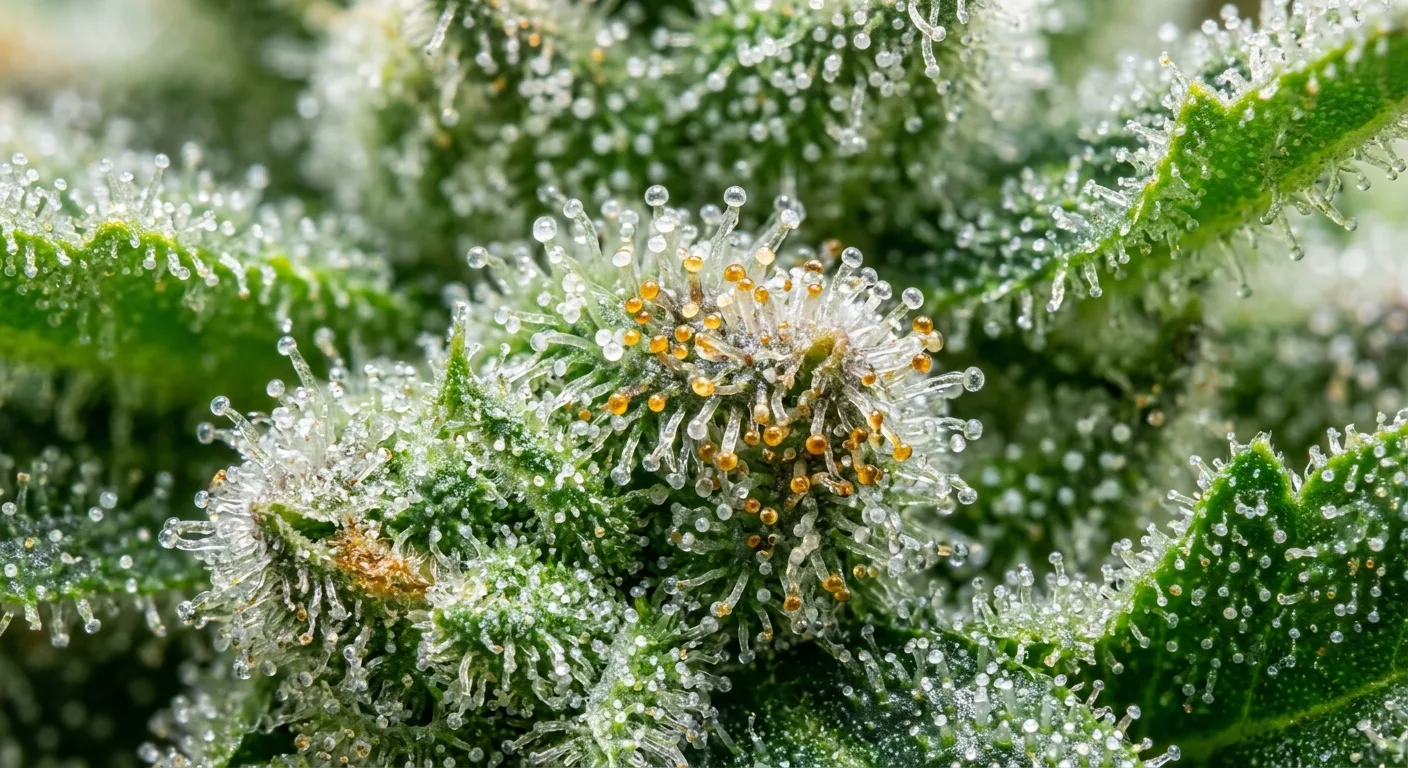
Cannabis flavor is not controlled by a single molecule. It emerges from the interplay of terpenes, flavonoids, esters, and volatile sulfur compounds produced inside trichome glands on the flower surface. As Royal Queen Seeds' cultivation team explains, trichomes are "miniature chemical factories" that synthesize these aromatic secondary metabolites as natural defense mechanisms.
Key Terpene Families That Define Flavor
- Myrcene — Earthy, musky, and herbal. The most abundant terpene in cannabis. Found in mangoes and hops.
- Limonene — Bright citrus: lemon, orange, grapefruit. Also present in citrus rinds.
- Linalool — Floral and lavender-forward. Common in lavender, coriander, and sweet basil.
- Caryophyllene — Spicy, peppery, and woody. The only terpene known to bind CB2 receptors.
- Terpinolene — Piney, floral, and slightly herbal. Less common, highly prized in sativa-leaning varieties.
- Pinene — Sharp pine and rosemary notes. Research suggests it may help counteract short-term memory effects of THC (read our pinene and memory article).
- Humulene — Woody, earthy, and slightly bitter. Dominant in hops and sage (full humulene guide).
Recent studies have identified volatile sulfur compounds (VSCs) as contributors to the skunky, gassy aromas in strains like GMO Cookies and Chemdog. These molecules are present in trace amounts but have extraordinarily low odor thresholds, meaning even nanograms can dominate the scent profile. Learn how to read lab results for these compounds in our terpene COA guide.
Flavonoids and Esters: The Supporting Cast
Flavonoids like cannflavin A and cannflavin B add subtle pigmentation-related taste notes—think the bitter undertone in a purple phenotype. Esters, meanwhile, contribute the candy-like sweetness found in strains such as Runtz and Zkittlez. Together, these compounds layer on top of terpenes to create the multi-dimensional flavor experiences growers and consumers describe as "terpy cannabis strains."
🍓 Fruity Cannabis Strains: Tropical, Berry, and Citrus Flavors
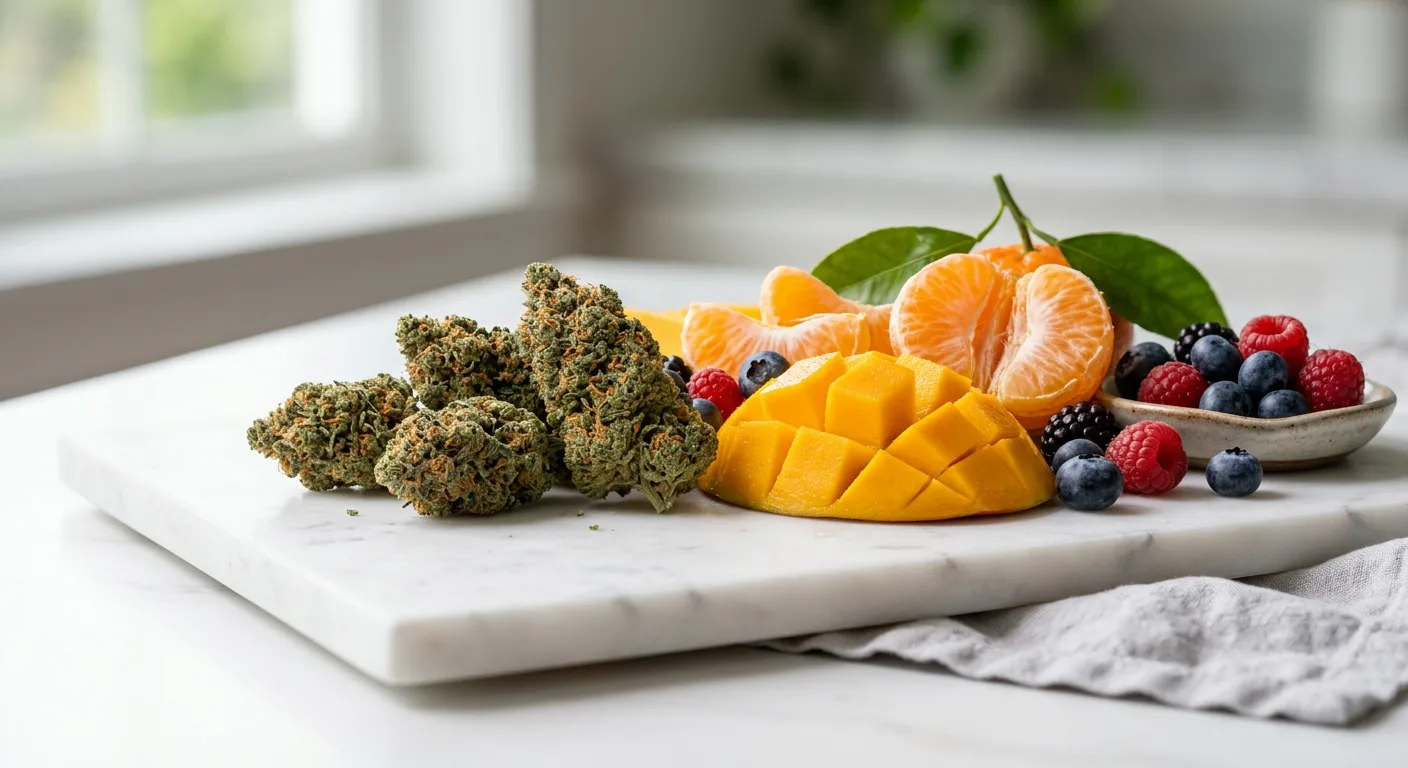
Fruity cannabis strains dominate "best tasting" lists for a reason: their terpene profiles trigger instant recognition. A whiff of ripe mango, fresh strawberry, or tangerine peel is universally appealing—and certain genetics deliver these flavors with remarkable consistency.
1. Gelato
Few strains have shaped modern cannabis flavor as profoundly as Gelato. Bred from Sunset Sherbet and Thin Mint GSC, this Bay Area hybrid was Leafly's 2018 Strain of the Year. Its terpene profile is dominated by limonene and caryophyllene, producing a creamy, citrus-forward flavor with sweet lavender undertones. THC typically lands between 20–25%.
- Dominant terpenes: Limonene, caryophyllene, humulene
- Flavor notes: Creamy citrus, sweet berry, lavender finish
- Type: Hybrid (slightly indica-dominant)
- Grow difficulty: Intermediate — prefers consistent temps and humidity control
2. Tangerine Haze
If you want a strain that genuinely smells like a bag of fresh tangerines, Tangerine Haze Feminized Seeds deliver. This sativa-leaning hybrid explodes with limonene and terpinolene, creating an uplifting citrus experience that energizes from the first exhale. At 18% THC, the effects stay functional and creative.
- Dominant terpenes: Limonene, terpinolene, myrcene
- Flavor notes: Tangerine peel, tropical sweetness, herbal spice
- Type: Sativa-dominant hybrid
- Grow difficulty: Easy to moderate — vigorous grower, responds well to topping
3. Forbidden Fruit
A cross of Cherry Pie and Tangie, Forbidden Fruit earned a spot on Leafly's top-100 list for its deeply exotic fruit flavor. The terpene profile leans heavily on myrcene and limonene with supporting caryophyllene, creating a dense tropical mango and passionfruit experience layered with musk. THC ranges from 21–26%.
- Dominant terpenes: Myrcene, limonene, caryophyllene
- Flavor notes: Tropical mango, passionfruit, earthy musk
- Type: Indica-dominant hybrid
- Grow difficulty: Intermediate — develops gorgeous purple hues in late flower with cool nighttime temps
Growing tip for fruity strains: Drop nighttime temperatures to 60–65°F during the last 2–3 weeks of flower. This temperature differential boosts anthocyanin production (purple coloring) and can intensify fruity terpene expression. Use our VPD calculator to dial in the humidity alongside these cooler temps.
🍬 Sweet and Dessert-Flavored Cannabis Strains
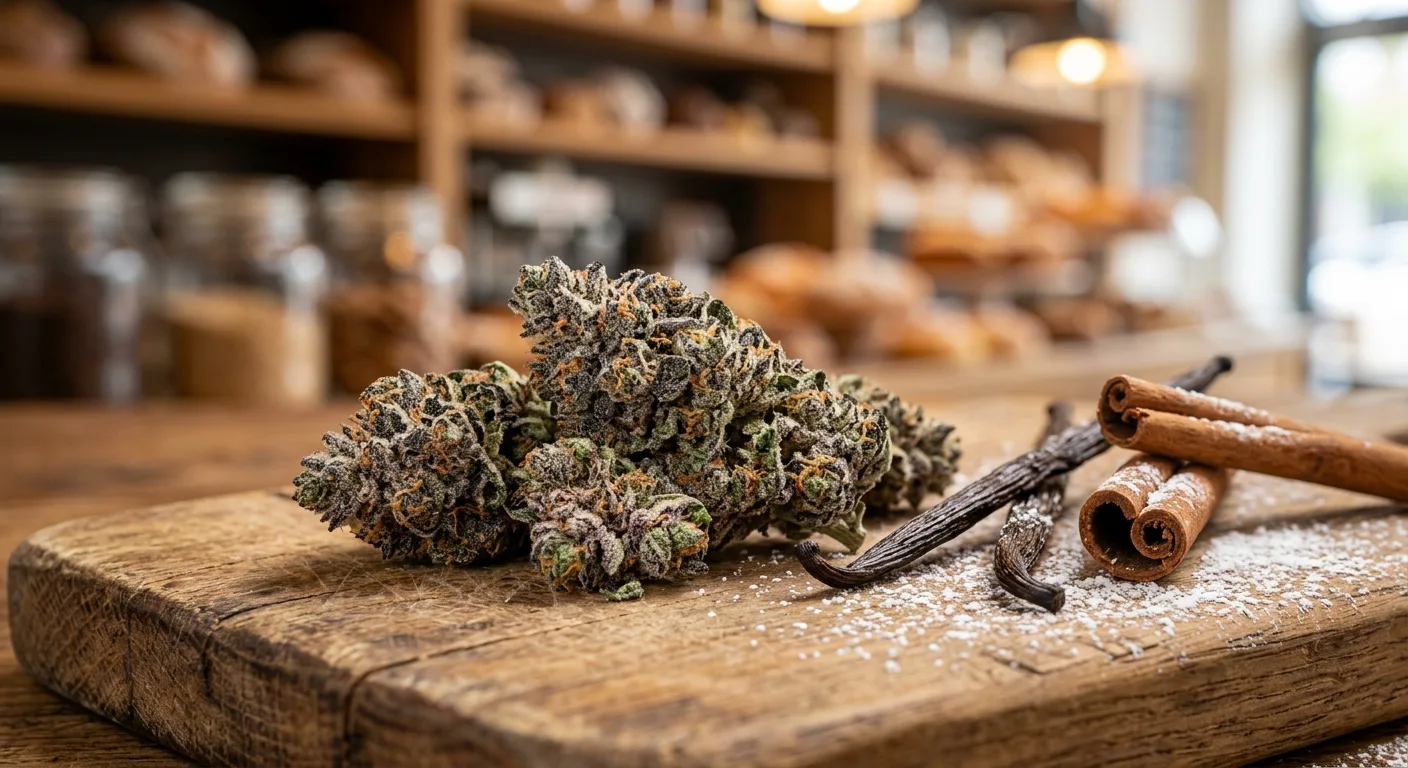
Cannabis strains with sweet flavor profiles often owe their taste to high concentrations of limonene and linalool combined with esters and lactones that mimic confectionery aromas. These are the cultivars that smell like walking into a bakery.
4. Wedding Cake
Wedding Cake (Triangle Mints x Animal Mints) is one of the most acclaimed cannabis strains for best flavor in the dessert category. Its terpene profile produces a rich, tangy vanilla frosting aroma layered with earthy pepper. Leafly consistently ranks it among the top strains, noting its dense, icy buds and blistering THC levels that regularly test above 25%.
- Dominant terpenes: Limonene, caryophyllene, myrcene
- Flavor notes: Vanilla frosting, tangy dough, peppery finish
- Type: Indica-dominant hybrid
- Grow difficulty: Intermediate — heavy feeder, benefits from SCROG training (ScrOG guide)
5. Cookies Kush
Our Cookies Kush Feminized Seeds produce a cookie-dough-forward phenotype that delivers exactly what the name promises. With 18% THC, it is approachable enough for flavor chasers who do not want to be overwhelmed by potency. The terpene blend of caryophyllene, limonene, and humulene creates a spicy-sweet cookie aroma with hints of mint.
- Dominant terpenes: Caryophyllene, limonene, humulene
- Flavor notes: Cookie dough, mint chocolate, warm spice
- Type: Indica-dominant hybrid
- Grow difficulty: Easy — compact structure, good for SOG setups
6. Runtz
The Zkittlez x Gelato cross that took the cannabis world by storm, Runtz delivers candy-sweet flavor that borders on artificial—yet it is entirely natural. Dominant in limonene and linalool, this strain tastes like a bag of sugary fruit candies. THC often reaches 24–29%, making it as potent as it is delicious.
- Dominant terpenes: Limonene, linalool, caryophyllene
- Flavor notes: Sugary candy, tropical fruit, creamy exhale
- Type: Balanced hybrid (50/50)
- Grow difficulty: Intermediate to advanced — sensitive to nutrient burn, benefits from light feeding
🌍 Earthy Cannabis Strains: Woody, Herbal, and Grounded Profiles
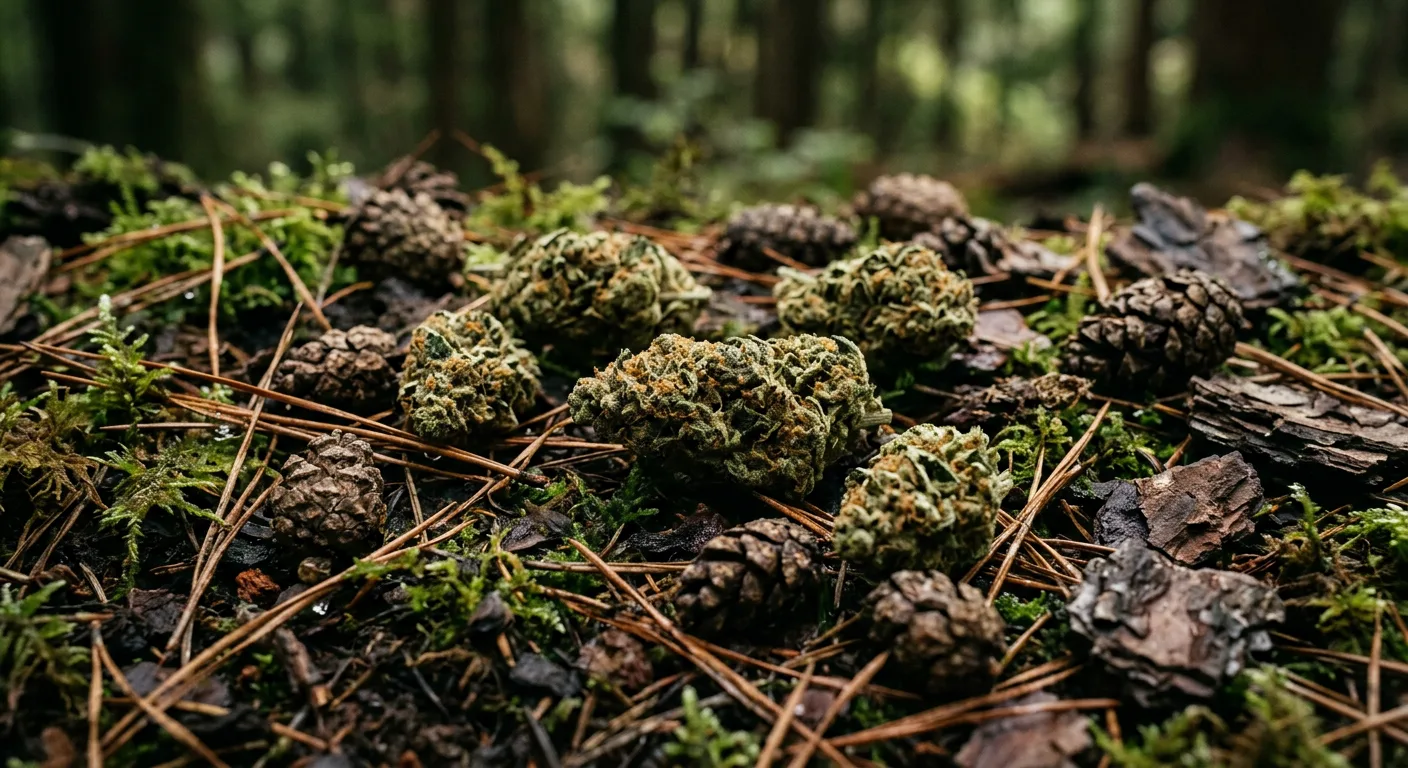
Earthy cannabis strains get their signature flavor from high myrcene and humulene content, often supplemented by pinene and caryophyllene. These cultivars appeal to traditional cannabis enthusiasts who appreciate a grounded, hash-like taste with layers of wood, soil, and herbal spice.
7. OG Kush
The backbone of modern cannabis genetics, OG Kush Feminized Seeds produce the legendary earthy-pine-fuel flavor that defined West Coast cannabis culture in the 1990s. Testing up to 26% THC, OG Kush is myrcene-dominant with strong limonene and caryophyllene support. The result: a complex earthy-citrus-diesel taste that has spawned countless descendants.
- Dominant terpenes: Myrcene, limonene, caryophyllene
- Flavor notes: Pine, earth, lemon, diesel fuel
- Type: Hybrid (slight indica lean)
- Grow difficulty: Intermediate — can be finicky with nutrients but rewards attentive growers
8. GMO Cookies
Also called "Garlic Cookies," GMO is the savory counterpoint on this list. A cross of Chemdog and GSC, it produces an intensely pungent garlic-mushroom-onion flavor profile driven by caryophyllene, limonene, and myrcene alongside notable volatile sulfur compounds. THC regularly tests above 25%, and Leafly includes it among their top strains for its bold, complex taste.
- Dominant terpenes: Caryophyllene, limonene, myrcene
- Flavor notes: Garlic, roasted mushroom, coffee, diesel
- Type: Indica-dominant hybrid
- Grow difficulty: Moderate — slow vegetative growth, heavy yielder in flower
9. Northern Lights x Big Bud
Our Northern Lights x Big Bud Feminized Seeds combine two legendary indica lineages into a deeply earthy, hashy cultivar that tastes like walking through a pine forest after rain. At 20% THC with dominant myrcene and pinene, this strain delivers heavy relaxation with a smooth, spicy-herbal finish. It is an excellent choice for hash production, as its dense bud structure and heavy resin output concentrate those earthy terpenes beautifully.
- Dominant terpenes: Myrcene, pinene, caryophyllene
- Flavor notes: Pine, wet earth, hash, herbal spice
- Type: Indica-dominant (80/20)
- Grow difficulty: Easy — forgiving, compact, beginner-friendly
Core insight: Earthy terpene profiles are often the richest in myrcene, which research suggests may enhance THC absorption. If you prefer a deep, grounded flavor and potent effects, earthy cannabis strains frequently deliver both. For our full guide on pinene's role in these profiles, see our dedicated article.
🌸 Floral Cannabis Strains: Lavender, Rose, and Perfume Notes
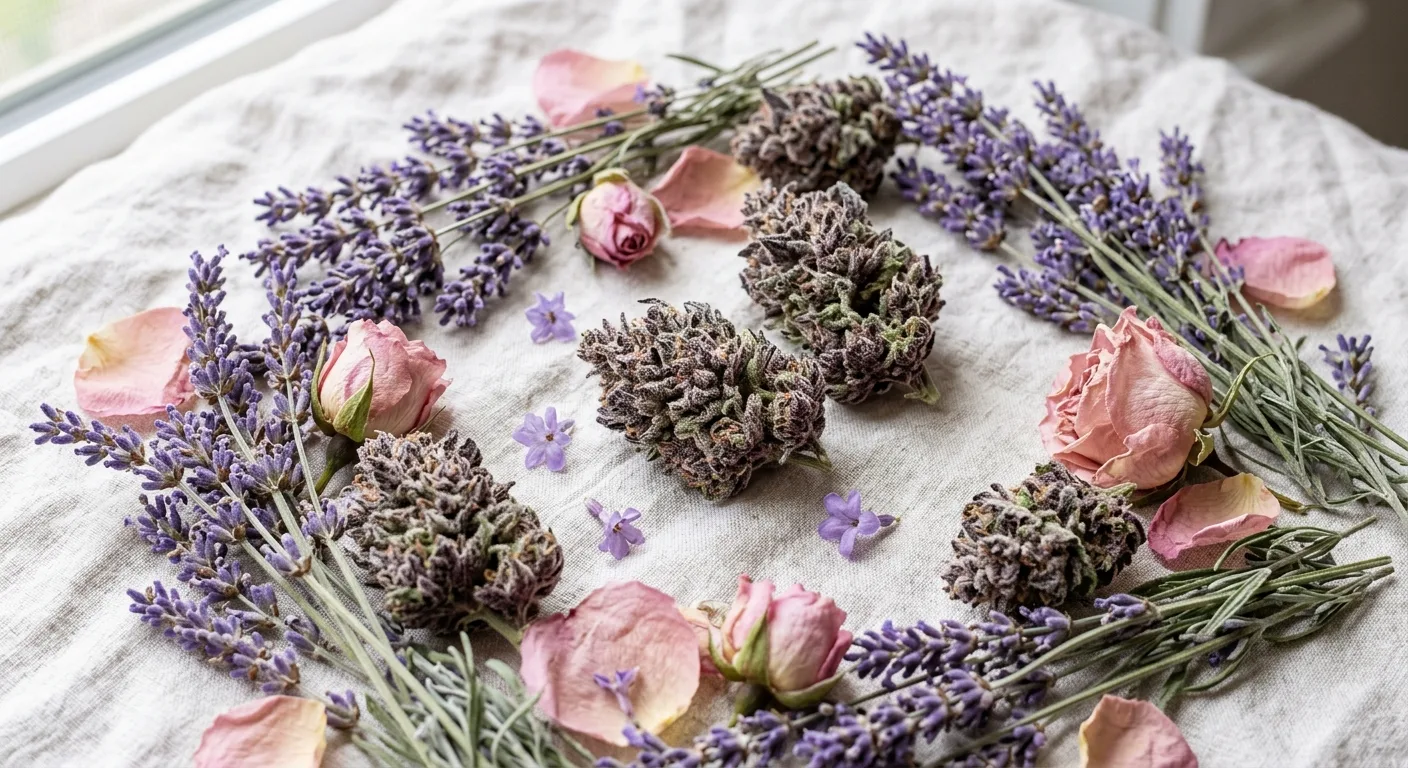
Floral profiles are driven primarily by linalool and terpinolene, sometimes with ocimene and geraniol as supporting players. These strains appeal to consumers seeking a refined, aromatic experience that feels closer to perfume than produce.
10. Lavender (Lavender Kush)
True to its name, Lavender delivers a linalool-dominant terpene profile that fills the room with sweet floral and spicy hash aromas. This indica-heavy hybrid descends from Super Skunk, Big Skunk Korean, and Afghani Hawaiian genetics. THC typically lands at 19–22%, and the effects lean deeply relaxing without excessive sedation.
- Dominant terpenes: Linalool, myrcene, caryophyllene
- Flavor notes: Lavender, sweet spice, hash, subtle grape
- Type: Indica-dominant (80/20)
- Grow difficulty: Easy to moderate — hardy genetics, beautiful purple coloration
11. Purple Kush
A pure indica bred from Hindu Kush and Purple Afghani, Purple Kush Feminized Seeds produce one of the most visually stunning and aromatically complex cultivars available. At 27% THC, this is among the most potent floral-earthy strains on our list. Its terpene blend of myrcene, pinene, and caryophyllene creates a grape-lavender flavor with a deep woody undertone.
- Dominant terpenes: Myrcene, pinene, caryophyllene
- Flavor notes: Grape, lavender, sandalwood, subtle berry
- Type: Pure indica
- Grow difficulty: Easy — compact, resilient, ideal for small grow spaces
12. Blueberry Haze
Crossing classic Blueberry genetics with a Haze backbone, Blueberry Haze Feminized Seeds produce a sativa-dominant plant with a floral-berry aroma that leans perfume-like rather than candy-sweet. The 20% THC combines with myrcene and linalool to deliver a clear-headed, creative high wrapped in soft blueberry-lavender flavor.
- Dominant terpenes: Myrcene, linalool, pinene
- Flavor notes: Blueberry, lavender, floral haze, subtle pine
- Type: Sativa-dominant hybrid
- Grow difficulty: Moderate — tall plants that benefit from topping and LST
🌶️ Spicy and Exotic Flavor Cannabis Strains
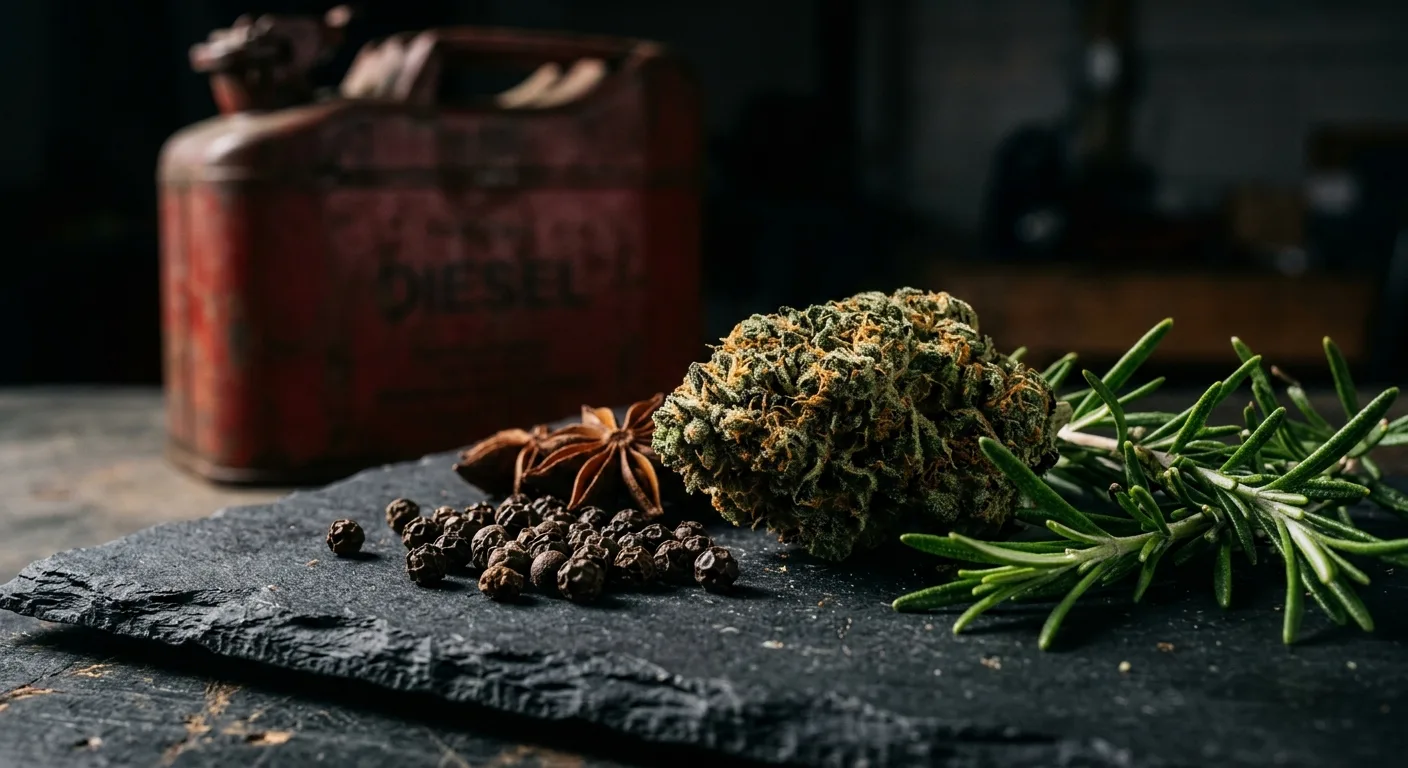
Spicy and exotic flavor cannabis strains owe their unique profiles to high caryophyllene, humulene, and sometimes terpinolene concentrations. These cultivars defy simple flavor categories—think black pepper, incense, diesel fuel, and sandalwood layered together in a single hit.
13. Sour Diesel
The quintessential fuel-forward strain, Sour Diesel Feminized Seeds deliver a pungent diesel-lemon-pepper profile that has been a cannabis industry staple since the early 1990s. At 24% THC with dominant caryophyllene and limonene, Sour Diesel produces an energetic, cerebral high. As Leafly notes in their top-100 coverage, this strain remains one of the most searched-for cultivars year after year.
- Dominant terpenes: Caryophyllene, limonene, myrcene
- Flavor notes: Diesel fuel, sharp lemon, black pepper, herbal
- Type: Sativa-dominant (90/10)
- Grow difficulty: Moderate — stretchy, needs headroom and good airflow (mold prevention guide)
14. Chemdog
The legendary parent of both Sour Diesel and OG Kush, Chemdog defines the "gas" flavor category. Its terpene profile—heavy on caryophyllene and myrcene—produces a sharp chemical-diesel taste with an earthy, pine-heavy backbone. THC typically ranges from 22–28%. Leafly calls it one of the most important strains in cannabis history, and we agree.
- Dominant terpenes: Caryophyllene, myrcene, limonene
- Flavor notes: Chemical fuel, pine resin, sharp earth, spice
- Type: Hybrid (slightly sativa-leaning)
- Grow difficulty: Moderate to advanced — heavy resin production demands good humidity management
15. Super Lemon Haze
A two-time Cannabis Cup winner, Super Lemon Haze Feminized Seeds produce a zesty, spicy-citrus profile that straddles the line between fruity and exotic. At 23% THC, the terpinolene-limonene combination creates a sharp lemon-pepper-herbal experience unlike straightforward citrus strains. The flavor has an almost incense-like depth that keeps you coming back.
- Dominant terpenes: Terpinolene, limonene, caryophyllene
- Flavor notes: Sharp lemon zest, black pepper, sweet herbal incense
- Type: Sativa-dominant (70/30)
- Grow difficulty: Moderate — tall grower, thrives with ScrOG or topping to manage canopy
Caution: Spicy, high-caryophyllene strains like Chemdog and Sour Diesel can be extremely pungent during flower. Without proper carbon filtration, odor can travel significant distances. Plan your ventilation and odor management before flipping to 12/12.
Terpene Profile Comparison Table: All 15 Strains at a Glance
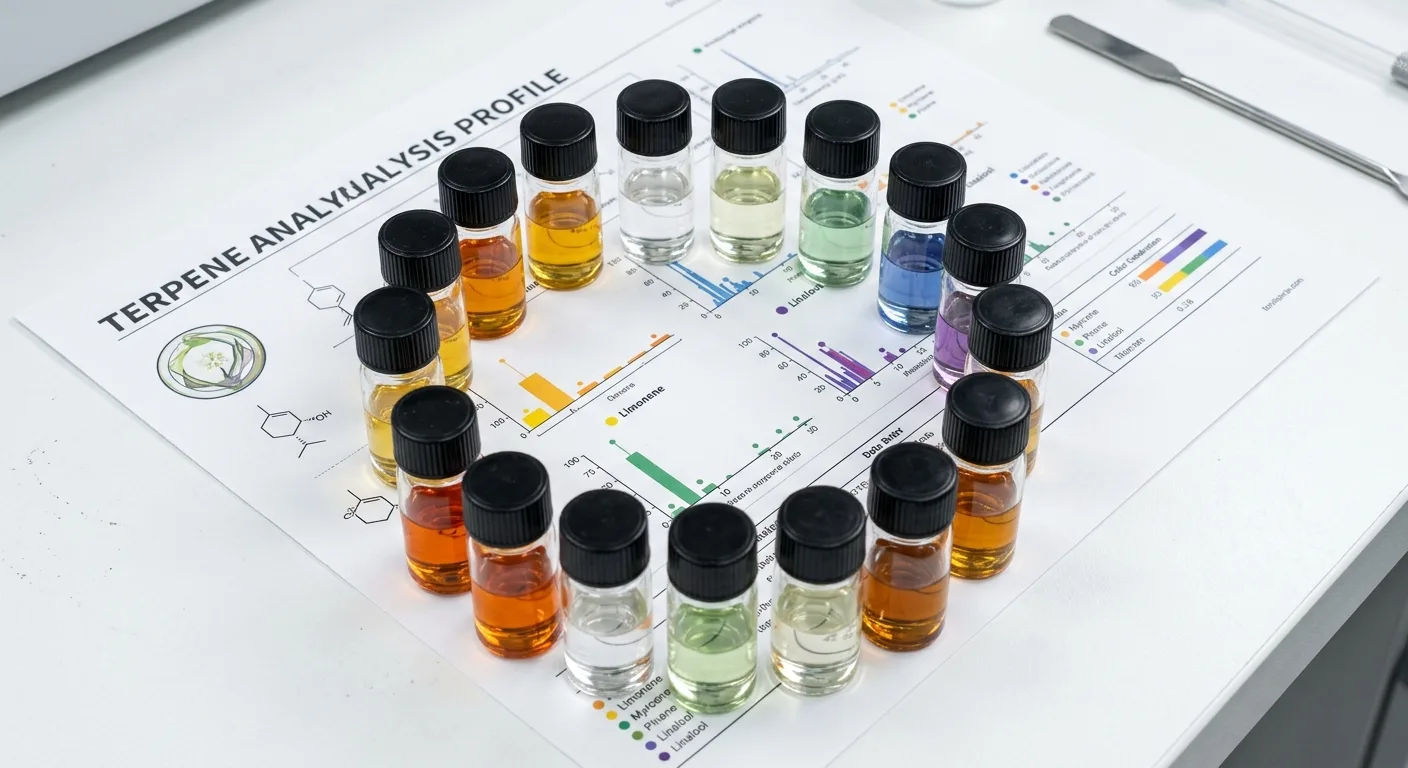
Use this quick-reference table to compare the best tasting cannabis strains by flavor category, dominant terpene, THC range, and grow difficulty. It is a fast way to match your flavor preference with the right genetics.
| Strain | Flavor Category | Dominant Terpene | THC Range | Grow Difficulty |
|---|---|---|---|---|
| Gelato | 🍓 Fruity | Limonene | 20–25% | Intermediate |
| Tangerine Haze | 🍓 Fruity | Limonene | 18% | Easy–Moderate |
| Forbidden Fruit | 🍓 Fruity | Myrcene | 21–26% | Intermediate |
| Wedding Cake | 🍬 Sweet | Limonene | 25–28% | Intermediate |
| Cookies Kush | 🍬 Sweet | Caryophyllene | 18% | Easy |
| Runtz | 🍬 Sweet | Limonene | 24–29% | Intermediate–Advanced |
| OG Kush | 🌍 Earthy | Myrcene | 23–26% | Intermediate |
| GMO Cookies | 🌍 Earthy | Caryophyllene | 25–30% | Moderate |
| Northern Lights x Big Bud | 🌍 Earthy | Myrcene | 20% | Easy |
| Lavender | 🌸 Floral | Linalool | 19–22% | Easy–Moderate |
| Purple Kush | 🌸 Floral | Myrcene | 27% | Easy |
| Blueberry Haze | 🌸 Floral | Myrcene | 20% | Moderate |
| Sour Diesel | 🌶️ Spicy/Exotic | Caryophyllene | 24% | Moderate |
| Chemdog | 🌶️ Spicy/Exotic | Caryophyllene | 22–28% | Moderate–Advanced |
| Super Lemon Haze | 🌶️ Spicy/Exotic | Terpinolene | 23% | Moderate |
How to Grow Cannabis for Maximum Flavor: 6 Cultivation Tips
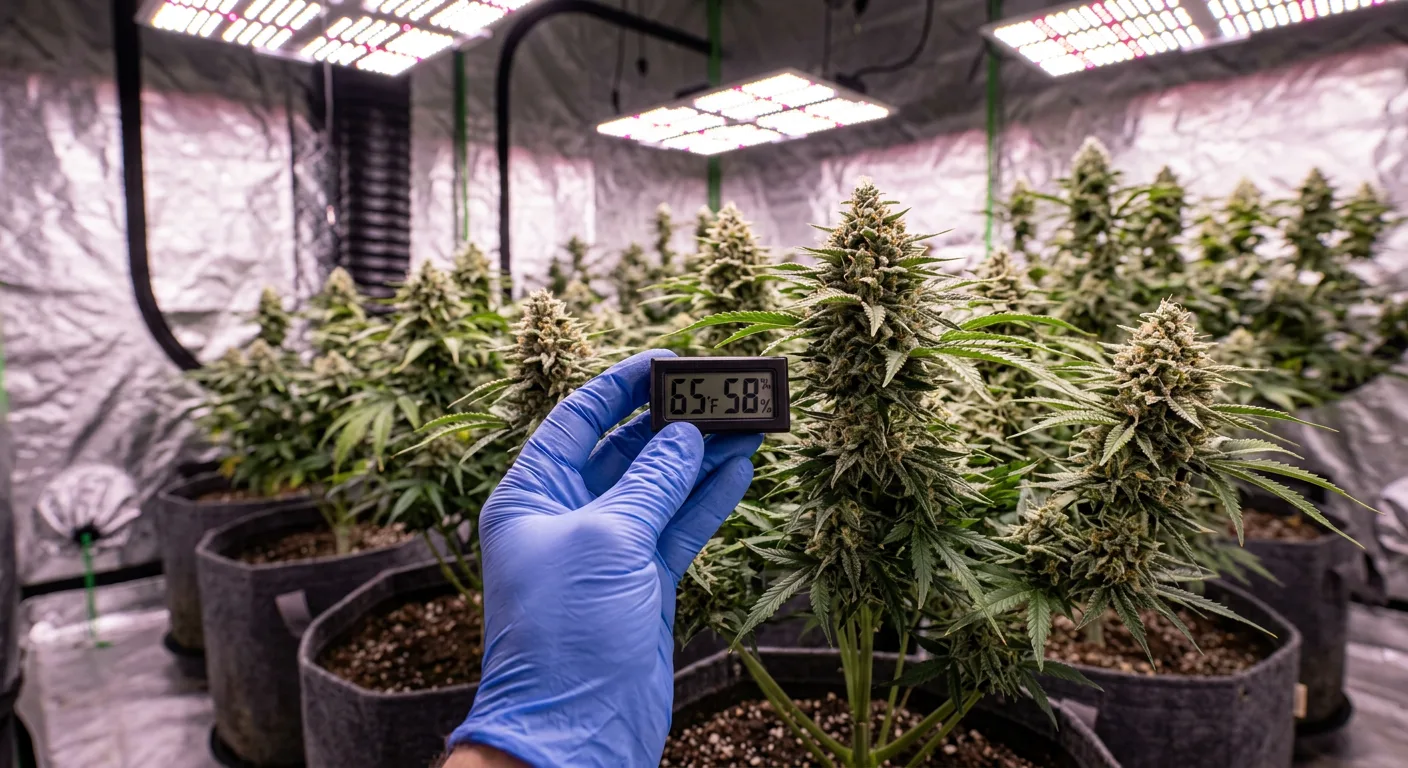
Genetics provide the blueprint, but growing conditions determine how fully that blueprint is expressed. The flavorful cannabis genetics in the list above can taste mediocre if environmental conditions, nutrition, and harvest timing are off. Follow these six steps to maximize terpene production in any grow setup.
Use Living Soil or Organic Amendments
Synthetic nutrients can push growth rates, but organic growing media—living soil, compost teas, worm castings—tend to produce more complex terpene profiles. The diverse microbial ecosystem in living soil helps plants synthesize a broader range of secondary metabolites. As Arete's growers demonstrated with their living-soil Sour Diesel, organic methods can elevate aroma dramatically.
Dial In Your VPD Throughout Flower
Vapor pressure deficit (VPD) directly influences terpene volatilization from trichomes. Aim for 1.0–1.3 kPa during early flower, stepping up to 1.3–1.6 kPa in late flower. Too high and the plant stress-responses may degrade delicate monoterpenes. Too low and excess humidity invites mold. Use our free VPD calculator to find the sweet spot for your specific temperature and humidity readings.
Reduce Temperatures in Late Flower
During the final 2–3 weeks before harvest, drop daytime temperatures to 72–76°F and nighttime temperatures to 60–65°F. This temperature swing slows terpene evaporation, intensifies color expression in purple phenotypes, and can increase overall terpene concentration at harvest. This technique is especially effective for fruity cannabis strains and floral profiles.
Flush or Reduce Nutrients Before Harvest
Whether you run a full 7–14 day plain-water flush or simply taper nutrient strength by 50% during the last two weeks, reducing nutrient input forces the plant to metabolize stored minerals. Many experienced growers report smoother, cleaner flavor when excess nitrogen and other salts are cleared before chop day.
Harvest at Peak Trichome Maturity
Timing your harvest directly impacts flavor. Cloudy trichomes with roughly 10–20% amber heads typically yield the most complex terpene profiles. Harvest too early and monoterpenes have not fully developed. Harvest too late and volatile terpenes begin degrading on the plant. Use a jeweler's loupe or USB microscope to check daily during late flower (full harvest timing guide).
Supplement UV-B Light in the Final Weeks
Research suggests that UV-B exposure (280–315 nm) stimulates additional trichome production as a protective stress response. Adding a UV-B supplement for 2–3 hours daily during the last 3 weeks of flower may boost both resin output and terpene density. Use caution: overexposure can bleach buds and stress plants.
Growing tip: Track your environmental data meticulously. Small shifts in temperature, humidity, or light schedule can significantly alter terpene expression. Our Grow Planner tool helps you schedule feeding, training, and environmental changes across your entire grow cycle.
Curing and Storage: Preserving Flavor After Harvest
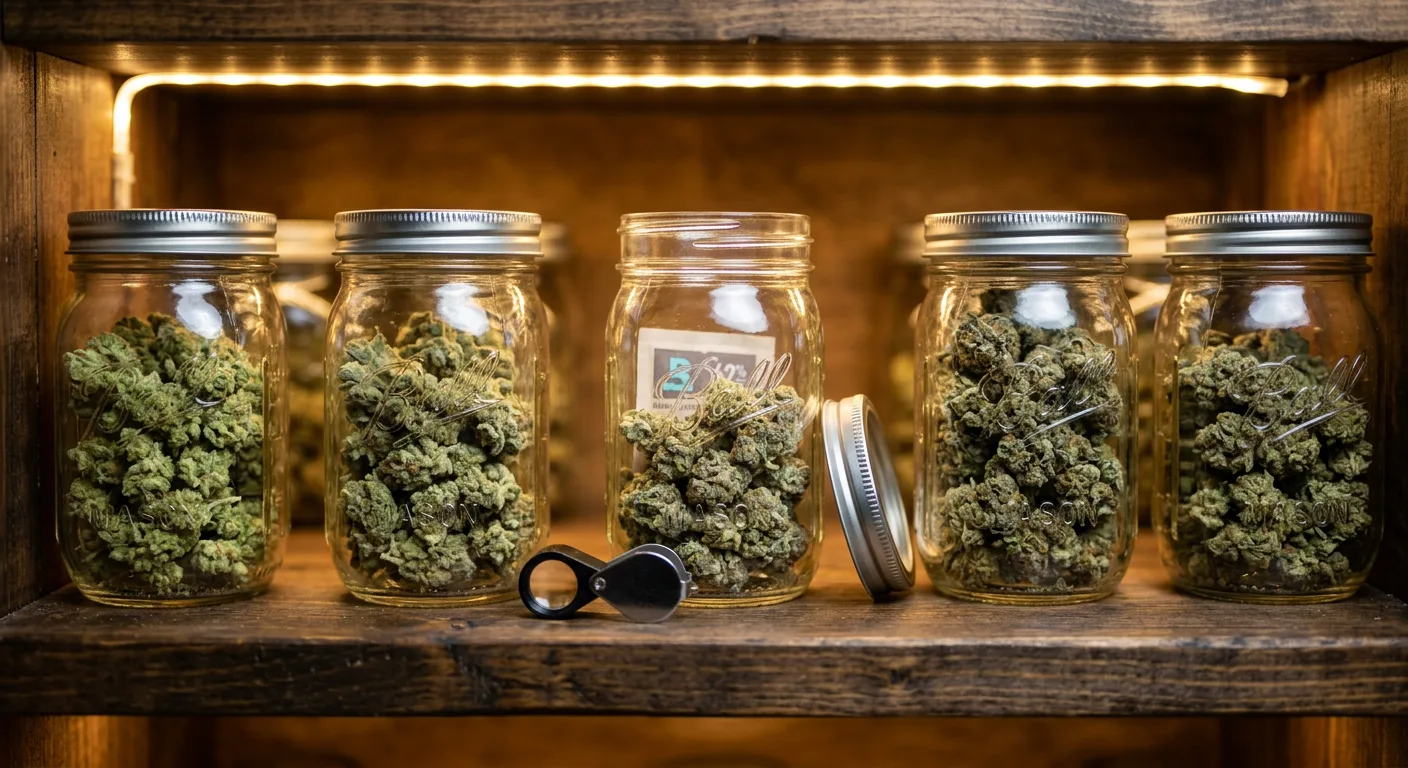
You can grow the best tasting cannabis strains in the world and still lose their flavor to a rushed dry or poor storage. Terpenes are volatile by nature—they evaporate easily. Proper curing slows this loss and actually improves flavor through biochemical conversion of chlorophyll and starches.
The Slow Dry: Your Single Most Important Step
Hang-dry whole plants or individual branches in a dark room at 60–68°F with 55–62% relative humidity. Air circulation should be gentle—think light breeze, not direct fan blasts on buds. Target a drying time of 10–14 days. Branches should snap (not bend) before you move to the curing phase.
Caution: Drying too fast (above 75°F or below 45% RH) evaporates monoterpenes like myrcene and limonene first, stripping fruity and citrus notes before you ever get to cure. If your buds dry in under 5 days, your conditions are too aggressive. See our rescue guide for over-dried cannabis if this happens.
Curing in Jars: The Flavor Development Phase
- Container: Wide-mouth glass mason jars, filled 70–75% to allow air exchange.
- Burping schedule: Open jars 2–3 times daily for 10–15 minutes during the first week. Reduce to once daily in week two, then 2–3 times per week for weeks three through six.
- Target RH: 58–62% inside the jar. Use humidity packs if needed (Boveda vs Integra Boost comparison).
- Duration: Minimum 2 weeks; 4–8 weeks yields noticeably smoother, more complex flavor. Some terpy cannabis strains continue improving for 3+ months.
Long-Term Storage for Flavor Preservation
Once cured, store buds in airtight glass containers in a cool (60–65°F), dark environment. UV light degrades both cannabinoids and terpenes. Avoid plastic bags—static clings to trichome heads and strips resin. For storage beyond 3 months, our long-term cannabis storage guide covers vacuum sealing, nitrogen flushing, and ideal conditions in detail.
Best Tasting Cannabis Strains 2026: How to Choose Your Next Grow
Selecting the best tasting cannabis strains for your garden depends on your flavor preferences, grow environment, and experience level. Here is a quick decision framework to narrow your options.
- Prefer tropical/fruit flavors → Gelato, Tangerine Haze, Forbidden Fruit
- Love bakery/candy sweetness → Wedding Cake, Cookies Kush, Runtz
- Enjoy classic earthy/hash taste → OG Kush, GMO Cookies, NL x Big Bud
- Want floral/lavender aromatics → Lavender, Purple Kush, Blueberry Haze
- Chase fuel/spice/exotic profiles → Sour Diesel, Chemdog, Super Lemon Haze
- Beginner grower → Cookies Kush (18% THC, easy), NL x Big Bud (20% THC, forgiving), Purple Kush (27% THC, compact)
- Small indoor space → Purple Kush, Cookies Kush, NL x Big Bud
- Outdoor warm climate → Tangerine Haze, Super Lemon Haze, Blueberry Haze
Core insight: The "best" flavor is subjective—but quality genetics paired with proper growing, curing, and storage are not. Start with proven flavorful cannabis genetics from our list, dial in your environment, and cure patiently. The results will speak for themselves. Browse our full seed catalog for additional options or use our Grow Planner to map your next cycle. All seeds ship with our germination guarantee.
Frequently Asked Questions About Flavorful Cannabis Strains
What makes some cannabis strains taste better than others?
Flavor in cannabis is primarily determined by terpenes—aromatic compounds produced in trichome glands on the flower surface. Different strains produce different terpene ratios, creating distinct flavor profiles. Flavonoids, esters, and volatile sulfur compounds also contribute. Growing conditions, harvest timing, and curing practices then determine how much of that genetic potential is preserved in the final product.
What is the best tasting cannabis strain for beginners to grow?
For beginners who want exceptional flavor without a steep learning curve, we recommend Cookies Kush (sweet, cookie-dough flavor, easy grow), Northern Lights x Big Bud (earthy-pine, very forgiving), or Purple Kush (floral-grape, compact and resilient). All three tolerate minor environmental fluctuations well and produce flavorful flower without advanced growing techniques.
Does curing really improve cannabis flavor?
Yes. Curing breaks down chlorophyll (which tastes harsh and grassy) and allows residual sugars and starches to be consumed by aerobic bacteria. This biochemical process smooths the smoke and allows terpenes to become more prominent in the flavor profile. A minimum 2-week cure is recommended, but 4–8 weeks produces noticeably superior flavor. Some connoisseur growers cure for 3 months or longer.
Can you increase terpene production during the growing phase?
Yes. Key strategies include using organic living soil, maintaining optimal VPD (1.0–1.6 kPa during flower), dropping nighttime temperatures to 60–65°F in the final weeks, supplementing UV-B light for 2–3 hours daily in late flower, and avoiding over-fertilization with nitrogen. Stress techniques like controlled drought stress in the final days before harvest may also boost trichome and terpene output, though this requires experience to avoid damaging the plant.
Are fruity strains less potent than earthy or diesel strains?
Not at all. Flavor profile and potency are determined by different genetic pathways. Fruity strains like Runtz (24–29% THC), Forbidden Fruit (21–26% THC), and Gelato (20–25% THC) are among the most potent cultivars available. Terpene profile influences the character of the high through the entourage effect, but THC content is the primary driver of psychoactive intensity regardless of flavor category.
Sources & References
This article was researched and fact-checked using 8 verified sources including 2 authoritative references, 2 industry sources, 4 community resources.
- The best strains of all time: 100 top cannabis strains to try | Leafly — leafly.com [Reference]
- Explore the Best Weed Strains: Indica, Sativa & Hybrid | Leafly — leafly.com [Reference]
- The 10 Best-Tasting Cannabis Strains — zamnesia.com [Industry]
- Discover the Top 10 Best-Tasting Weed Strains - RQS Blog — royalqueenseeds.com [Industry]
- Best Tasting Weed Strains » Red Eye Monkey — redeyemonkey.com [Community]
- 31 Best Weed Strains of All Time: The Greatest Hits - Sensi Seeds — sensiseeds.com [Community]
- Best Taste & Aroma Cannabis Weed Seeds — barneysfarm.com [Community]
- Best Tasting Strains | Fast USA Shipping | Hypno Seeds — hypnoseeds.com [Community]