Imagine a flowering tent where every plant stands the same height, every cola catches the same beam of light, and harvest day arrives weeks earlier than a traditional grow. That is the promise of SOG cannabis growing — a decades-old technique that trades a few big bushes for a dense, uniform canopy of small, single-cola plants [4][2].
In this 2026 setup guide, we walk through everything we have learned running Sea of Green rooms: strain selection, clone vs. seed decisions, vegetative timing, the flip to flower, and where SOG genuinely beats SCROG — and where it doesn't. If you want the bigger picture on room design and environment first, our indoor growing pillar guide is the best starting point.
What Is the Sea of Green (SOG) Method?
Sea of Green is a cultivation method that fills a given footprint with many small, single-cola cannabis plants instead of a few large, branched ones — creating a uniform canopy that harvests faster and often yields more per square foot [4][2][3][5][6].
The core idea is simple: cannabis doesn't need to be big to be productive. By flowering plants while they are still short, SOG redirects energy into one dominant top cola per plant rather than dozens of lower branches [2][6]. The result is an even "sea" of green buds across the canopy.
The two main advantages growers chase with SOG are faster harvests and higher total yields from the same indoor footprint [4][2][6]. Because plants stay small, light penetrates evenly, and because veg is short, the calendar between plant-in and harvest compresses dramatically.
How SOG differs from a conventional grow
- Plant count: many small plants instead of a few large ones [4][2]
- Training: minimal — plants grow mostly as a single stalk with one terminal cola [2][6]
- Veg length: short, often 2–6 weeks depending on strategy [2][3]
- Canopy: flat and uniform, with tops exposed to direct light [2]
A Brief History: Why SOG Emerged Indoors
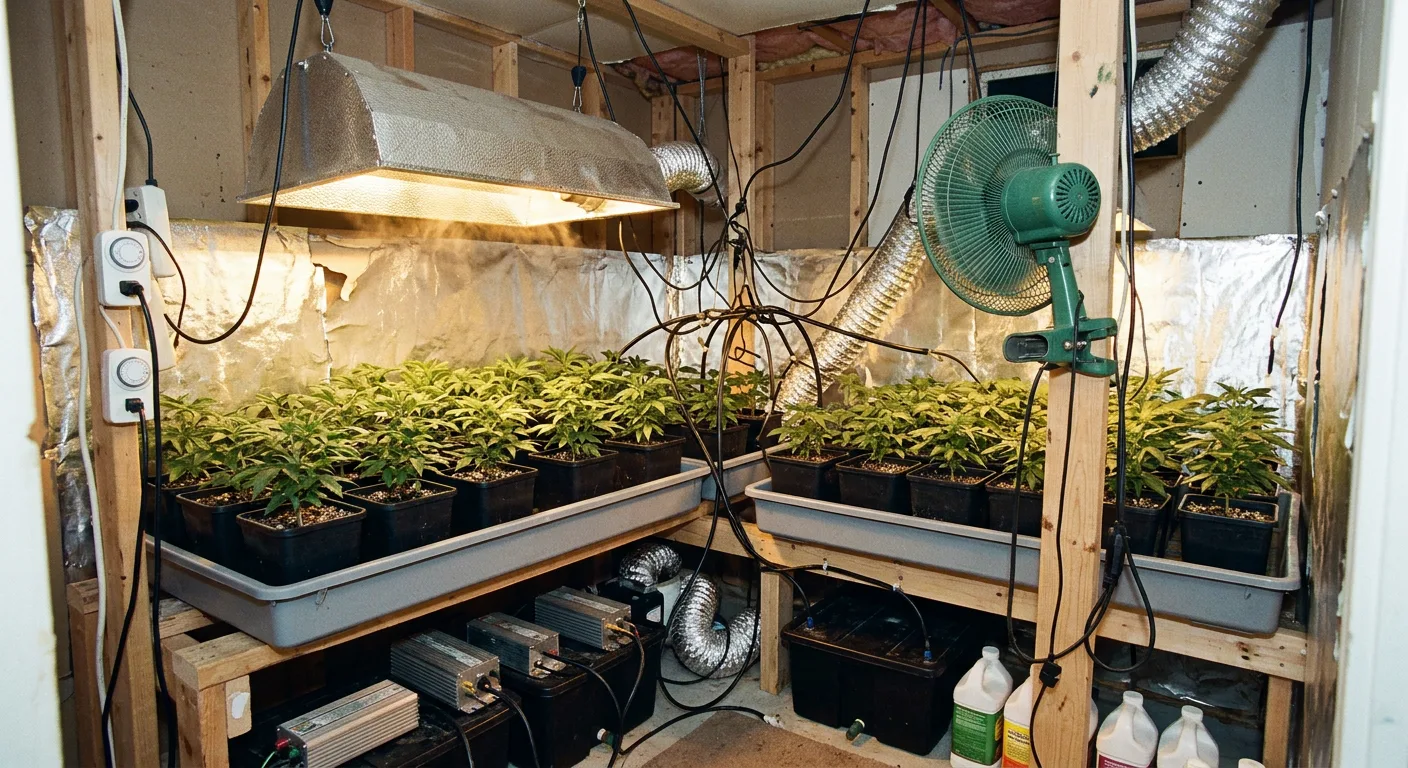
SOG is a direct response to indoor constraints. As Weedmaps' editorial team puts it: "Necessity is the mother of invention. As growers moved indoors in the 1980s and 90s, they began to experiment with techniques that would maximize yields with limited resources. One such technique surpassed the rest and spread through the cultivation community over the years: the Sea of Green method." [2]
Early indoor growers faced low ceilings, expensive lights, and small rooms. Waiting 8–12 weeks for a single sativa to veg, then another 12 for it to flower, was a poor use of watts and time [2][3]. Packing a tray with clones and flipping quickly turned the same watts into multiple harvests per year.
SOG is fundamentally a light-economics technique. You are not growing bigger plants — you are filling every inch of lit canopy with productive flowering tissue the instant the lights turn on in flower.
How SOG Works — One Cola, Many Plants, Even Canopy
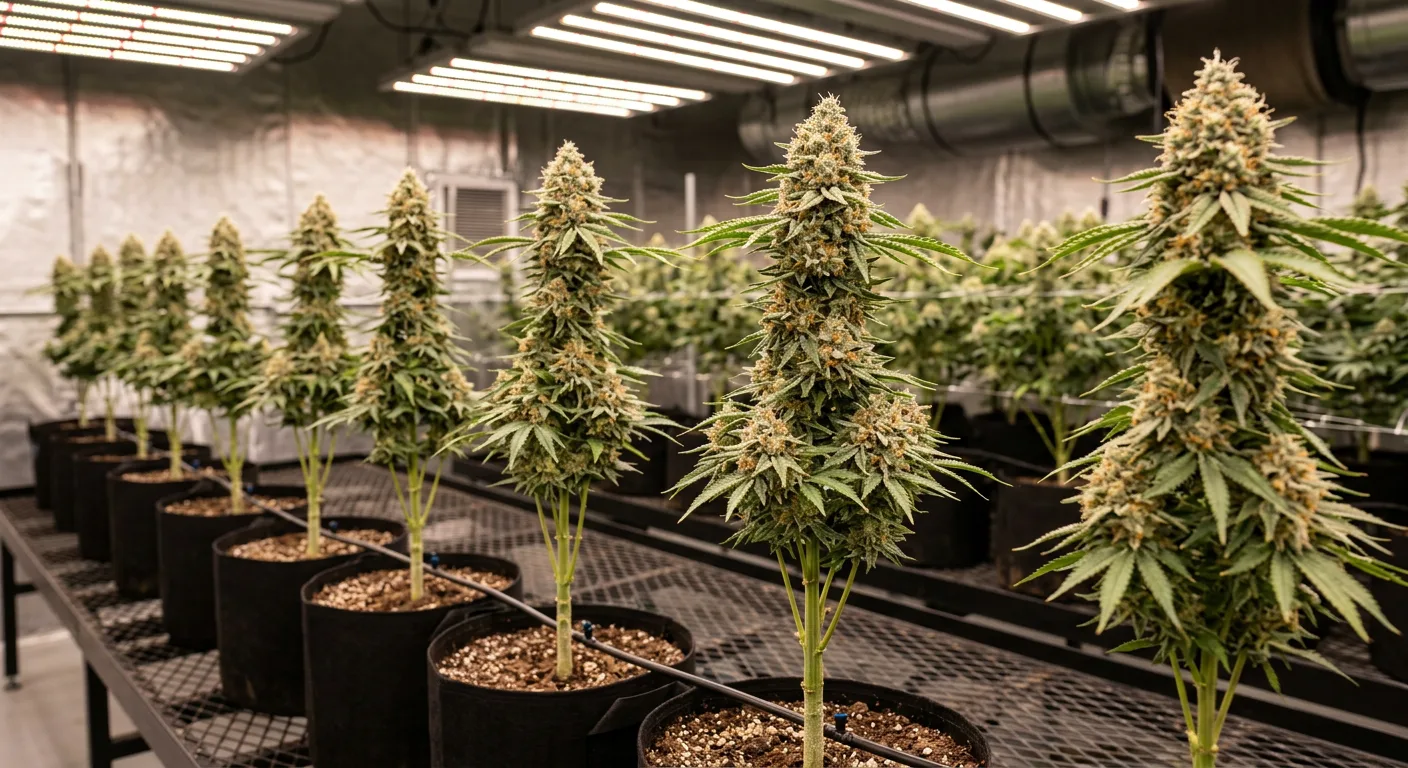
In SOG, each plant is pushed into flower while short, so it develops primarily one large top cola rather than many side branches. With plants packed tightly, the combined tops form a single uniform canopy [2][6].
Because SOG plants stay compact, they require little training beyond normal upkeep — no topping, no LST, no scrogging necessary [2][6]. That is a major appeal for commercial growers managing hundreds of plants and for hobbyists who simply don't want to tie down every branch.
There is a tradeoff to understand: an individual SOG plant produces fewer colas than a big, branchy sativa left to grow out. But when you pack many plants into a smaller area, total yield can match or exceed the branched approach [2][3]. You are trading per-plant size for canopy density.
Why uniform canopies matter for potency
There is a science angle worth knowing. As Montel's cultivation blog notes: "Trichomes are where the money is—research shows that trichomes that are exposed to higher levels of UV light produce more THC, which is what you should expect under SOG. Trichomes also produce the terpenes and cannabinoids that give a plant its distinct flavor profile and can even ward off pests." [6]
In a SOG, every cola sits near the top of the canopy, which means every cola sees similar light intensity and spectrum. That uniformity is a big reason SOG rooms often finish with remarkably consistent bud quality from corner to corner [6].
Choosing the Right Strain for SOG
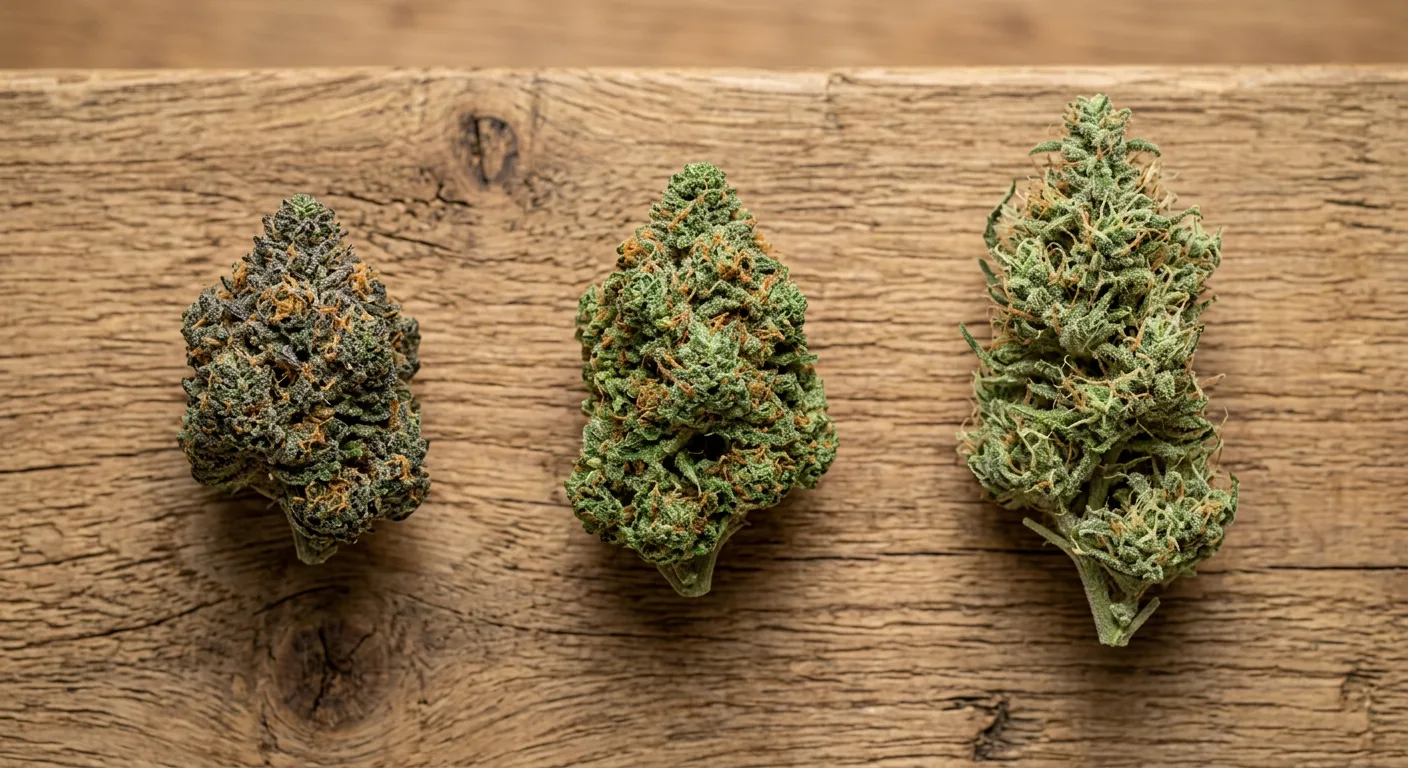
Strain choice decides 80% of your SOG success. Weedmaps sums up the ideal profile bluntly: "Sea of Green favors plants that stay relatively short and have relatively short flowering cycles. Indica and many indica-dominant hybrids will have these traits" [2].
Target genetics with roughly 8-week flowering cycles, low stretch, and strong apical dominance [4][2]. Towering sativas with 12+ week flower times are a poor fit — they stretch too hard after the flip and break the even canopy.
Popular SOG-friendly strains
Per the Grow Weed Easy tutorial, strains commonly recommended for SOG include Green Crack, Great White (Shark), Baller's Game, Runtz Muffin, Purple Queen, Do-Si-Dos 33, and Blueberry x OG Kush [4]. Short-flowering varieties like Orka, which finishes in roughly 60 to 70 days, are also a classic fit [5].
From our own catalog, these cultivars have performed well in compact single-cola setups:
- Northern Lights x Big Bud — 20% THC, dense indica structure, short internodes
- OG Kush — 26% THC, compact indica-dominant hybrid
- Purple Kush — 27% THC, low-stretch pure indica
- White Widow — 25% THC, reliable single-cola former
- Great White Shark Auto — 16% THC, fits SOG density and timing
- Northern Lights x Amnesia Haze — 24% THC, manageable stretch
Before buying a pack, check the breeder's stated flower time and stretch factor. Anything listed as "stretches 2–3x" in flower is risky for SOG unless you flip very early.
SOG Clones vs Seeds: Which Wins?
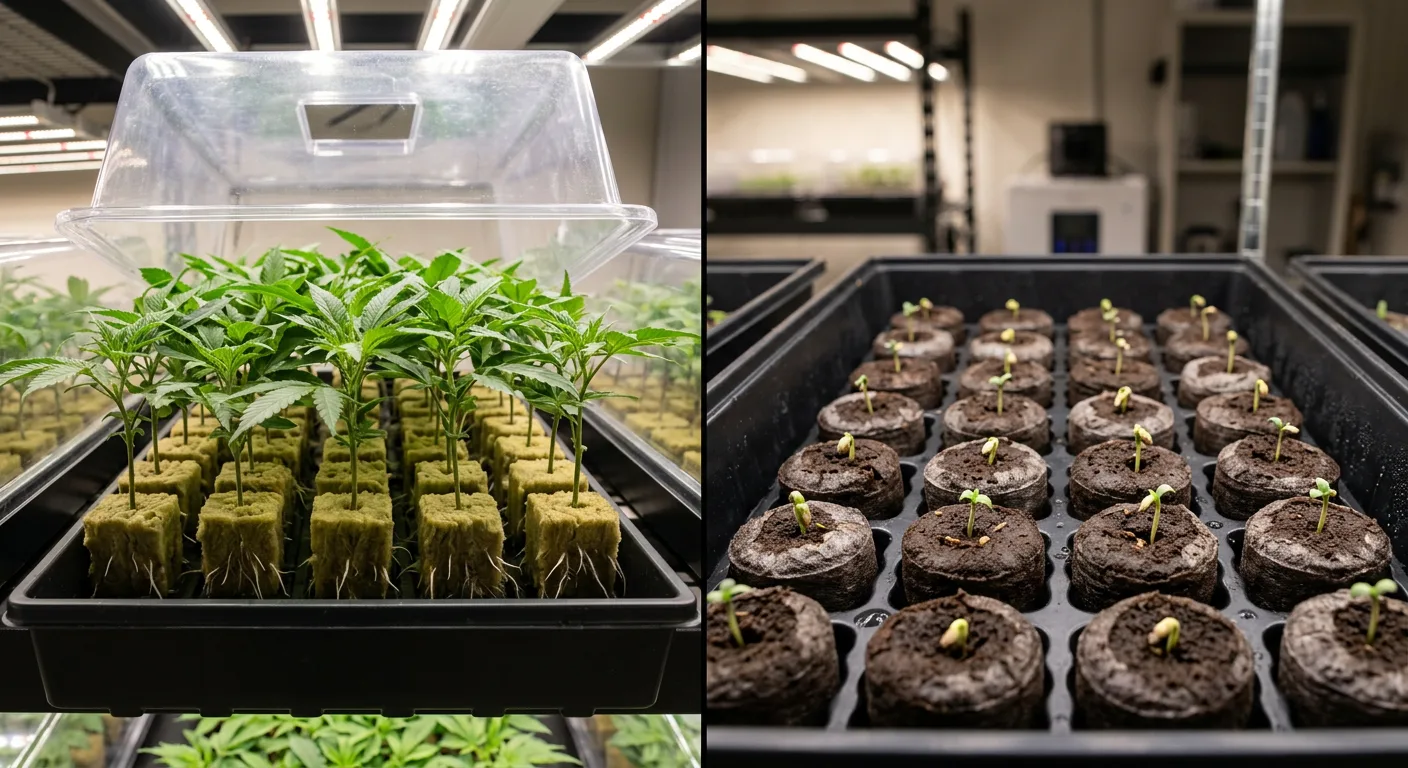
Genetic uniformity is the single biggest variable separating a clean SOG from a bumpy one. A 2020 review in PMC on commercial propagation explains why many operators favor cuttings: high-potency mother plants are selected on cannabinoid profile and then multiplied asexually via vegetative cuttings (clones) or tissue culture to ensure batch-to-batch consistency [1].
Clones from a single mother grow at the same rate, finish at the same height, and ripen on the same day — the dream scenario for SOG [1]. Seeds, especially regular or untested feminized lines, will show some plant-to-plant variation that can create an uneven canopy.
| Factor | Clones | Feminized seeds |
|---|---|---|
| Canopy uniformity | Excellent [1] | Good with careful phenohunting |
| Startup cost | Needs mother plant / source | One-off purchase |
| Vigor at start | Rooted cut, ready to veg | Must germinate and establish |
| Legal/access | Region-dependent | Widely available online |
| Pheno risk | Locked — what you see is what you get | Some variation between individuals |
For home growers without a mother room, feminized seeds paired with our germination guarantee are the practical choice. You can still get an even canopy — just expect to cull or rearrange the weakest 10–15% before the flip. New to the seed question? Read feminized vs regular seeds.
Step-by-Step SOG Setup (2026 Edition)
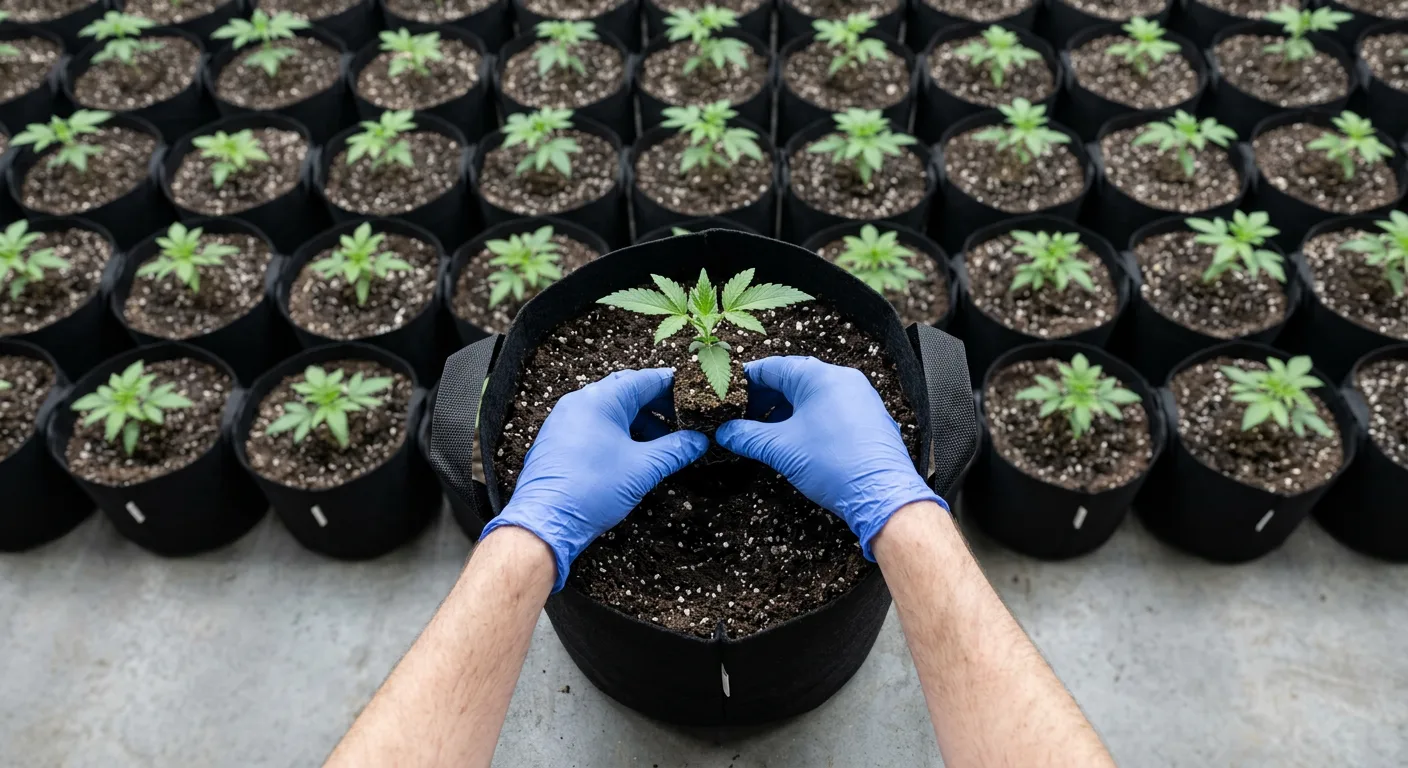
Here is the numbered sequence we follow when setting up a new SOG run. Times assume photoperiod genetics, not autos.
Source uniform plants
Best case: clones from one mother plant for locked genetics [1]. Next best: a fresh pack of feminized seeds started on the same day.
Germinate or root cuttings
See our seedling care guide for the first 10–14 days. Goal: a tray of healthy, identical starts.
Transplant into small containers
Cite-approved sources don't specify pot sizes, but the general principle is small enough to fit density yet big enough to carry the plant through flower. Many SOG growers use 1–3 gallon containers; pick what your strain and medium support.
Veg under 18–24 hours of light
Run an 18–24 hour veg photoperiod [3]. Feed lightly, water evenly, and keep spacing tight from day one.
Flip to 12/12 at the right height
Switch to 12 hours light / 12 hours darkness when plants hit your target height (details in the next section) [3][S8 note: use F6/F7].
Harvest when trichomes cloud over
Use our harvest timing guide and a jeweler's loupe. Cut, hang, dry, and cure as normal.
Run our grow planner and yield estimator before you buy seeds. Locking the calendar in writing prevents the classic mistake of flipping a SOG too late.
Light Cycles and Veg Length: Two Legitimate Paths
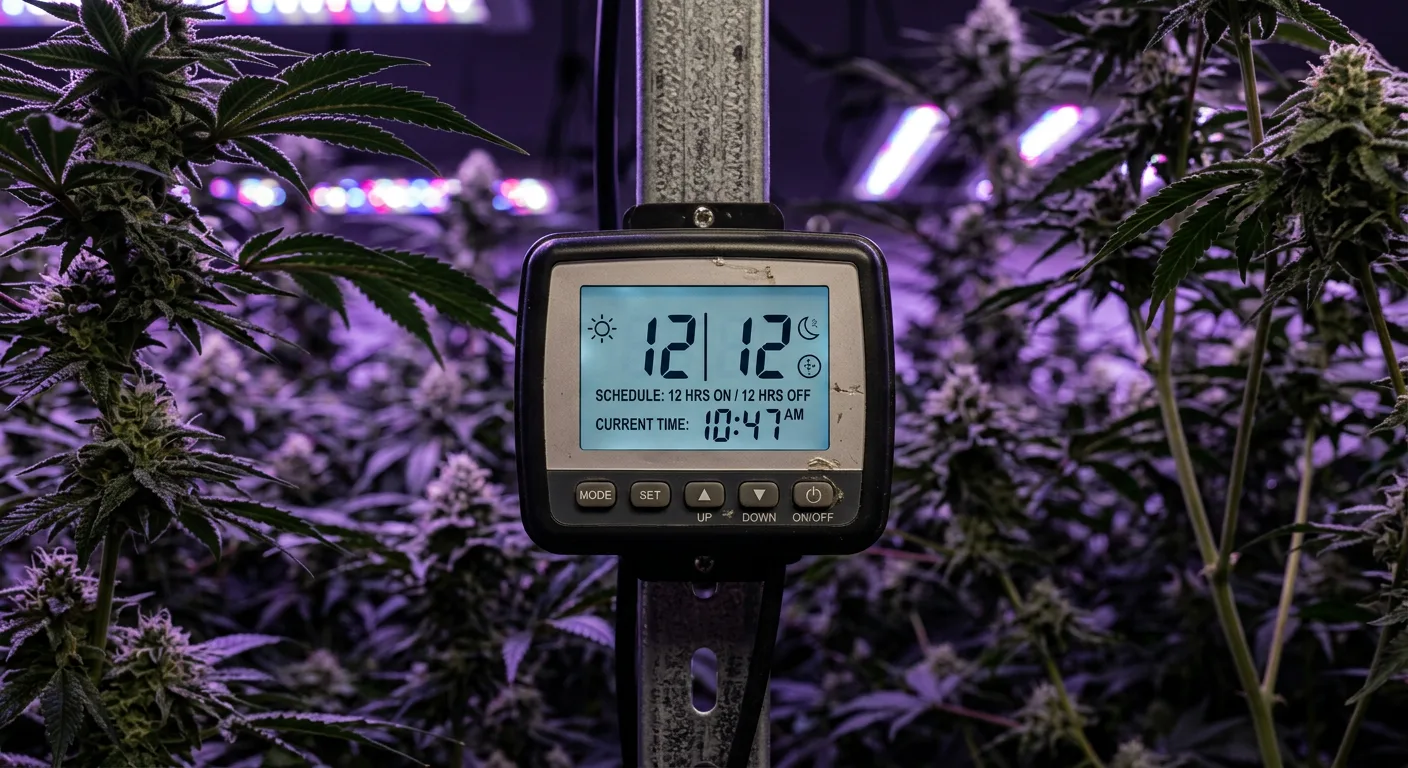
There is no single "correct" SOG veg length. Most growers veg 4–6 weeks to ~10–12 in plants, while a faster camp flips at 2–3 weeks when plants are only ~6 in [2][3]. Pick based on cycle speed vs per-plant size.
Both schedules are documented in the cultivation literature, and both work — they just optimize for different things.
Path A: The standard 4–6 week veg
Veg for 4 to 6 weeks, or until plants reach about 10 to 12 inches (25–30 cm) tall, running 18 to 24 hours of light [2][3]. Then flip to 12 hours light / 12 hours darkness to trigger flowering [3].
This path gives you slightly larger individual plants, more productive root systems, and a more forgiving flower stretch. It is the most commonly recommended approach for first-time SOG growers.
Path B: The aggressive 2–3 week veg
Some growers flip as early as 2 to 3 weeks into growth, when plants are only about 6 inches tall [2][3]. This maximizes harvests per year and is popular with commercial rooms that prize turnover.
The tradeoff: each plant finishes smaller, so you need more plants per square foot to match total yield. It also leaves less margin for error — a slow-rooting clone in a 2-week veg barely had time to establish.
| Approach | Veg length | Flip height | Best for |
|---|---|---|---|
| Standard | 4–6 weeks [3] | 10–12 in / 25–30 cm [3] | Beginners, photoperiod clones, larger individual colas |
| Fast turnover | 2–3 weeks [3] | ~6 in [3] | Commercial cycling, high plant counts, fastest calendar |
SOG vs SCROG: Which Method Fits Your Room?
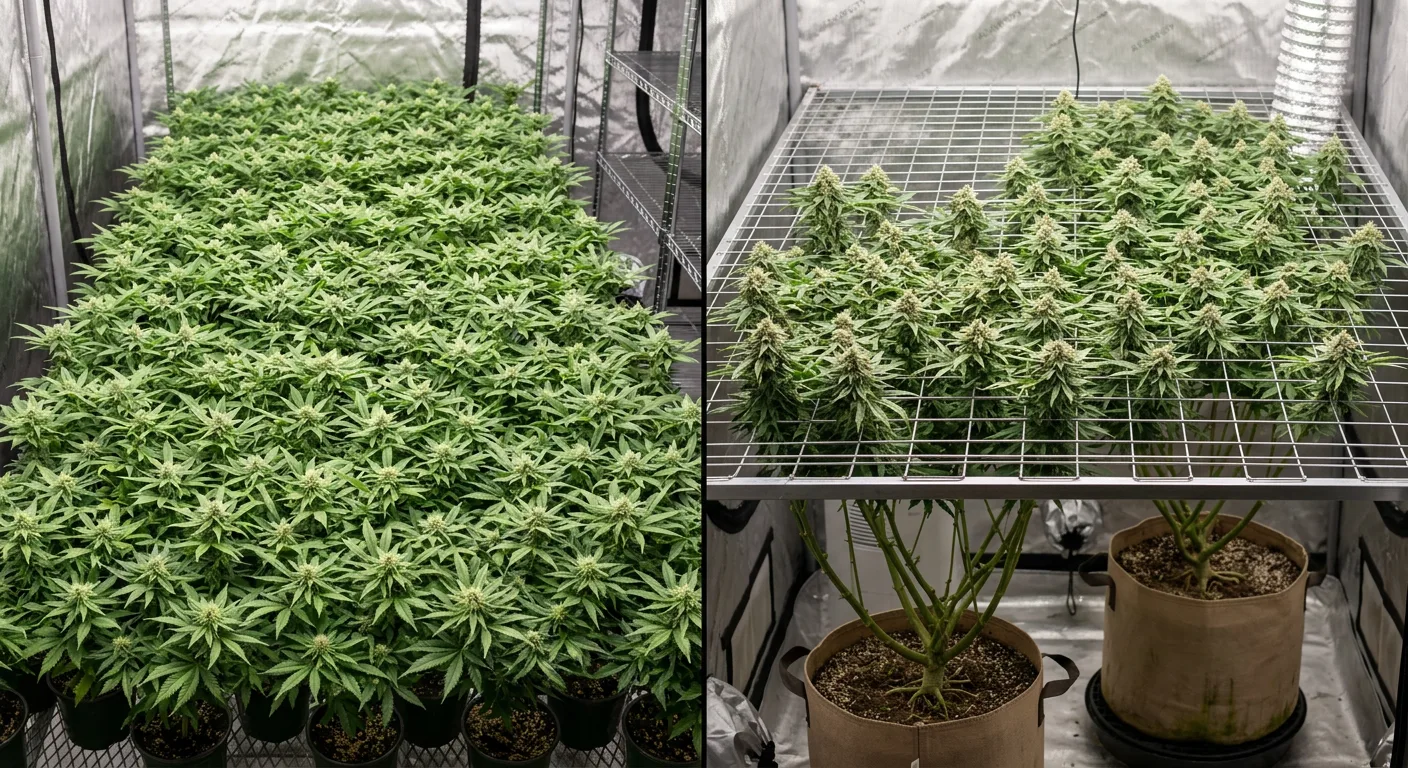
SOG and SCROG (Screen of Green) are often framed as rivals, but they solve different problems. SOG uses many plants to fill a canopy; SCROG uses a horizontal net to spread a few plants into one. We have a full SCROG guide if you want to go deep on that technique.
| Feature | SOG | SCROG |
|---|---|---|
| Plant count | High (many small) [4][2] | Low (few, heavily trained) |
| Training time | Minimal [2][6] | High — weekly tucking |
| Veg length | 2–6 weeks [2][3] | Longer, to fill screen |
| Best genetics | Short indica-dominant, ~8 wk flower [4][2] | Stretchy hybrids and sativas |
| Legal plant-count laws | Can conflict with plant limits | Better for plant-count-restricted jurisdictions |
| Canopy uniformity | Excellent [2] | Excellent, but via training not numbers |
Check your local plant-count limits before designing a SOG. Many medical and home-grow laws cap plants per household — SCROG or low-plant-count approaches may be legally safer. See our legalization map.
Benefits of SOG: Speed, Yield, Space Efficiency
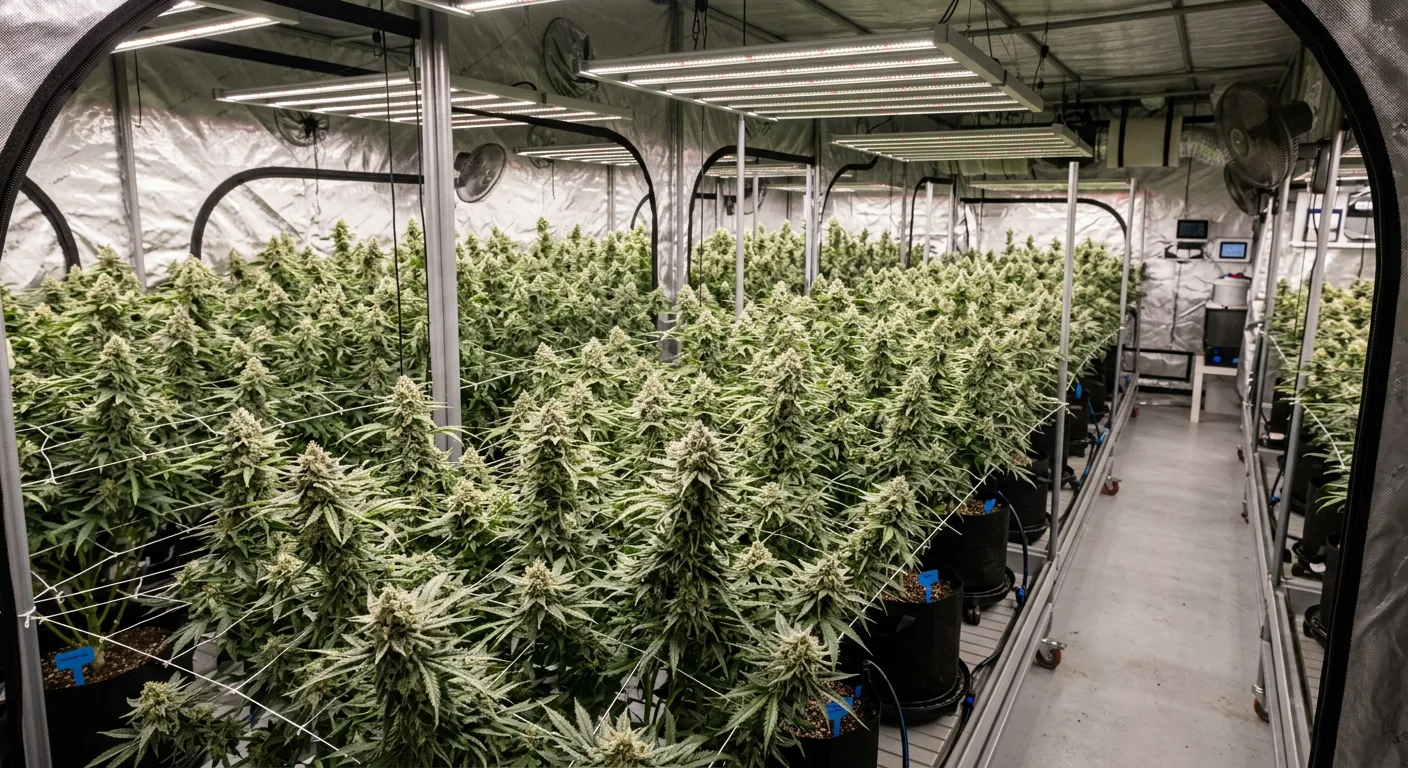
The reason SOG spread through the cultivation community is that it delivers on three concrete wins [4][2][6]:
- Faster harvests — short veg compresses the calendar [4][2][6]
- Higher yields for a given indoor setup [4][2][6]
- Uniform canopy — every cola gets equal light [2][6]
- Minimal training required, just normal upkeep [2][6]
- Even trichome development from better UV exposure across tops [6]
- Predictable scheduling — helpful for perpetual harvest rooms [2]
The Grow Weed Easy SOG tutorial documents one example harvest of 4 plants yielding 13 oz total using this approach [4]. Results obviously vary with strain, light, and environment — but the point stands that dense small-plant setups can produce meaningful weight.
Achieving the maximum SOG yield per square foot depends on dialing in pot size, light type, water pH, nutrients, soil, and environmental conditions [3]. Tools like our VPD calculator, nutrient calculator, and light calculator help tighten each of those variables.
Limitations: What SOG Won't Fix
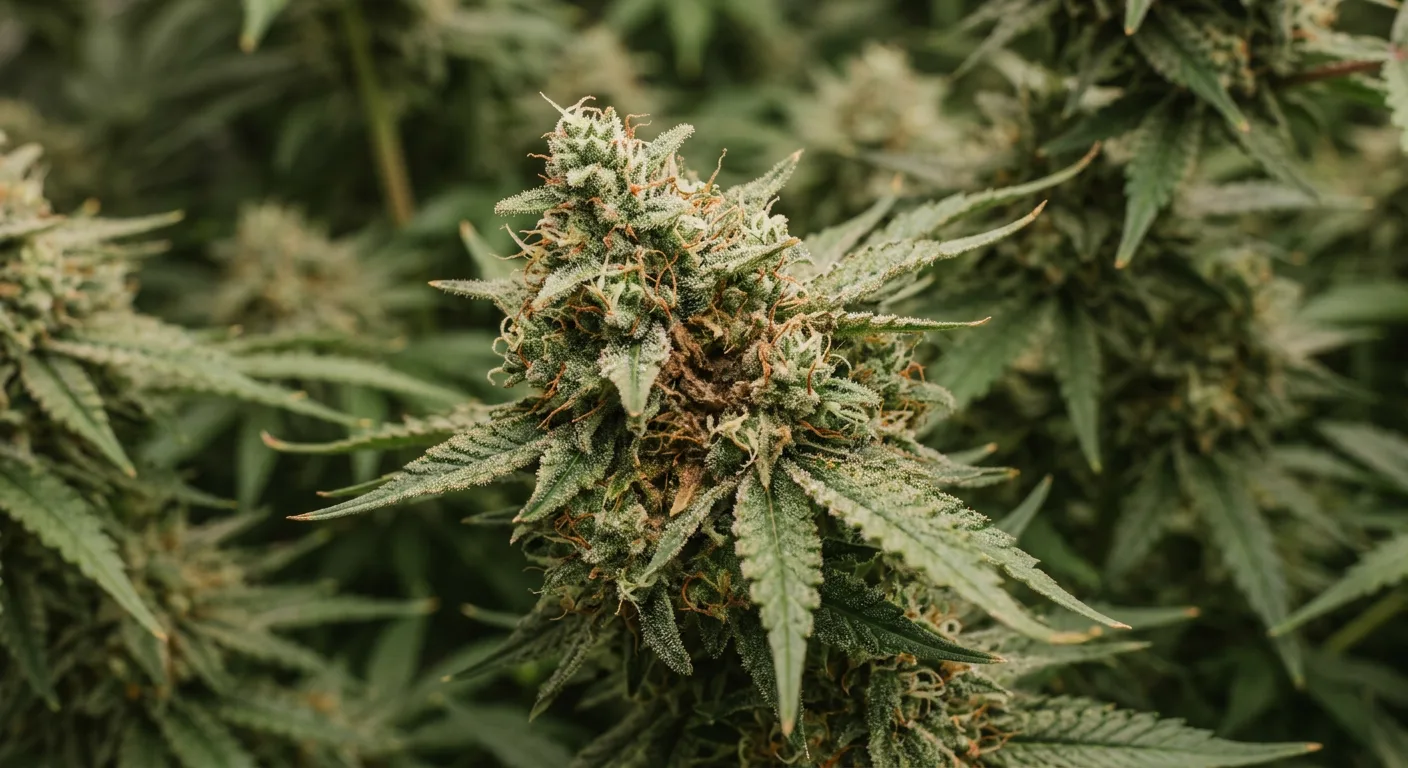
SOG is not magic, and it is not right for every grower. Based on 15+ years of cultivation work across many setups, these are the honest drawbacks:
- Plant-count laws: many jurisdictions cap legal plant numbers, which clashes with SOG's dense-plant philosophy
- Genetic dependency: tall, long-flower, or highly variable genetics break the flat canopy [2]
- Pest/disease risk: dense canopies trap humidity, raising mold pressure — see our mold prevention guide
- Workflow intensity: watering and harvesting 30–60 plants takes real time vs. pruning 4 big ones
- Startup: you need a reliable clone source or a uniform seed batch
- No rescue for bad environment: SOG concentrates your mistakes — bad VPD hits every plant
Autoflowers in SOG is a common question. The cite-approved sources in this guide don't directly address autos in SOG, so we treat that configuration as an open question — worth experimenting with, but evidence is limited on this point.
Cost-Benefit: Is SOG Worth It?

The cost-benefit calculation comes down to three variables: plants available, time per cycle, and watts you already own. Run the numbers with our grow cost calculator before buying anything.
SOG wins clearly when:
- You have legal room for many plants
- You want maximum harvests per year from fixed lighting
- You have access to clones or a reliable feminized-seed source
- You are growing short, indica-leaning strains with ~8-week flower times [4][2]
SOG is a weaker fit when:
- Plant-count limits apply
- You love sativas and long-flower exotics
- You only run one or two plants for personal stash
- Your environment (humidity, airflow) can't handle canopy density
If you are space-constrained but plant-count-restricted, SCROG often beats SOG on legal weight per room. If you have clone access and no plant limit, SOG almost always wins on calendar speed.
Harvest and What to Expect
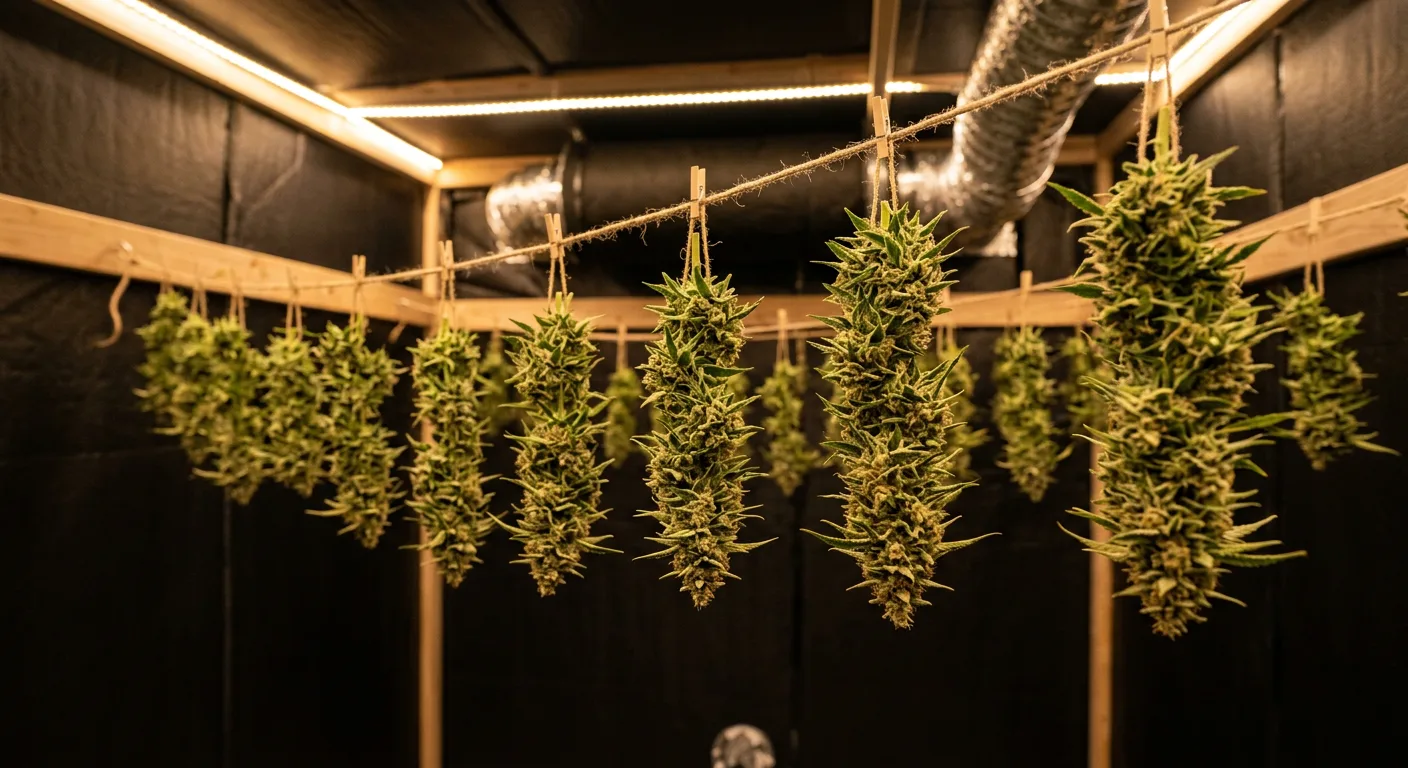
Harvest in SOG is the same physiological event as any other grow — trichomes shift from clear to cloudy to amber, and you chop when your preferred ratio is hit. What is different is logistics: you are processing many small plants at once, not a handful of giants.
Our typical SOG harvest-day workflow:
- Check trichomes on 5–10 random plants with a loupe or USB scope
- Cut whole plants at the stem — single-cola structure makes this fast [2][6]
- Wet-trim if humidity is high; dry-trim in cooler, drier rooms
- Hang or rack at 60°F / 60% RH for 10–14 days (see our harvest guide)
- Jar cure with humidity packs — our Boveda vs Integra guide covers the details
Because every plant was flipped on the same day and shared the same environment, SOG harvests are remarkably consistent in moisture content and bud density — which makes drying and curing easier than a mixed-maturity grow.
Frequently Asked Questions
How many plants do I need for a SOG?
Cite-approved sources do not give a universal plants-per-square-foot number. The right density depends on your light footprint, pot size, and strain stretch. Start by filling your canopy with uniform plants spaced so tops touch by mid-flower.
Can I run autoflowers in a SOG?
Our cite-approved sources don't directly address autoflowers in SOG, so we treat it as an open question. In practice, many growers do run autos in a SOG-style layout since autos already stay short — but evidence is limited on this specific configuration.
What light cycle should I use for SOG veg and flower?
Run 18 to 24 hours of light during veg, then switch to 12 hours of light and 12 hours of darkness to trigger flowering [3]. This is the standard photoperiod SOG schedule.
How long is the veg stage in SOG?
There are two legitimate paths: a standard 4–6 week veg until plants are 10–12 in (25–30 cm) tall, or a faster 2–3 week veg flipping at ~6 in tall [2][3]. Longer veg gives bigger individual plants; shorter veg gives more cycles per year.
SOG vs SCROG — which yields more?
Both can deliver excellent yields. SOG uses many small plants to fill a canopy [4][2]; SCROG uses few plants spread over a net. In jurisdictions with plant-count limits, SCROG usually wins; in rooms with free plant counts and a clone source, SOG typically runs faster cycles.
Sources & References

This article was researched and fact-checked using 6 verified sources including 1 peer-reviewed study, 2 authoritative references, 1 industry source, 2 community resources.
- Propagation of Cannabis for Clinical Research: An Approach Towards a Modern Herbal Medicinal Products Development - PMC — pmc.ncbi.nlm.nih.gov/articles/PMC7333344 [Research]
- Ultimate Guide to Sea of Green (SOG) Growing | Weedmaps — weedmaps.com/learn/the-plant/weedmaps-guide-to-the-sea-of-green-method [Reference]
- A guide to the sea of green method | Weedmaps — weedmaps.com/learn/the-plant/guide-to-sea-green-method [Reference]
- Sea of Green Tutorial - Increase yields with more plants | Grow Weed Easy — growweedeasy.com/sea-of-green [Industry]
- SOG Method: Best Cannabis Strains for Cultivation — blimburnseeds.com/blog/tips-and-tricks/sog-method [Community]
- What is the “sea of green” method of growing cannabis indoors? | Montel — montel.com/blog/what-is-the-sea-of-green-method-of-growing-cannabis-indoors [Community]